
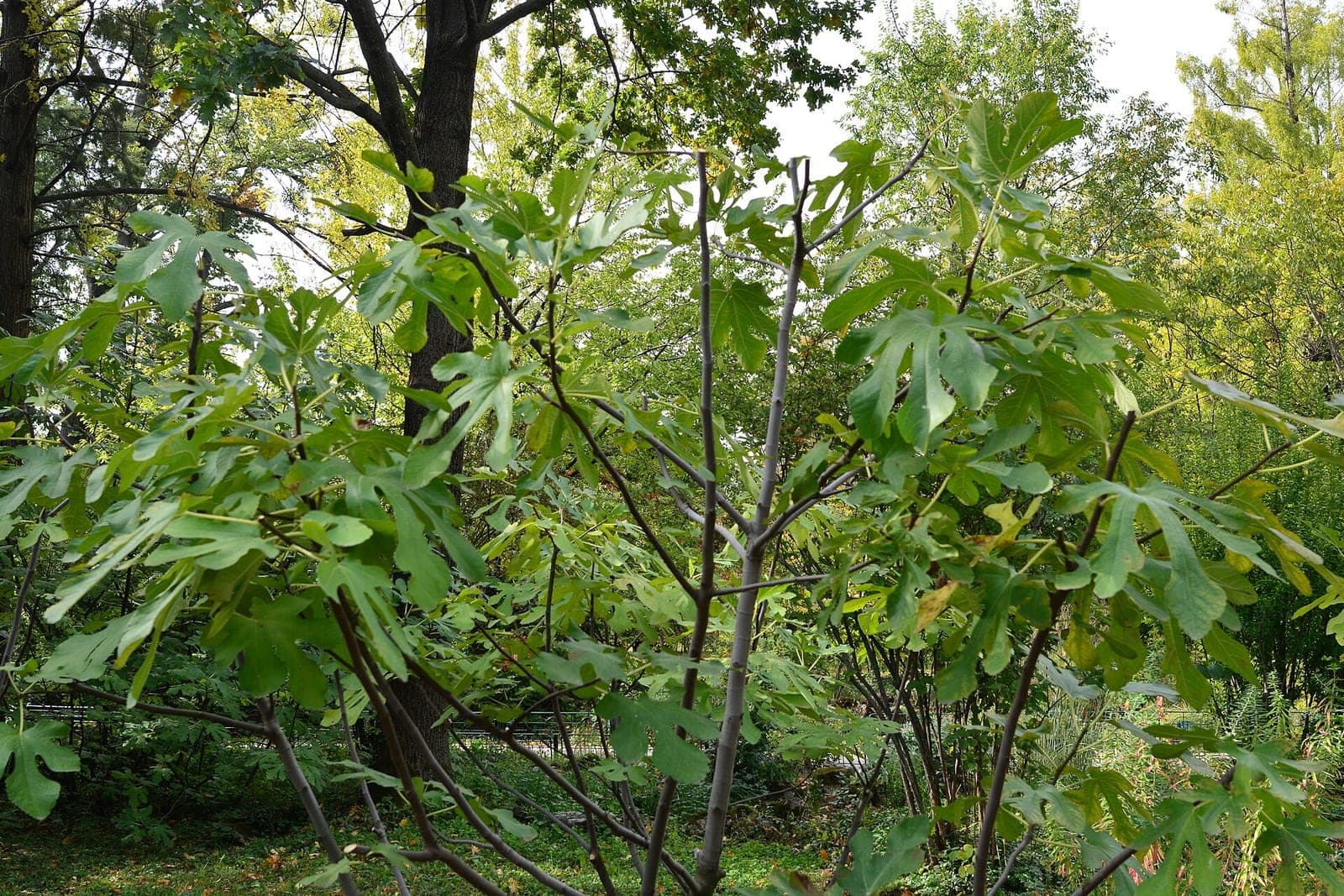
Violette de Bordeaux is a compact, self-fertile fig cultivar producing small, dark violet-black fruit with deep raspberry-red flesh. The flavor is intensely sweet with berry undertones, making it one of the more sought-after fresh-eating figs for home gardens. Its smaller mature size relative to standard fig varieties makes it practical for containers, espaliered walls, and smaller spaces.
This cultivar is deciduous in zones 6–8 and semi-evergreen in warmer climates. In zones 8 and warmer it reliably sets a breba crop on prior-year wood followed by a main crop on current-season growth; in zone 6, only the main crop consistently ripens. The largely closed ostiole (eye) reduces entry by dried-fruit beetles and the yeasts responsible for internal souring, a useful trait in humid climates. Planting against a south- or west-facing masonry wall in marginal zones concentrates heat and accelerates ripening. Reduce irrigation as fruit approaches maturity to concentrate sugars and limit splitting. In zones 6–7, mulching the root zone 6–8 inches deep before hard freezes significantly improves winter survival; wrapping the trunk in burlap adds further protection during severe cold.
Fresh and dried figs have been a Mediterranean food staple for thousands of years. Fruit is eaten fresh, dried, or made into preserves and condiments. Fig leaves serve as wrappers for grilling and baking in Mediterranean and Middle Eastern cuisines. Latex from unripe fruit and stems has a long folk-medicine history of topical application for wart removal, and fig-leaf preparations are used traditionally for digestive complaints and as an adjunct remedy in managing blood sugar.
Growing figs? Read the fig guide - which type to buy, pruning and picking, winter protection for zones 7 and below, and growing in a pot, timed to your frost dates.Fig Endosepsis
Internal browning, softening, and souring of the fruit with little to no external sign in early stages. Cut fruit reveals a darkened, fermented, or foul-smelling interior. Caused by Fusarium moniliforme entering through the fruit's ostiole.
Remove and destroy all affected fruit immediately; do not compost. Harvest promptly as soon as fruit reaches full ripeness. Clear dropped fruit from beneath the tree regularly. The primary vector is the fig wasp, which is largely absent in zones 5–7, reducing transmission risk for northern plantings.
Rust
Orange to brown raised pustules on the undersides of leaves, with yellow spotting on the upper surface. Heavy infections cause leaves to yellow and drop.
Remove and destroy infected leaves. Avoid overhead watering and improve air circulation. Apply a sulfur or copper-based fungicide if it spreads. Clear plant debris in fall.
Root-Knot Nematode
Swollen galls on roots, poor vigor, wilting in heat, and reduced fruiting. Containers and sandy soils are more prone.
Use clean potting mix in containers. Avoid replanting in infested soil. Maintain plant vigor with mulch and steady watering. Solarize affected garden soil.
Mosaic virus
Yellowing, mottled, or distorted leaves. No cure - spread by aphids.
Remove and destroy infected plants. Control aphid populations to prevent spread. Do not propagate from infected tubers.
Botryosphaeria Canker
Dark, sunken cankers on stems and major branches, most often occurring after drought stress or mechanical wounding. Bark peeled back from affected areas reveals brown, discolored wood beneath. Branch tips wilt and die back progressively inward.
Prune infected branches at least 6 inches below the visible canker margin using sterilized tools, and dispose of all cuttings away from the garden. Reduce plant stress by maintaining consistent irrigation during dry periods and avoiding bark wounds during maintenance. No curative fungicide is available; keeping plants vigorous is the primary preventive strategy.
Fig Souring
Fruit softens prematurely from the inside and emits a fermented or vinegary odor. Internal flesh turns brown and watery. A pinkish or whitish ooze may appear at the ostiole. Affected fruit often drops before reaching full color.
Reduce irrigation as fruit nears maturity to limit moisture accumulation at the ostiole. Harvest promptly at peak ripeness and remove fallen or overripe fruit immediately. Control dried-fruit beetles and vinegar flies with yellow sticky traps and strict sanitation. Avoid overhead irrigation. Closed-eye cultivars such as Violette de Bordeaux have inherent resistance; maintain good ostiole closure by avoiding excessive nitrogen fertilization, which can cause oversized, more open fruit.