
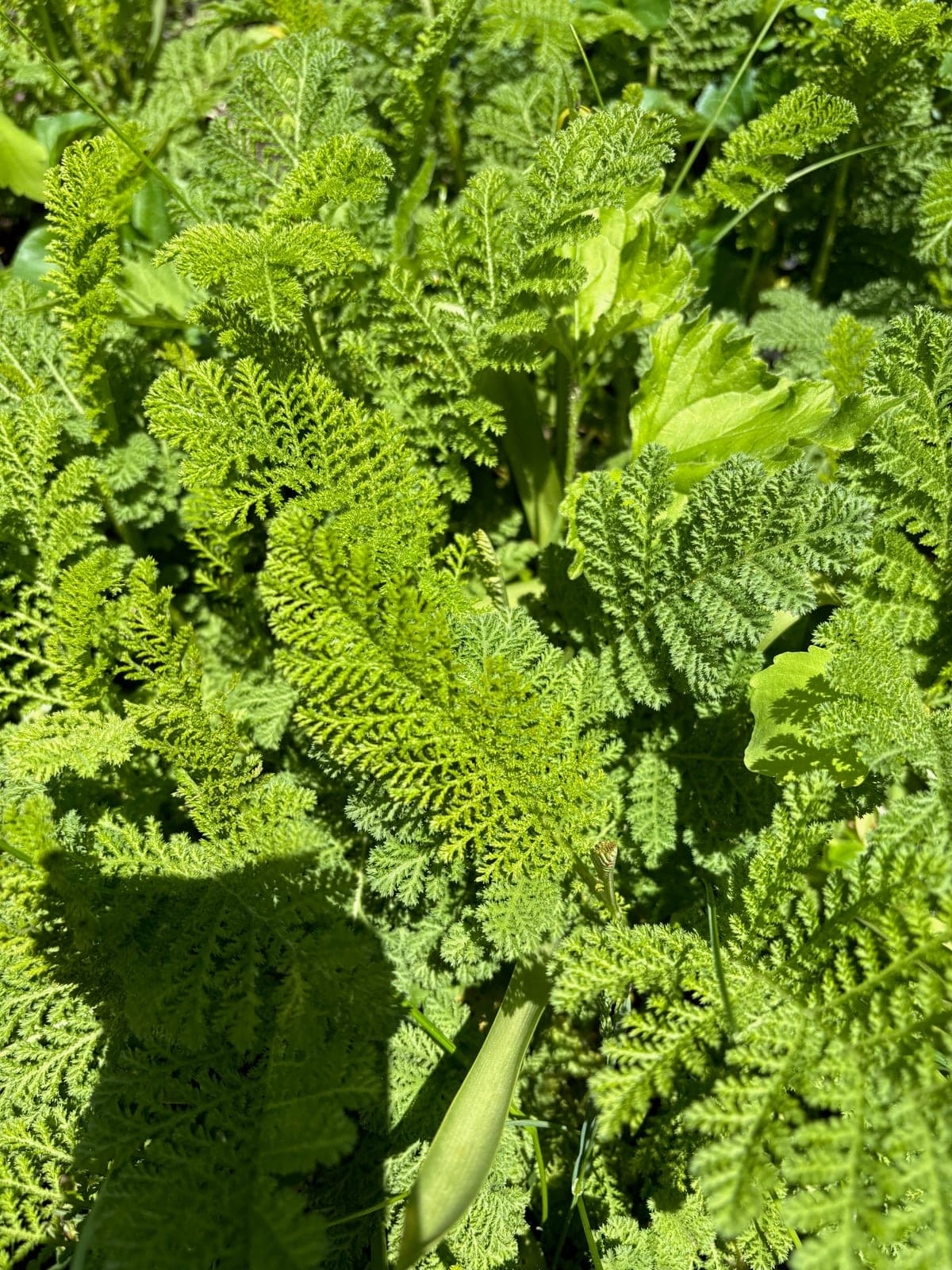
Tansy is an old herb and cottage-garden plant: flat clusters of bright yellow button flowers on aromatic, ferny foliage that smells strongly of camphor when bruised, 3 to 5 feet tall, flowering from midsummer into fall. It is virtually indestructible in sun or part shade and any soil, and that toughness is the warning.
It spreads by rhizome and by seed and is listed as a noxious weed in several states, so plant it where a mower or a barrier can hold it, deadhead before the seed ripens, and dig out the runners each spring. Space plants 24 to 36 inches apart and give them nothing; rich soil only makes them flop. Cut the whole clump to the ground after flowering.
As a cut flower the yellow buttons add a wild, naturalistic note to summer arrangements with coneflower, scabious and grasses, and they dry well, holding their colour for months. The foliage has a long history as a strewing herb and insect repellent, and deer and rabbits leave it alone. It is native to Europe and Asia; the plant is toxic in quantity and is not a culinary herb.
Powdery mildew
White or grey powdery coating on leaves - usually starting on older growth in humid conditions or when nights cool.
Improve air circulation by thinning plants. Apply neem oil or potassium bicarbonate spray at first sign. Avoid overhead watering.
Rust
Orange to brown raised pustules on the undersides of leaves, with yellow spotting on the upper surface. Heavy infections cause leaves to yellow and drop.
Remove and destroy infected leaves. Avoid overhead watering and improve air circulation. Apply a sulfur or copper-based fungicide if it spreads. Clear plant debris in fall.
Aphids
Aphididae →Clusters of small soft insects on new growth and flower buds.
Knock off with a strong jet of water. Ladybirds and lacewings are natural predators. Insecticidal soap as last resort.