
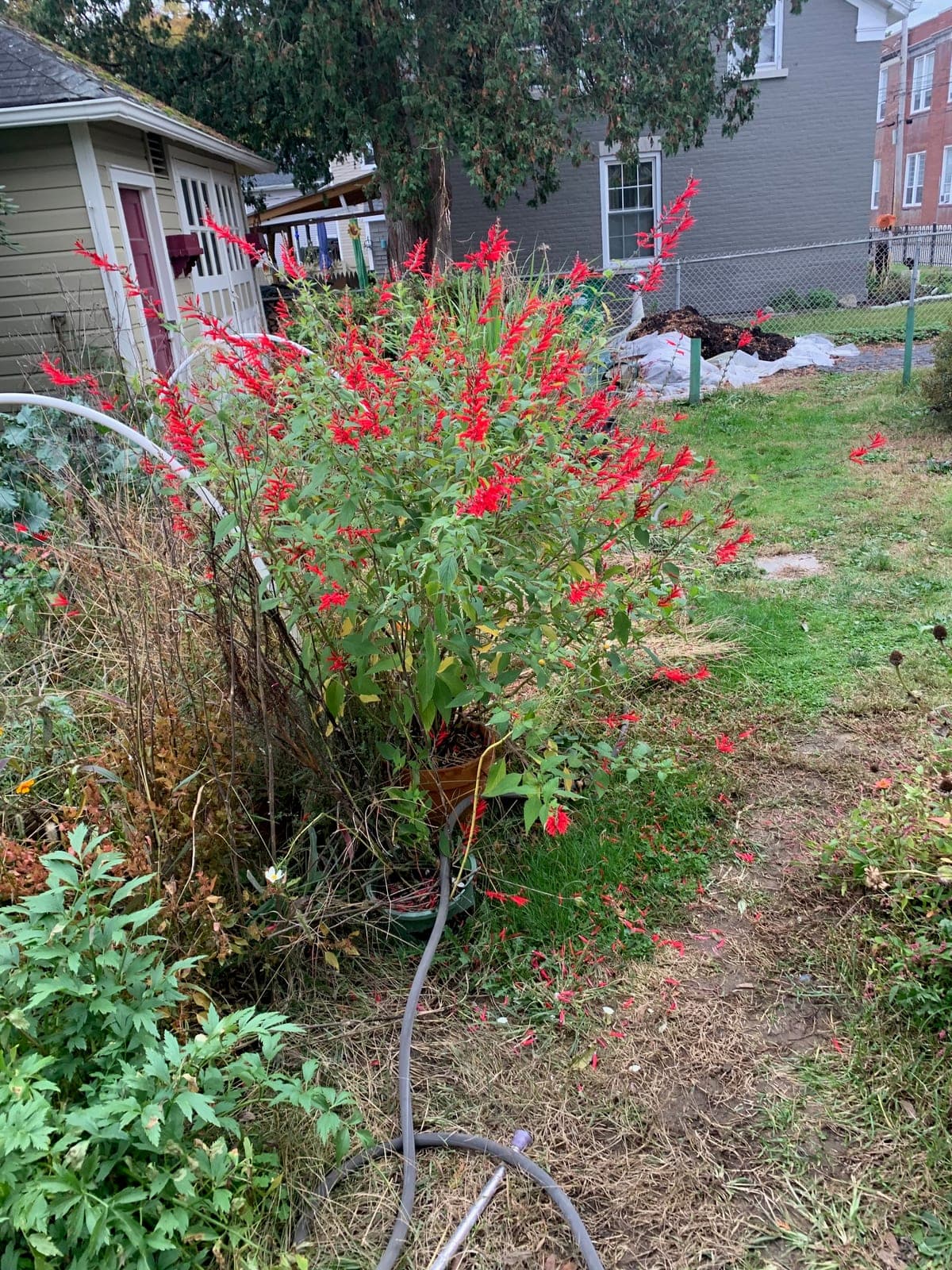
Pineapple sage is a large, bushy tender perennial from Mexico, 3 to 5 feet, grown for foliage that smells of pineapple when crushed and for a late-season display: it waits until late summer and early fall to produce its brilliant scarlet tubular flowers, just as most of the garden is winding down, and hummingbirds find it the day it opens. The leaves and flowers go into drinks, fruit salads and tea.
It is hardy only in zones 8 to 11. Elsewhere plant it after the last frost, 24 to 36 inches apart in full sun and rich soil that drains, and keep it watered, because it wilts in drought. Pinch it in early summer for a bushier plant. In the North it flowers so late that a hard early frost can take it before it opens; a sheltered, south-facing spot buys a week or two.
Take cuttings in late summer, before frost, to overwinter on a windowsill, and plant them out again after the last frost; they root in water in a week. The scarlet spikes are striking in autumn arrangements, and the foliage adds scent. Bees and butterflies share the flowers with the hummingbirds, and deer and rabbits leave the scented leaves alone.
Aphids
Aphididae →Clusters of small soft insects on new growth and flower buds.
Knock off with a strong jet of water. Ladybirds and lacewings are natural predators. Insecticidal soap as last resort.