
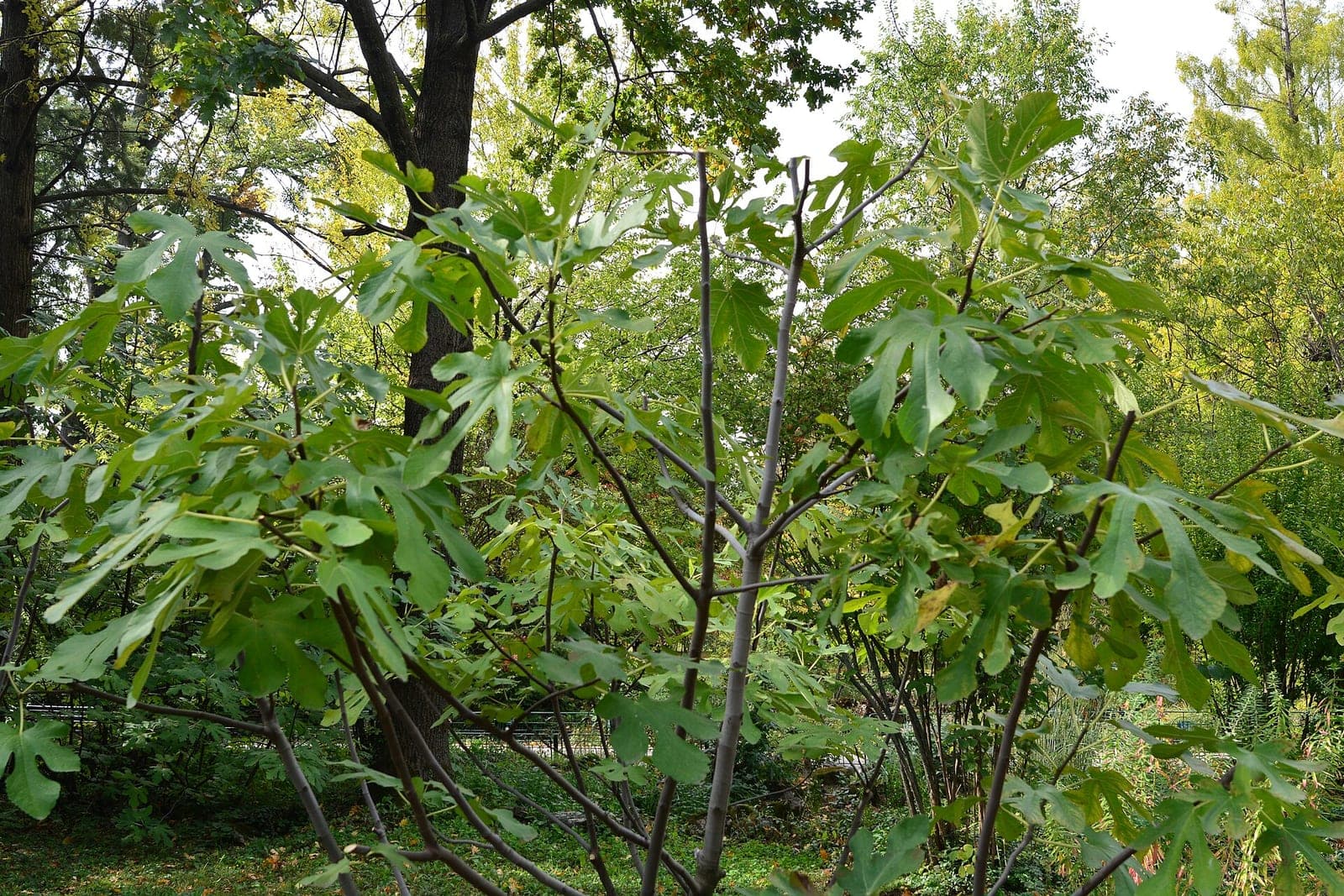
Ficus carica 'Olympian' is a cold-tolerant common fig cultivar selected for reliable performance into USDA Zone 5. It produces large, sweet figs that ripen late summer through early fall. The cultivar is self-fertile and parthenocarpic - it does not require cross-pollination or caprification to set fruit.
In zones 7 and warmer, 'Olympian' grows as a multi-stemmed tree or large shrub reaching 10–20 ft with minimal pruning. In zones 5–6, above-ground growth frequently dies back in severe winters, but established root systems survive with heavy mulch applied before the ground freezes; the plant regrows vigorously and can still fruit in the same season on new wood. Figs prefer near-neutral to slightly alkaline soil with sharp drainage - heavy clay or chronically wet conditions cause root rot. Plants become drought-tolerant once established but produce larger, sweeter fruit with consistent moisture during fruit swell. Basal suckers arise regularly and can be removed to maintain a tree form or allowed to develop a multi-stemmed clump.
Fresh figs are eaten out of hand or used in preserves, chutneys, baked goods, and cheese pairings. Dried figs are dense in fiber, calcium, and potassium. The high fiber content combined with the proteolytic enzyme ficin gives figs a well-documented mild laxative effect; fig leaf preparations have been studied for effects on blood glucose regulation.
Growing figs? Read the fig guide - which type to buy, pruning and picking, winter protection for zones 7 and below, and growing in a pot, timed to your frost dates.Fig Endosepsis
Internal browning, softening, and souring of the fruit with little to no external sign in early stages. Cut fruit reveals a darkened, fermented, or foul-smelling interior. Caused by Fusarium moniliforme entering through the fruit's ostiole.
Remove and destroy all affected fruit immediately; do not compost. Harvest promptly as soon as fruit reaches full ripeness. Clear dropped fruit from beneath the tree regularly. The primary vector is the fig wasp, which is largely absent in zones 5–7, reducing transmission risk for northern plantings.
Rust
Orange to brown raised pustules on the undersides of leaves, with yellow spotting on the upper surface. Heavy infections cause leaves to yellow and drop.
Remove and destroy infected leaves. Avoid overhead watering and improve air circulation. Apply a sulfur or copper-based fungicide if it spreads. Clear plant debris in fall.
Mosaic virus
Yellowing, mottled, or distorted leaves. No cure - spread by aphids.
Remove and destroy infected plants. Control aphid populations to prevent spread. Do not propagate from infected tubers.
Root-Knot Nematode
Swollen galls on roots, poor vigor, wilting in heat, and reduced fruiting. Containers and sandy soils are more prone.
Use clean potting mix in containers. Avoid replanting in infested soil. Maintain plant vigor with mulch and steady watering. Solarize affected garden soil.
Root rot
Plants wilt, yellow, and stunt even in moist soil; lower stems and roots turn brown, soft, and mushy and the plant may collapse. Most common in heavy, wet, or poorly drained ground.
Improve drainage and stop overwatering, and never plant too deep. Lift and destroy badly affected plants along with the soil around the roots. Grow in raised or free-draining beds to prevent it returning.
Fungal leaf spot
Brown or purplish spots on the leaves, often ringed with a yellow halo, that spread and merge in warm, humid, or wet weather; heavily spotted leaves yellow and drop early.
Pick off spotted leaves and clear fallen debris to remove overwintering spores. Improve air circulation by thinning, and water at the base so foliage dries quickly. If it persists, apply a copper- or sulfur-based fungicide at the first sign.