
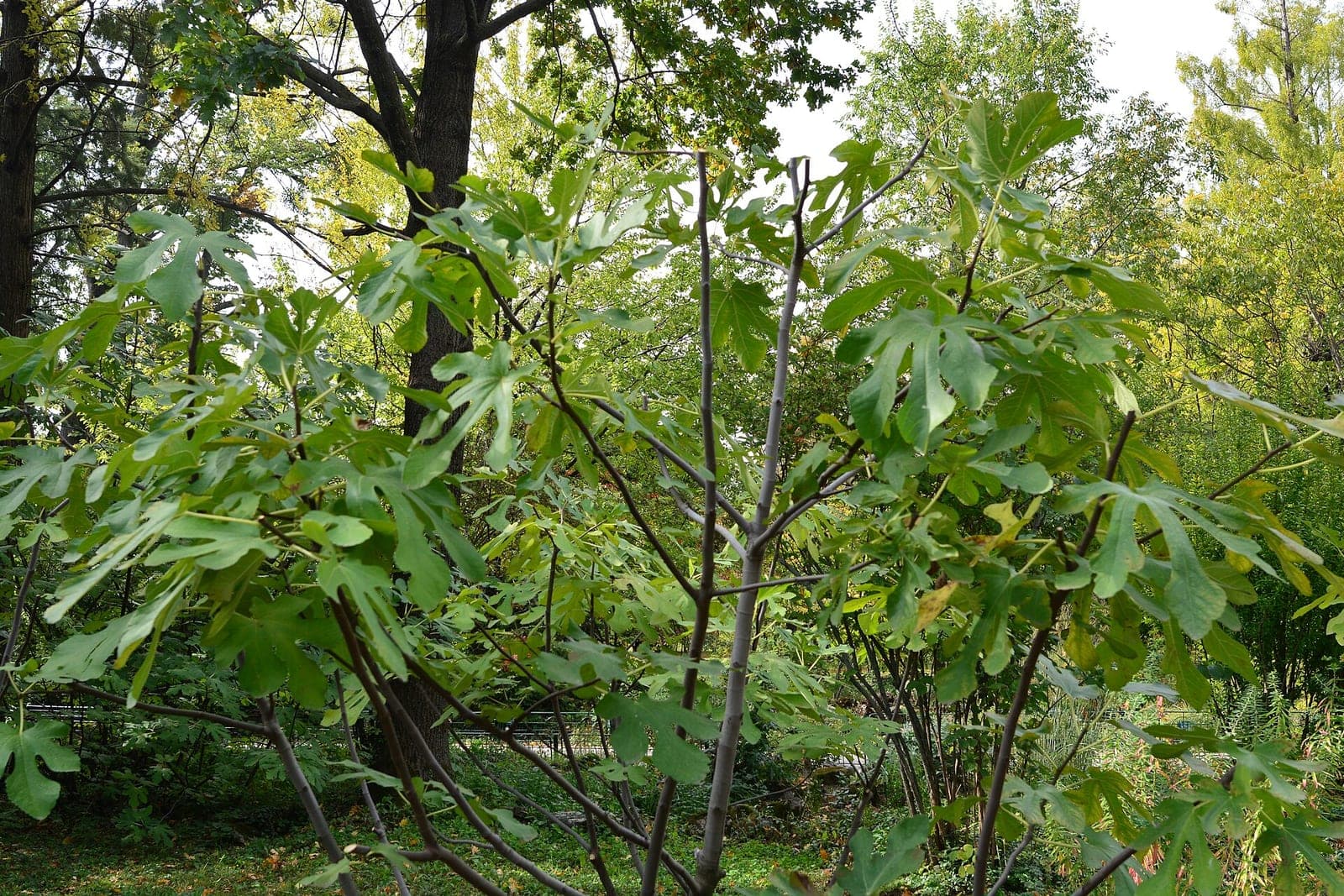
Black Mission is one of the most commercially significant and widely planted fig cultivars in North America, originating in Spain and introduced to California by Franciscan missionaries. It produces two crops annually: a breba crop on second-year wood in early summer and a main crop on current-year wood from late summer through fall. Fruit are large, with dark purple-to-black skin, dense strawberry-pink flesh, and a sweet, rich flavor that intensifies on drying.
A vigorous deciduous tree capable of reaching 10–30 ft if unpruned, it responds well to hard annual pruning and can be maintained as a compact garden tree. It spreads by root suckers that should be removed at the base each spring. In zone 8a, siting against a south-facing masonry wall provides reflected heat that protects wood through marginal winters. The tree is self-fertile, requires no pollinating partner, tolerates drought and moderately poor soils once established, and fruits best with deep infrequent irrigation in fertile, well-drained ground. A soil pH between 6.0 and 6.5 suits it well. Harvest fruit promptly at peak ripeness; fruit left on the tree past ripe attracts pests and promotes souring.
Fig fruit and leaves have a long history in traditional Mediterranean medicine. Dried fruit is a recognized source of soluble fiber with a documented laxative effect. Latex from unripe fruit and leaves has been used topically for skin tags and warts in folk medicine, but is also a documented skin and mucous-membrane irritant; handle with gloves.
Growing figs? Read the fig guide - which type to buy, pruning and picking, winter protection for zones 7 and below, and growing in a pot, timed to your frost dates.Fig Endosepsis
Internal browning, softening, and souring of the fruit with little to no external sign in early stages. Cut fruit reveals a darkened, fermented, or foul-smelling interior. Caused by Fusarium moniliforme entering through the fruit's ostiole.
Remove and destroy all affected fruit immediately; do not compost. Harvest promptly as soon as fruit reaches full ripeness. Clear dropped fruit from beneath the tree regularly. The primary vector is the fig wasp, which is largely absent in zones 5–7, reducing transmission risk for northern plantings.
Fig Souring
Fruit softens prematurely from the inside and emits a fermented or vinegary odor. Internal flesh turns brown and watery. A pinkish or whitish ooze may appear at the ostiole. Affected fruit often drops before reaching full color.
Reduce irrigation as fruit nears maturity to limit moisture accumulation at the ostiole. Harvest promptly at peak ripeness and remove fallen or overripe fruit immediately. Control dried-fruit beetles and vinegar flies with yellow sticky traps and strict sanitation. Avoid overhead irrigation. Closed-eye cultivars such as Violette de Bordeaux have inherent resistance; maintain good ostiole closure by avoiding excessive nitrogen fertilization, which can cause oversized, more open fruit.
Root rot
Plants wilt, yellow, and stunt even in moist soil; lower stems and roots turn brown, soft, and mushy and the plant may collapse. Most common in heavy, wet, or poorly drained ground.
Improve drainage and stop overwatering, and never plant too deep. Lift and destroy badly affected plants along with the soil around the roots. Grow in raised or free-draining beds to prevent it returning.
Rust
Orange to brown raised pustules on the undersides of leaves, with yellow spotting on the upper surface. Heavy infections cause leaves to yellow and drop.
Remove and destroy infected leaves. Avoid overhead watering and improve air circulation. Apply a sulfur or copper-based fungicide if it spreads. Clear plant debris in fall.
Mosaic virus
Yellowing, mottled, or distorted leaves. No cure - spread by aphids.
Remove and destroy infected plants. Control aphid populations to prevent spread. Do not propagate from infected tubers.
Botrytis (grey mould)
Grey fuzzy mould on petals and stems, worst in cool wet conditions.
Remove affected parts immediately. Improve air circulation. Avoid overhead watering. Apply copper fungicide if severe.
Armillaria Root Rot
Thinning, yellowing canopy with progressive dieback; white, fan-shaped mycelial mats visible beneath bark at or just below the soil line; honey-colored mushroom clusters appearing at the trunk base or on surface roots in autumn.
No chemical cure exists. Improve drainage and avoid any injury to roots or trunk. Remove severely infected trees along with as much root material as possible. Do not replant susceptible species in the same spot.