
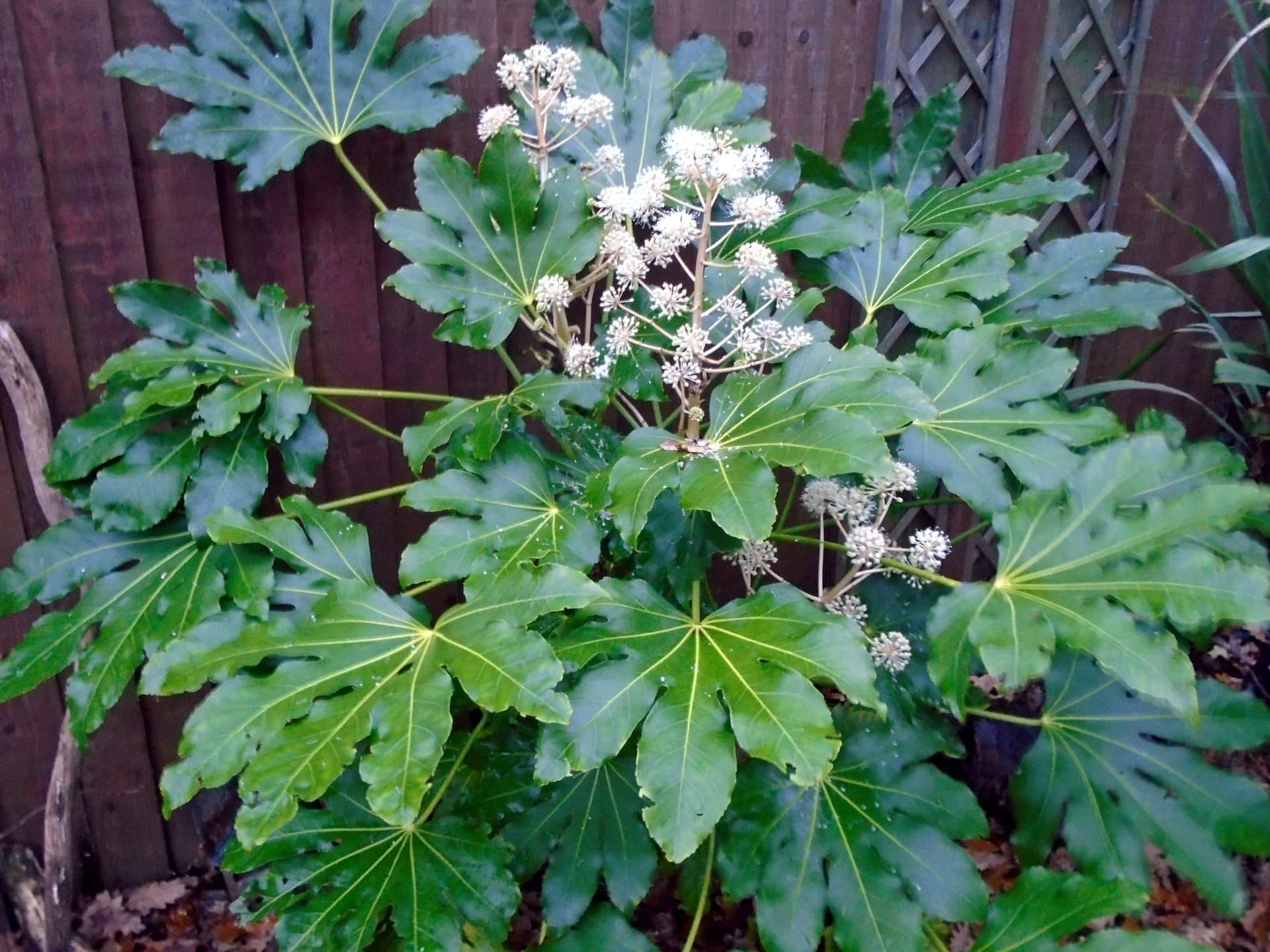
Fatsia japonica is a bold evergreen shrub grown primarily for its large, deeply lobed, glossy leaves that can span 12–16 inches across. Native to forest understories in southern Japan and Korea, it is one of the few large-leaved shrubs that thrives in deep shade, making it a reliable structural anchor in shaded borders and woodland gardens.
It matures to 6–10 feet tall and wide, often faster in mild coastal climates. In fall and early winter it produces branched stalks bearing spherical clusters of small white flowers, followed by black drupes in spring that attract birds. Fatsia tolerates urban air pollution and root competition from established trees better than most broadleaf shrubs. In zone 7b, a sheltered wall position and deep winter mulch improve cold survival. Suckers at the base can be removed to maintain a clean single-stemmed form or left to develop a dense, multi-stemmed clump.
Fungal leaf spot
Brown or purplish spots on the leaves, often ringed with a yellow halo, that spread and merge in warm, humid, or wet weather; heavily spotted leaves yellow and drop early.
Pick off spotted leaves and clear fallen debris to remove overwintering spores. Improve air circulation by thinning, and water at the base so foliage dries quickly. If it persists, apply a copper- or sulfur-based fungicide at the first sign.
Phytophthora Root Rot
Wilting despite moist soil, yellowing leaves, stunted growth, and dark, decayed roots and crown tissue. Vines may collapse during hot weather.
Plant in well-draining soil and avoid waterlogging. Remove and destroy affected vines. Improve drainage with raised beds or amended soil and avoid overwatering.
Root rot
Plants wilt, yellow, and stunt even in moist soil; lower stems and roots turn brown, soft, and mushy and the plant may collapse. Most common in heavy, wet, or poorly drained ground.
Improve drainage and stop overwatering, and never plant too deep. Lift and destroy badly affected plants along with the soil around the roots. Grow in raised or free-draining beds to prevent it returning.
Sooty Mold (Scale-Associated)
Black, powdery or crusty coating on upper leaf surfaces and stems. Affected leaves may yellow and drop in severe cases. The mold grows on honeydew secreted by scale insects, mealybugs, or aphids feeding on the plant.
Control the underlying pest infestation first using horticultural oil or neem oil applied thoroughly to stems and leaf undersides. Once pest populations are reduced, sooty mold stops spreading and weathers away over time. Rinse foliage with a strong stream of water to dislodge existing mold deposits.