
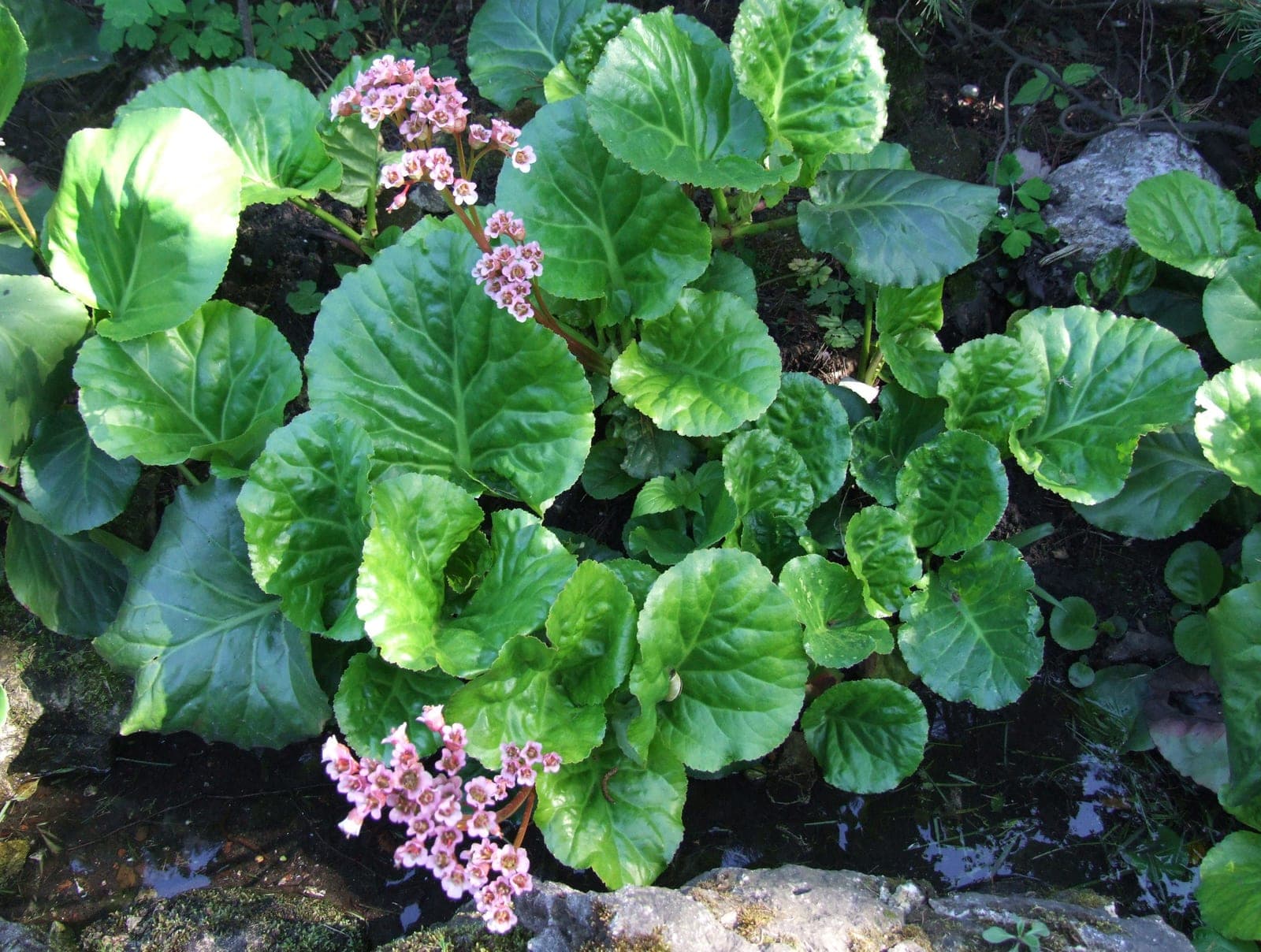
Bergenia crassifolia is a semi-evergreen perennial groundcover grown for its large, leathery, rounded leaves and clusters of pink flowers that open in late winter to early spring. It tolerates deep shade, cold, and periods of neglect, making it one of the most dependable choices for difficult spots under trees or at the front of shaded borders.
Leaves turn burgundy to bronze as temperatures drop in fall and hold that color through winter, providing multi-season interest. Plants spread by thick surface rhizomes to form dense, weed-suppressing mats. They perform best in part shade with consistent moisture but adapt to full shade and tolerate brief dry periods once established. Acidic to neutral soil amended with organic matter is ideal; waterlogged conditions invite crown rot. Mulching rhizomes in zone 5 winters reduces frost heave.
Leaves have been dried and brewed as a tea in Siberia and Mongolia, a use reflected in the common names Siberian tea and Mongolian tea. The plant contains bergenin, arbutin, and tannins. Arbutin has documented antimicrobial and mild urinary-antiseptic properties, and the plant appears in traditional medicine for urinary tract complaints, diarrhea, hemorrhoids, and inflammatory conditions.
Crown Rot
Lower leaves yellow and wilt; the base of the rosette turns brown and soft, sometimes with white fungal threads at the soil line. Plants collapse in wet conditions.
Remove and destroy affected plants. Improve drainage and avoid overhead watering. Do not mulch directly against the crown. Space plants for airflow and avoid replanting in the same wet spot.
Root rot
Plants wilt, yellow, and stunt even in moist soil; lower stems and roots turn brown, soft, and mushy and the plant may collapse. Most common in heavy, wet, or poorly drained ground.
Improve drainage and stop overwatering, and never plant too deep. Lift and destroy badly affected plants along with the soil around the roots. Grow in raised or free-draining beds to prevent it returning.
Fungal leaf spot
Brown or purplish spots on the leaves, often ringed with a yellow halo, that spread and merge in warm, humid, or wet weather; heavily spotted leaves yellow and drop early.
Pick off spotted leaves and clear fallen debris to remove overwintering spores. Improve air circulation by thinning, and water at the base so foliage dries quickly. If it persists, apply a copper- or sulfur-based fungicide at the first sign.
Botrytis (grey mould)
Grey fuzzy mould on petals and stems, worst in cool wet conditions.
Remove affected parts immediately. Improve air circulation. Avoid overhead watering. Apply copper fungicide if severe.