
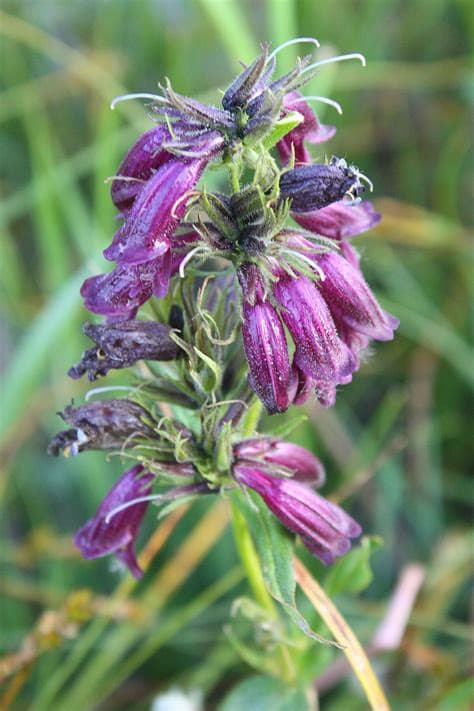
Penstemon whippleanus, the dusky beardtongue (also called Whipple's penstemon), is a perennial of the high Rocky Mountains, found from Montana and Idaho south through Wyoming, Colorado and Utah to Arizona and New Mexico. In the wild it grows in mountain meadows, open forest, rocky slopes and gravelly roadsides, mostly between about 7,500 and 13,000 feet. The flowers are large tubular bells, usually a deep purple-red or violet, sometimes blue or cream, with pale nectar guides and a hairy lower lip. They open in summer and carry on into early fall.
It is one of the easier penstemons to grow outside the mountains. Plants take full sun, and appreciate afternoon shade where summers are hot. They are drought tolerant once settled but will not tolerate soggy ground, so sharp drainage matters more than anything else. A neutral to slightly acidic, lean soil suits them, and rich feeding is unnecessary. Established clumps spread slowly and can be divided to make more plants. Young plants are sometimes chewed by slugs and snails, but deer generally leave it alone.
Seed needs about three months of cold, moist stratification, which is why it is usually sown outdoors in fall and left to winter over. For a dry mountain-meadow look, plant it with Rocky Mountain penstemon, yarrow and blue flax.
Ecoregions:Northwestern Forested Mountains
Powdery mildew
White or grey powdery coating on leaves - usually starting on older growth in humid conditions or when nights cool.
Improve air circulation by thinning plants. Apply neem oil or potassium bicarbonate spray at first sign. Avoid overhead watering.
Phytophthora Root Rot
Wilting despite moist soil, yellowing leaves, stunted growth, and dark, decayed roots and crown tissue. Vines may collapse during hot weather.
Plant in well-draining soil and avoid waterlogging. Remove and destroy affected vines. Improve drainage with raised beds or amended soil and avoid overwatering.