
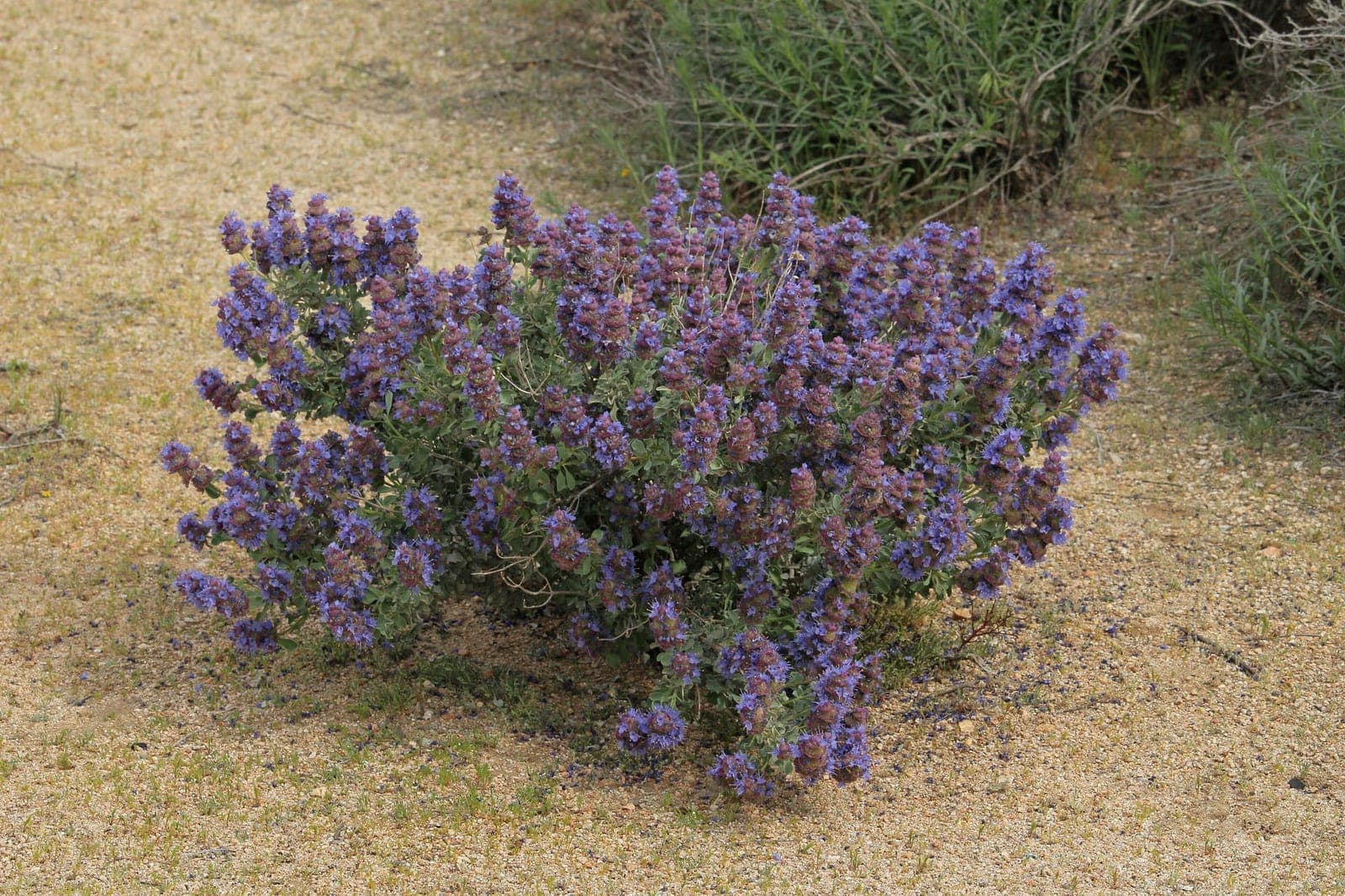
Salvia dorrii is a compact, mounding native shrub of the Great Basin and Mojave Desert, grown for its silver-gray aromatic foliage and intensely violet flowers that attract native bees, butterflies, and hummingbirds. It functions as both a structural element and a wildlife plant in xeriscape and western native gardens, requiring almost no supplemental water once established.
Sharp drainage is non-negotiable; clay or poorly drained soil causes rapid root rot. The plant naturally colonizes dry slopes, rocky flats, and open scrubland on alkaline to neutral soils. Establishment is slow but plants are long-lived and essentially self-sustaining under arid conditions. Avoid fertilizing - excess nitrogen produces weak, open growth. Light pruning after the main flush of flowers keeps plants compact. Known by some as tobacco sage, it was used ceremonially by Great Basin tribes including the Paiute and Shoshone, who burned or smoked the aromatic stems and leaves.
Ecoregions:Northwestern Forested MountainsNorth American DesertsMediterranean California
Root rot
Plants wilt, yellow, and stunt even in moist soil; lower stems and roots turn brown, soft, and mushy and the plant may collapse. Most common in heavy, wet, or poorly drained ground.
Improve drainage and stop overwatering, and never plant too deep. Lift and destroy badly affected plants along with the soil around the roots. Grow in raised or free-draining beds to prevent it returning.
Powdery mildew
White or grey powdery coating on leaves - usually starting on older growth in humid conditions or when nights cool.
Improve air circulation by thinning plants. Apply neem oil or potassium bicarbonate spray at first sign. Avoid overhead watering.