
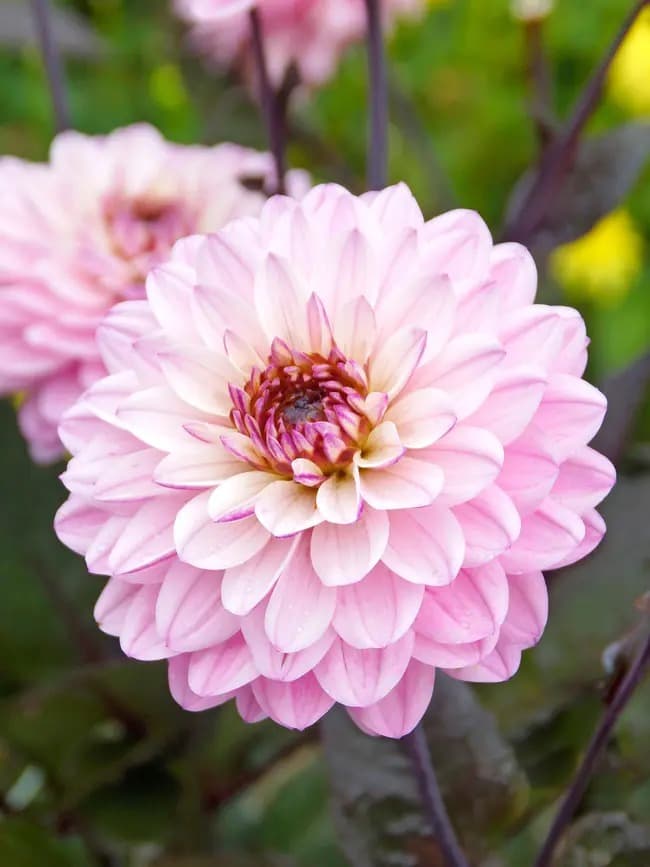
Dahlia 'Melody Harmony' is a compact semi-double dahlia in the Melody Series, bearing soft pink flowers with paler centers on mounded, bushy plants. Its long season from midsummer through first frost and tidy habit make it well suited to containers, front-of-border plantings, and cutting gardens.
Dahlias grow from tuberous roots. In zones 8a and warmer, tubers overwinter in the ground; in cooler zones they must be lifted after frost kills the foliage and stored dry and frost-free until spring. Pinching the central shoot once plants reach 12 in triggers lateral branching and significantly increases production. Consistent moisture and fertile, well-drained soil support vigorous tuber development. A mulch layer helps retain moisture and moderate soil temperature.
The semi-double, open-centered form of 'Melody Harmony' is accessible to bees and butterflies, making it a useful pollinator plant in mixed beds. Dahlia tubers were an important food crop for indigenous peoples of Mexico before the genus was introduced to Europe solely as an ornamental.
Growing dahlias? Read the Dahlia Growing Guide - pinching and disbudding for more stems, the flower forms, and the winter tuber storage method, timed to your frost dates.Powdery mildew
White or grey powdery coating on leaves - usually starting on older growth in humid conditions or when nights cool.
Improve air circulation by thinning plants. Apply neem oil or potassium bicarbonate spray at first sign. Avoid overhead watering.
Botrytis (grey mould)
Grey fuzzy mould on petals and stems, worst in cool wet conditions.
Remove affected parts immediately. Improve air circulation. Avoid overhead watering. Apply copper fungicide if severe.
Tuber Rot
Stored or in-ground tubers turn soft, brown, and mushy, often with mold growth. Affected tubers fail to sprout in spring.
Lift tubers only after foliage dies back, cure them in a dry airy spot before storage, and store in a cool dry location with breathable packing. Discard damaged or soft tubers and avoid waterlogged soil during the growing season.
Mosaic virus
Yellowing, mottled, or distorted leaves. No cure - spread by aphids.
Remove and destroy infected plants. Control aphid populations to prevent spread. Do not propagate from infected tubers.
Fungal leaf spot
Brown or purplish spots on the leaves, often ringed with a yellow halo, that spread and merge in warm, humid, or wet weather; heavily spotted leaves yellow and drop early.
Pick off spotted leaves and clear fallen debris to remove overwintering spores. Improve air circulation by thinning, and water at the base so foliage dries quickly. If it persists, apply a copper- or sulfur-based fungicide at the first sign.
Verticillium Wilt
Lower leaves yellow and wilt, often on one side of the plant, with brown streaking in the stem and crown tissue when cut open. Plants are stunted and decline over the season.
Remove and destroy affected plants. Avoid planting in soil that has grown infected tomatoes, peppers, or other susceptible crops. Rotate beds and improve drainage; there is no cure once a plant is infected.
Crown Rot
Lower leaves yellow and wilt; the base of the rosette turns brown and soft, sometimes with white fungal threads at the soil line. Plants collapse in wet conditions.
Remove and destroy affected plants. Improve drainage and avoid overhead watering. Do not mulch directly against the crown. Space plants for airflow and avoid replanting in the same wet spot.