
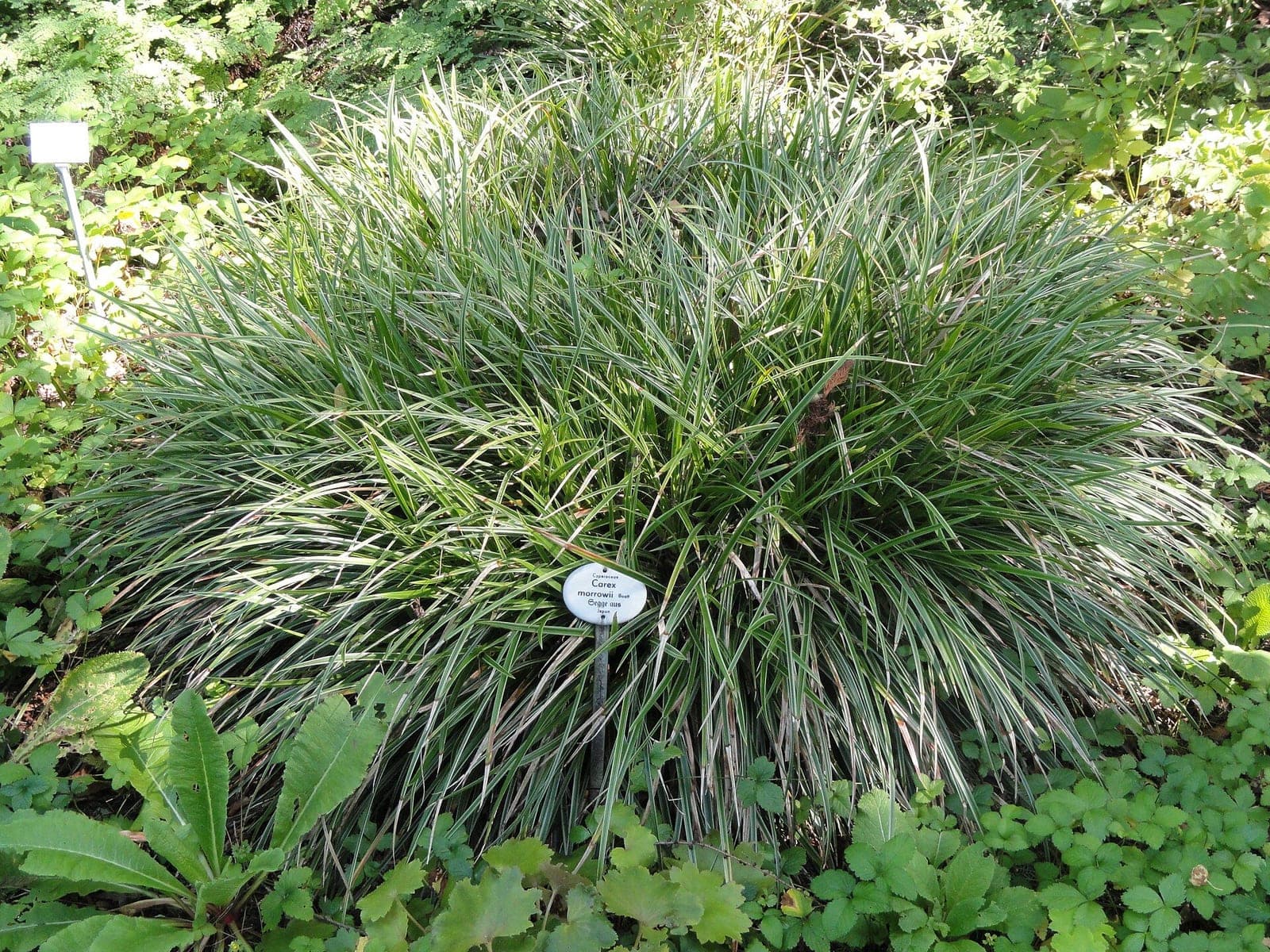
Carex morrowii is a clump-forming, evergreen sedge native to the woodlands of central and southern Japan. It is widely grown as a ground cover valued for its arching, strap-like foliage and reliable performance in shaded spots where turf and many perennials fail. Variegated cultivars such as 'Ice Dance' and 'Variegata', which carry white-margined leaves, are the most commonly sold forms and are effective at brightening dark corners.
The plant spreads slowly by short rhizomes, eventually forming dense, weed-suppressing mats. It remains evergreen through mild winters but may show tip browning in colder parts of its range; cutting back old foliage in early spring allows fresh growth to take over cleanly. It is pH-adaptable and performs well in clay-amended or humus-rich woodland soils, but resents prolonged waterlogging. Established plants tolerate short dry spells, though consistent moisture produces the best-looking foliage.
Fungal leaf spot
Brown or purplish spots on the leaves, often ringed with a yellow halo, that spread and merge in warm, humid, or wet weather; heavily spotted leaves yellow and drop early.
Pick off spotted leaves and clear fallen debris to remove overwintering spores. Improve air circulation by thinning, and water at the base so foliage dries quickly. If it persists, apply a copper- or sulfur-based fungicide at the first sign.
Crown Rot
Lower leaves yellow and wilt; the base of the rosette turns brown and soft, sometimes with white fungal threads at the soil line. Plants collapse in wet conditions.
Remove and destroy affected plants. Improve drainage and avoid overhead watering. Do not mulch directly against the crown. Space plants for airflow and avoid replanting in the same wet spot.
Root rot
Plants wilt, yellow, and stunt even in moist soil; lower stems and roots turn brown, soft, and mushy and the plant may collapse. Most common in heavy, wet, or poorly drained ground.
Improve drainage and stop overwatering, and never plant too deep. Lift and destroy badly affected plants along with the soil around the roots. Grow in raised or free-draining beds to prevent it returning.