
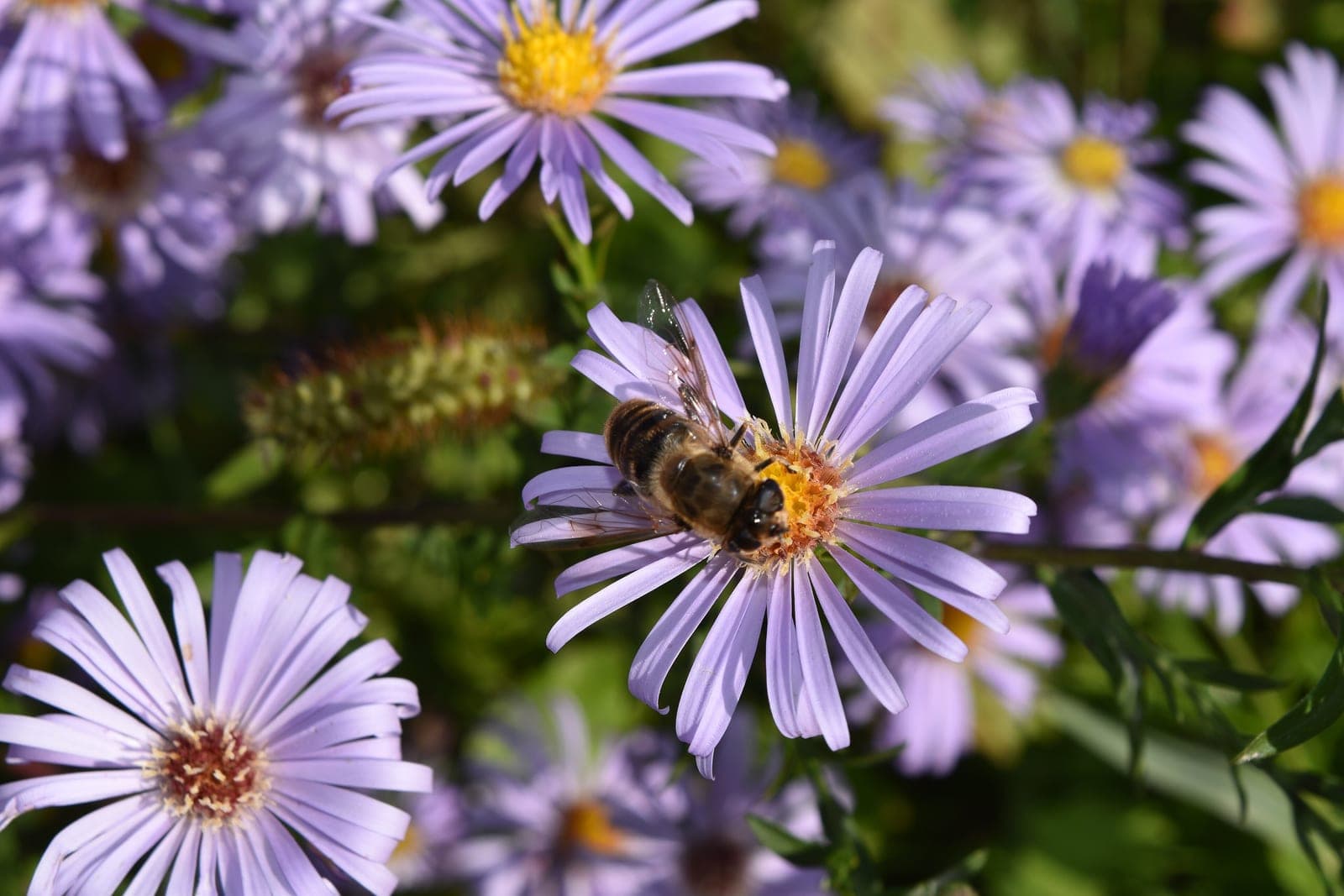
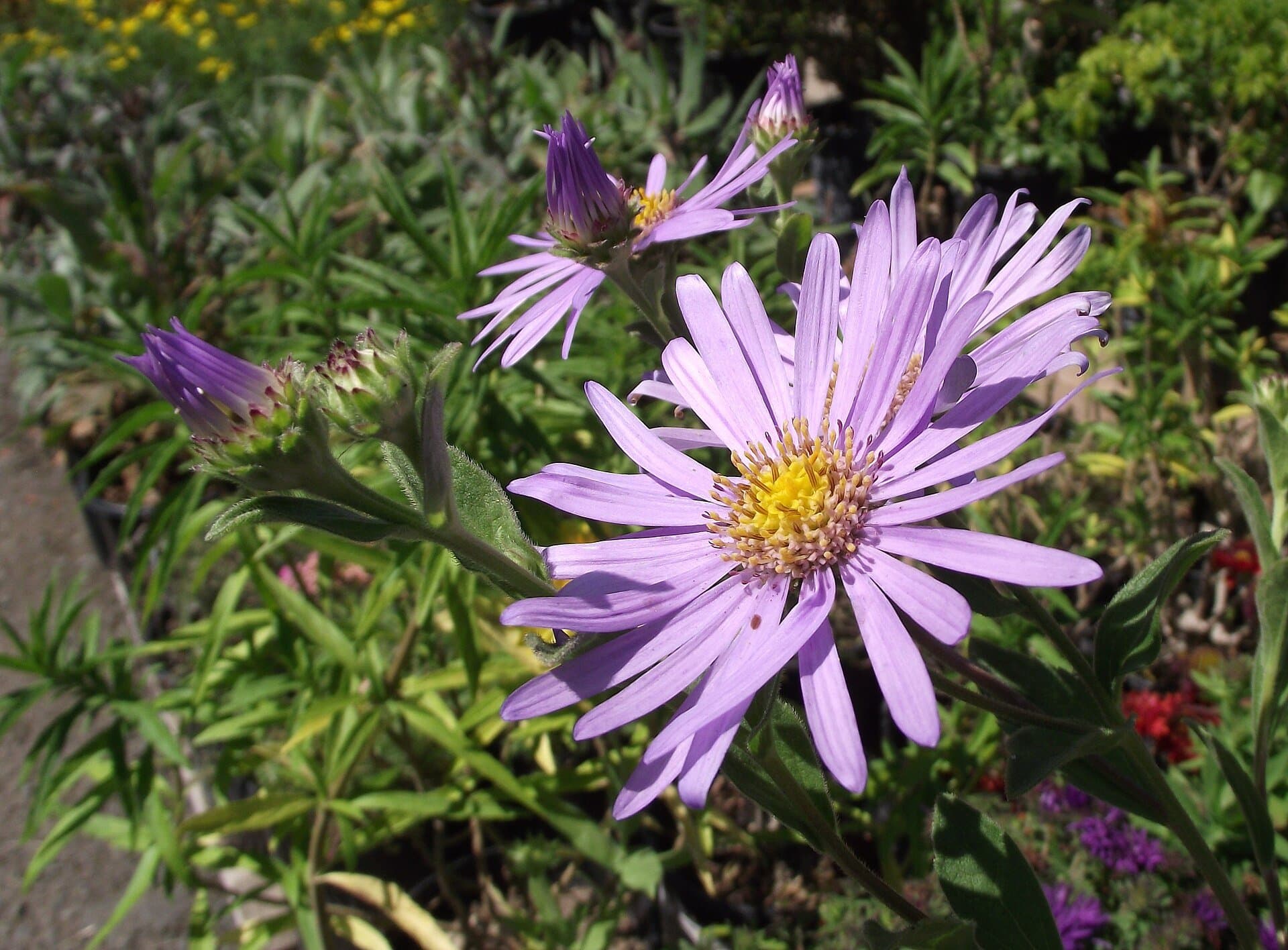
 'Mönch' - the most widely grown Frikart's aster, with lavender-blue, yellow-centered daisies from midsummer into fall. Photo: Tortie tude, CC0.
Frikart's aster is a hybrid between Aster amellus and Aster thomsonii, raised by Swiss nurseryman Carl Ludwig Frikart in the early 20th century. Large, lavender-blue, yellow-centered daisies cover a bushy, well-branched clump from midsummer well into fall - one of the longest bloom windows of any hardy aster - and the display holds up without staking better than most fall-blooming asters. The cultivar 'Mönch' carries the RHS Award of Garden Merit and is the most widely grown selection.
It prefers steady moisture and good air circulation more than most drought-tolerant border perennials, and benefits from a spring pinch or two to encourage bushier, sturdier growth before it starts to flower. It's a strong pollinator plant, drawing bees and butterflies through its long season, and is rarely bothered by deer. Divide congested clumps every two to three years to keep them vigorous.
Powdery mildew
White or grey powdery coating on leaves - usually starting on older growth in humid conditions or when nights cool.
Improve air circulation by thinning plants. Apply neem oil or potassium bicarbonate spray at first sign. Avoid overhead watering.