
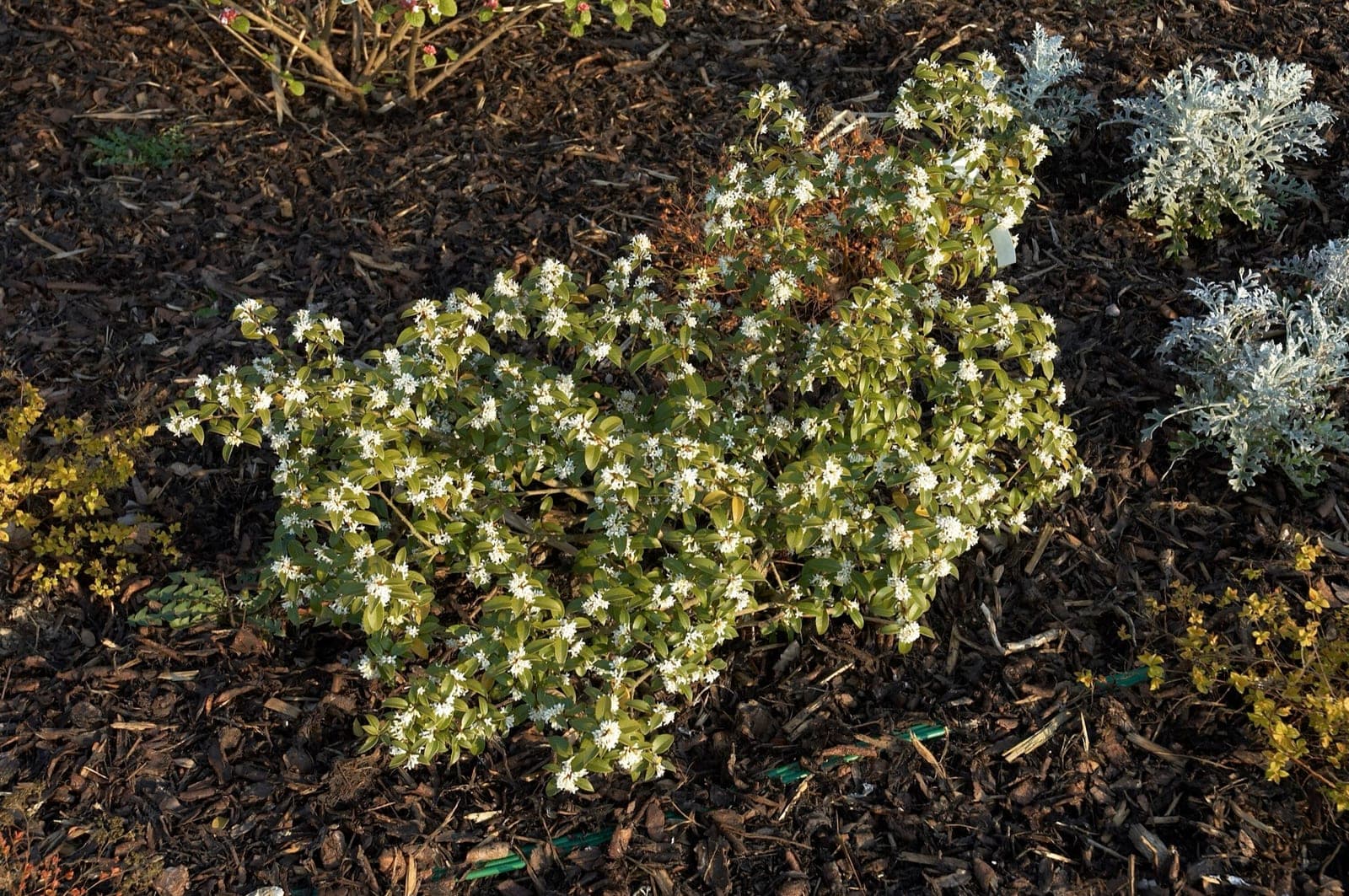
Osmanthus × burkwoodii is a hybrid evergreen shrub, a cross between O. delavayi and O. decorus, both members of the olive family Oleaceae. In mid-spring it produces dense clusters of small tubular white flowers with an intense, jasmine-like fragrance. The glossy, slightly toothed dark green leaves give it strong year-round structure, making it useful as a specimen, formal hedge, or screening plant.
Growth is slow to moderate, eventually reaching 6–10 ft tall and wide. It tolerates partial shade better than most spring-flowering shrubs and performs well under high-canopied deciduous trees. Prune lightly immediately after flowering; cutting later removes buds that develop over summer on the current season's new growth. Mulch around the root zone to retain moisture and moderate soil temperature. In zone 6, planting against a sheltered south- or west-facing wall measurably improves winter survival. Slightly acid to neutral, well-drained, fertile soil is preferred.
Powdery mildew
White or grey powdery coating on leaves - usually starting on older growth in humid conditions or when nights cool.
Improve air circulation by thinning plants. Apply neem oil or potassium bicarbonate spray at first sign. Avoid overhead watering.
Phytophthora Root Rot
Wilting despite moist soil, yellowing leaves, stunted growth, and dark, decayed roots and crown tissue. Vines may collapse during hot weather.
Plant in well-draining soil and avoid waterlogging. Remove and destroy affected vines. Improve drainage with raised beds or amended soil and avoid overwatering.
Sooty Mold (Scale-Associated)
Black, powdery or crusty coating on upper leaf surfaces and stems. Affected leaves may yellow and drop in severe cases. The mold grows on honeydew secreted by scale insects, mealybugs, or aphids feeding on the plant.
Control the underlying pest infestation first using horticultural oil or neem oil applied thoroughly to stems and leaf undersides. Once pest populations are reduced, sooty mold stops spreading and weathers away over time. Rinse foliage with a strong stream of water to dislodge existing mold deposits.
Fungal leaf spot
Brown or purplish spots on the leaves, often ringed with a yellow halo, that spread and merge in warm, humid, or wet weather; heavily spotted leaves yellow and drop early.
Pick off spotted leaves and clear fallen debris to remove overwintering spores. Improve air circulation by thinning, and water at the base so foliage dries quickly. If it persists, apply a copper- or sulfur-based fungicide at the first sign.