
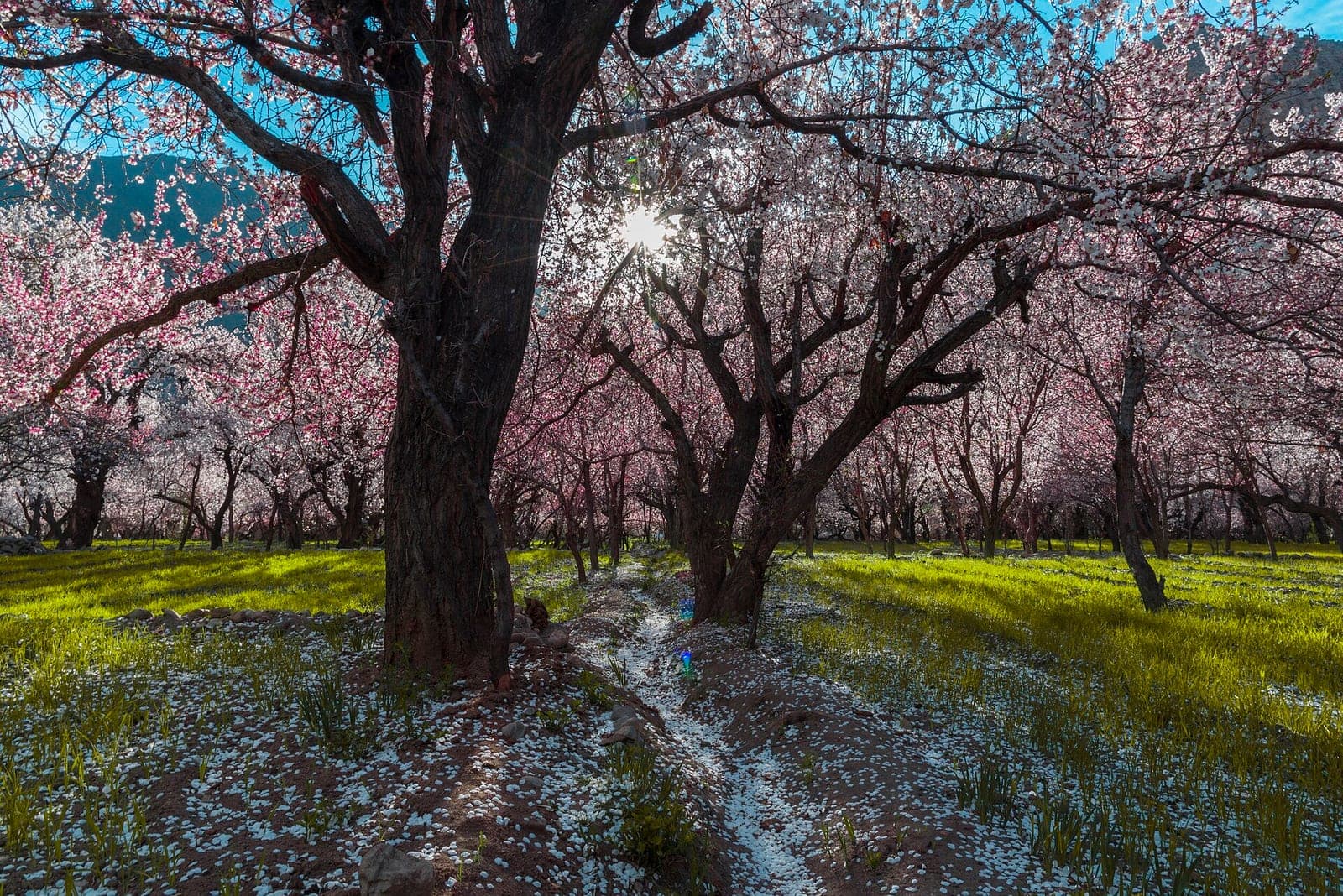
Apricot (Prunus armeniaca) is a deciduous stone-fruit tree native to Central Asia, where genetic evidence confirms it was first domesticated. It produces sweet, orange-fleshed drupes that ripen in early to mid-summer, making it one of the first stone fruits of the season. Well-chosen cultivars are productive and long-lived in temperate orchard or home-garden settings.
The primary challenge is the tree's unusually early flowering, which occurs well before the last frost date across most of its range and is killed by temperatures below 28°F. Elevated sites and south-facing slopes with good cold-air drainage significantly reduce crop failure. Trees require well-drained soil; standing moisture at the root zone is quickly fatal. Most cultivars need 400–900 hours of winter chilling below 45°F, and low-chill selections extend viability into warmer zones. Annual dormant pruning to maintain an open vase form improves light penetration, airflow, and disease management. Mulching conserves soil moisture during fruit development without allowing mulch to contact the trunk.
Apricot fruit provides beta-carotene, potassium, and vitamin C; dried fruit is among the richer plant sources of dietary iron. Cold-pressed kernel oil is widely used in cosmetics and topical skin preparations. Traditional medicine in Central and East Asia has used the fruit and kernel to address cough, constipation, and skin conditions.
Brown Rot
Blossoms turn brown and cling to the twig rather than dropping (blossom blight). Developing or ripe fruit shows soft, rapidly expanding brown lesions covered in distinctive ash-gray powdery spore tufts. Infected fruit shrivels into hard mummies that persist on branches through winter.
Remove and destroy mummified fruit from branches and the ground at pruning time. Apply sulfur or a registered fungicide at full bloom and again 2–3 weeks before harvest during wet seasons. Thin fruit to reduce canopy density and direct fruit-to-fruit contact, which speeds spread.
Bacterial Spot
Small water-soaked angular lesions on leaves that turn dark brown and drop out, leaving ragged shot-holes. Sunken, water-soaked dark spots on fruit skin that can crack and invite secondary rots. Twig cankers with gummy amber exudate on young wood.
Apply copper-based bactericide beginning at petal fall and repeat on a 10–14 day schedule through early summer. Avoid overhead irrigation. Prune for open canopy airflow. Remove and destroy infected shoots during dormant pruning. Elberta has moderate susceptibility; consider planting resistant cultivars in high-pressure sites.
Peach Leaf Curl
Emerging leaves pucker, distort, and thicken; affected tissue turns red to purple, then yellowish-white as the fungus (Taphrina deformans) sporulates on the surface. Severely infected leaves drop early, weakening the tree and reducing that season's yield.
Apply a single copper-based or lime-sulfur spray in late winter after leaf drop but strictly before any green tissue is visible. This narrow window is the only effective point of intervention. Spraying after bud break does not prevent infection. Rake and destroy fallen infected leaves in autumn.
Shot Hole Disease
Small reddish-purple spots on leaves that dry out and drop, leaving ragged holes across the leaf surface. Severe infections cause early defoliation. Dark sunken lesions may appear on young stems.
Remove and dispose of infected leaves and stems. Avoid overhead irrigation and wetting foliage. Apply a copper-based fungicide in fall just before seasonal rains begin; repeat in early spring if the previous season was severe. Ensure good air circulation through selective pruning.
Eutypa Dieback
Shoots arising from infected scaffold limbs are stunted and produce small, cupped, chlorotic leaves; heavily infected spurs may fail to break dormancy. Cross-section of affected wood reveals a wedge-shaped zone of dead, discolored tissue. Gum may ooze from the bark surface above the canker margin.
Prune out all affected wood at least 6 inches below the edge of visible discoloration. Sterilize cutting tools between each cut with 70% isopropyl alcohol. Avoid large-diameter pruning cuts during wet weather, as Eutypa lata spores are released and germinate during rain events. Apply a registered wound protectant to all cut surfaces larger than 1 inch in diameter.
Powdery mildew
White or grey powdery coating on leaves - usually starting on older growth in humid conditions or when nights cool.
Improve air circulation by thinning plants. Apply neem oil or potassium bicarbonate spray at first sign. Avoid overhead watering.
Silver Leaf
Leaves on affected branches develop a distinctive silvery sheen as fungal toxins (produced by Chondrostereum purpureum) separate the upper and lower leaf layers; infected branches die back progressively; cross-sections of dying wood show dark brown internal staining.
Remove affected branches at least 6 inches below the lowest visible internal staining; prune only in dry weather to reduce airborne spore entry into wounds; dispose of all infected wood off-site or burn it; no effective fungicide exists once the pathogen is established inside the wood.
Cytospora Canker
White or blue-white pitch masses ooze from bark on lower branches and the trunk. Affected branches die back progressively from the tip inward; bark beneath the resin is discolored brown and may have a resinous, sunken appearance.
Prune infected branches well below the canker margin into healthy wood and destroy all cuttings. Sterilize pruning tools with 70% isopropyl alcohol between each cut. No effective fungicide is available; prevent recurrence by avoiding drought stress, soil compaction, and mechanical bark injury.
Armillaria Root Rot
Thinning, yellowing canopy with progressive dieback; white, fan-shaped mycelial mats visible beneath bark at or just below the soil line; honey-colored mushroom clusters appearing at the trunk base or on surface roots in autumn.
No chemical cure exists. Improve drainage and avoid any injury to roots or trunk. Remove severely infected trees along with as much root material as possible. Do not replant susceptible species in the same spot.