
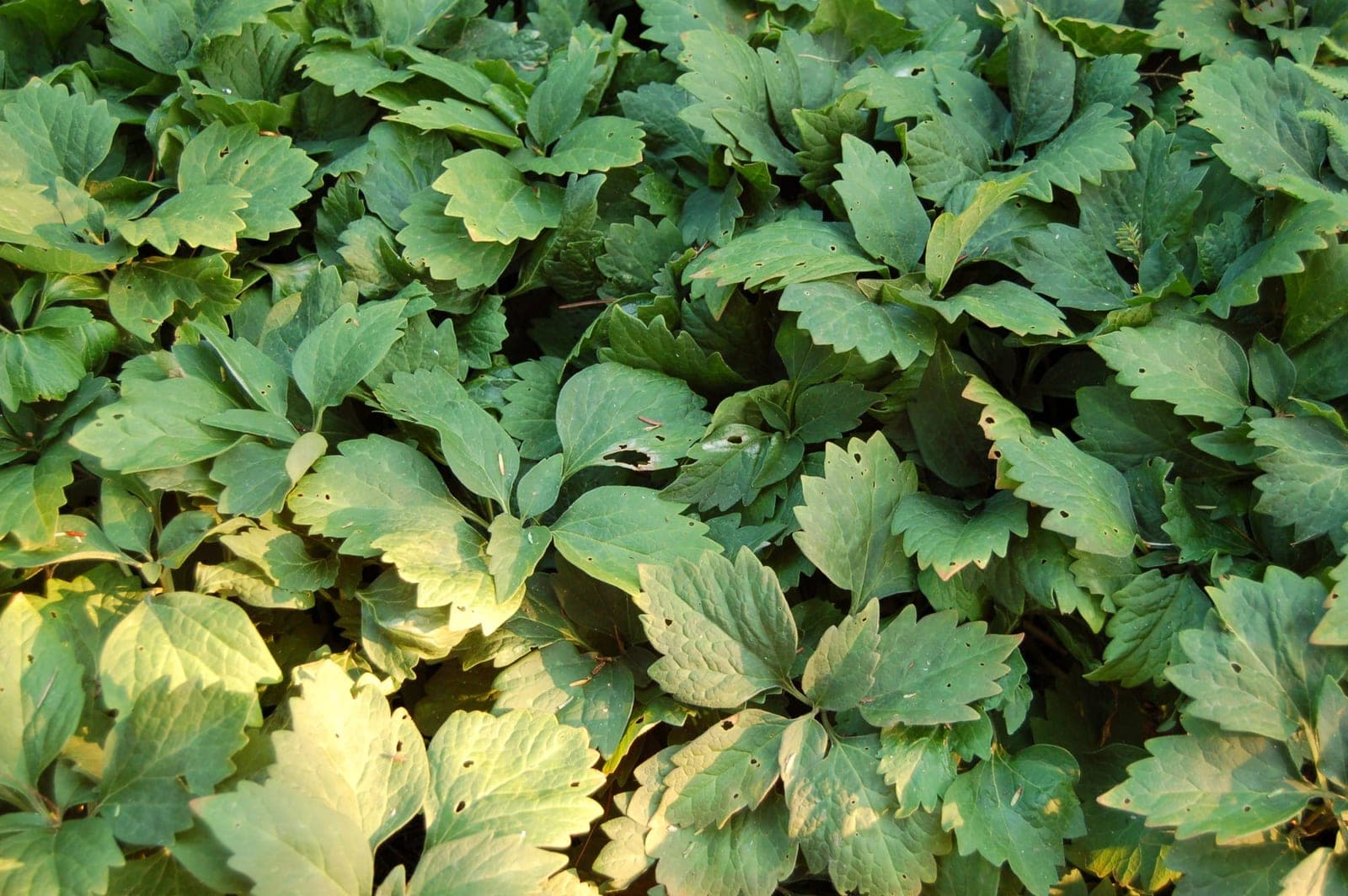
Pachysandra procumbens is a low-growing native ground cover from woodland understories of the southeastern United States, ranging from West Virginia and Kentucky south to Florida and west to Louisiana. Its semi-evergreen leaves often develop attractive silver-gray mottling through the colder months, distinguishing it visually from the more widely planted Japanese pachysandra. It spreads by rhizomes at a moderate, manageable pace, forming dense weed-suppressing mats under trees and shrubs.
The plant requires part to full shade and moist, humus-rich, acidic soil with a preferred pH of 5.0–6.5. It thrives beneath deciduous canopies where leaf litter naturally enriches and acidifies the soil. Pale white to pink flowers appear in early spring before new foliage fully expands. Annual top-dressing with shredded leaves mimics native forest floor conditions and helps retain moisture through summer. Avoid overhead irrigation once established, as prolonged wet foliage increases disease pressure.
As a native species, Allegheny spurge is considerably more resistant to volutella blight than its Japanese relative and supports native woodland invertebrates where it is sited appropriately.
Ecoregions:Eastern Temperate Forests
Volutella Blight
Stems die back and turn tan or straw-colored. Salmon-pink spore masses form on dead stems during humid conditions. Affected leaves yellow, then turn brown and drop, often beginning with inner or lower foliage.
Prune all dead and dying stems back to healthy wood. Disinfect cutting tools between plants with 70% isopropyl alcohol. Thin dense growth to increase air circulation. Apply a copper-based fungicide after pruning. Remove all plant debris from the base and avoid overhead watering.
Fungal leaf spot
Brown or purplish spots on the leaves, often ringed with a yellow halo, that spread and merge in warm, humid, or wet weather; heavily spotted leaves yellow and drop early.
Pick off spotted leaves and clear fallen debris to remove overwintering spores. Improve air circulation by thinning, and water at the base so foliage dries quickly. If it persists, apply a copper- or sulfur-based fungicide at the first sign.
Root rot
Plants wilt, yellow, and stunt even in moist soil; lower stems and roots turn brown, soft, and mushy and the plant may collapse. Most common in heavy, wet, or poorly drained ground.
Improve drainage and stop overwatering, and never plant too deep. Lift and destroy badly affected plants along with the soil around the roots. Grow in raised or free-draining beds to prevent it returning.