
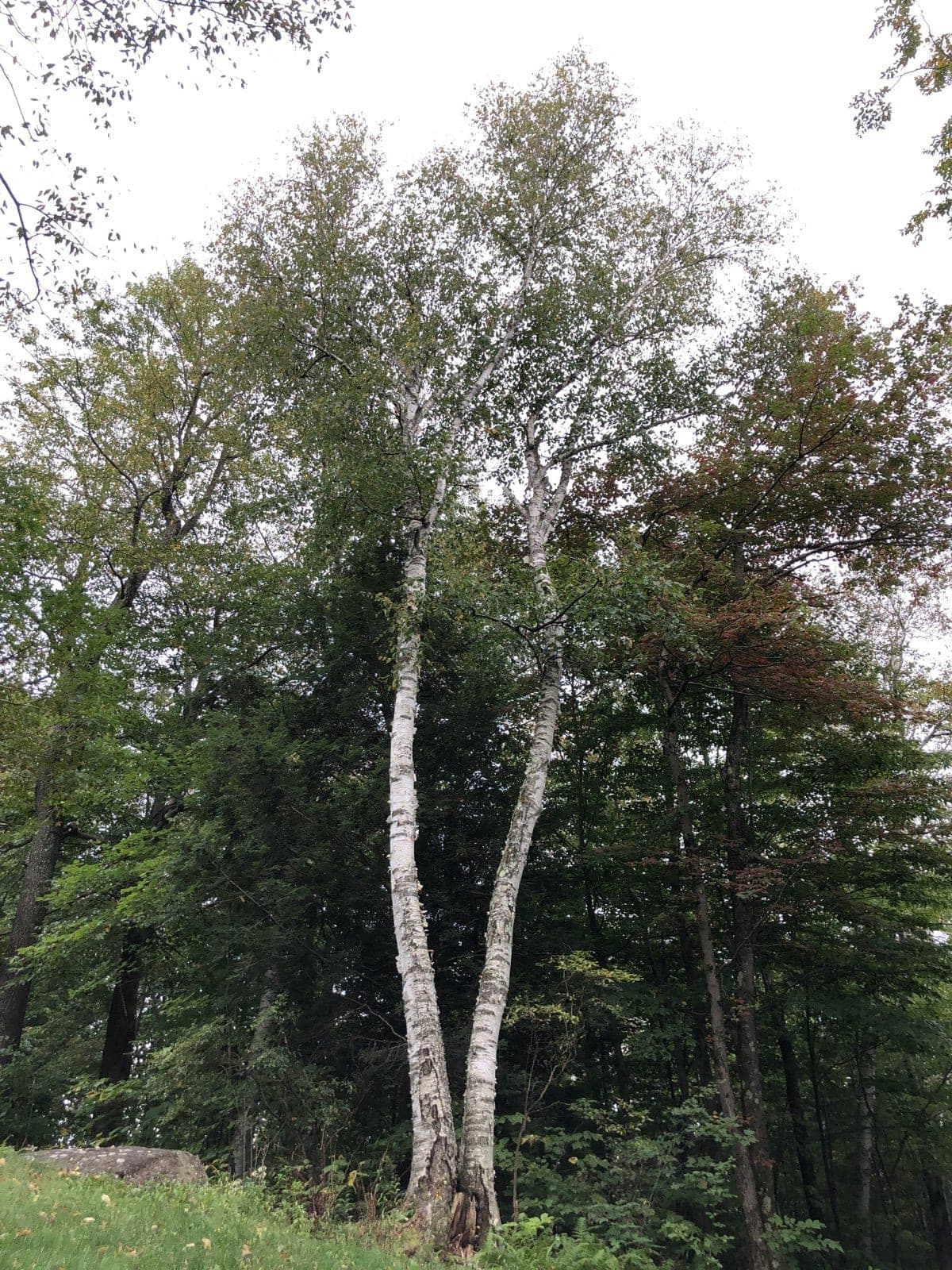
Betula neoalaskana is a deciduous tree native to interior Alaska and northern Canada, ranging from the Brooks Range south through the Yukon, British Columbia, and across the prairie provinces to northwestern Ontario. Its white, peeling bark and bright yellow fall foliage provide year-round ornamental interest, and its tolerance of zone 2a winters makes it one of the most cold-hardy landscape trees available to northern gardeners.
It colonizes disturbed ground, forest edges, and upland slopes throughout the boreal zone, often growing alongside white spruce and trembling aspen. In the landscape, plant in full sun with consistently moist, slightly acidic soil. A deep organic mulch layer keeps shallow roots cool and moist through dry periods. Trees establish quickly and grow at a moderate to fast rate. Thin bark makes stems vulnerable to sunscald on south-facing exposures with reflected heat - site accordingly. Trees are relatively short-lived compared to hardwoods, typically 50–80 years.
Birch sap can be tapped in early spring as a lightly sweet beverage or reduced into a thin syrup, a practice with a long tradition among Alaska Native peoples. Seeds and catkins are a key winter food source for redpolls, siskins, and pine grosbeaks; moose browse twigs and bark heavily through the cold months.
Ecoregions:TundraTaigaNorthern ForestsNorthwestern Forested MountainsMarine West Coast ForestGreat Plains
Fungal leaf spot
Brown or purplish spots on the leaves, often ringed with a yellow halo, that spread and merge in warm, humid, or wet weather; heavily spotted leaves yellow and drop early.
Pick off spotted leaves and clear fallen debris to remove overwintering spores. Improve air circulation by thinning, and water at the base so foliage dries quickly. If it persists, apply a copper- or sulfur-based fungicide at the first sign.
Rust
Orange to brown raised pustules on the undersides of leaves, with yellow spotting on the upper surface. Heavy infections cause leaves to yellow and drop.
Remove and destroy infected leaves. Avoid overhead watering and improve air circulation. Apply a sulfur or copper-based fungicide if it spreads. Clear plant debris in fall.
Botryosphaeria Canker
Dark, sunken cankers on stems and major branches, most often occurring after drought stress or mechanical wounding. Bark peeled back from affected areas reveals brown, discolored wood beneath. Branch tips wilt and die back progressively inward.
Prune infected branches at least 6 inches below the visible canker margin using sterilized tools, and dispose of all cuttings away from the garden. Reduce plant stress by maintaining consistent irrigation during dry periods and avoiding bark wounds during maintenance. No curative fungicide is available; keeping plants vigorous is the primary preventive strategy.
Armillaria Root Rot
Thinning, yellowing canopy with progressive dieback; white, fan-shaped mycelial mats visible beneath bark at or just below the soil line; honey-colored mushroom clusters appearing at the trunk base or on surface roots in autumn.
No chemical cure exists. Improve drainage and avoid any injury to roots or trunk. Remove severely infected trees along with as much root material as possible. Do not replant susceptible species in the same spot.