The king's blue
The fifth of the alpines is the last flower standing in the high meadows of the Sierra Nevada, and it carries the name of a Balkan king who lost his throne to Rome.
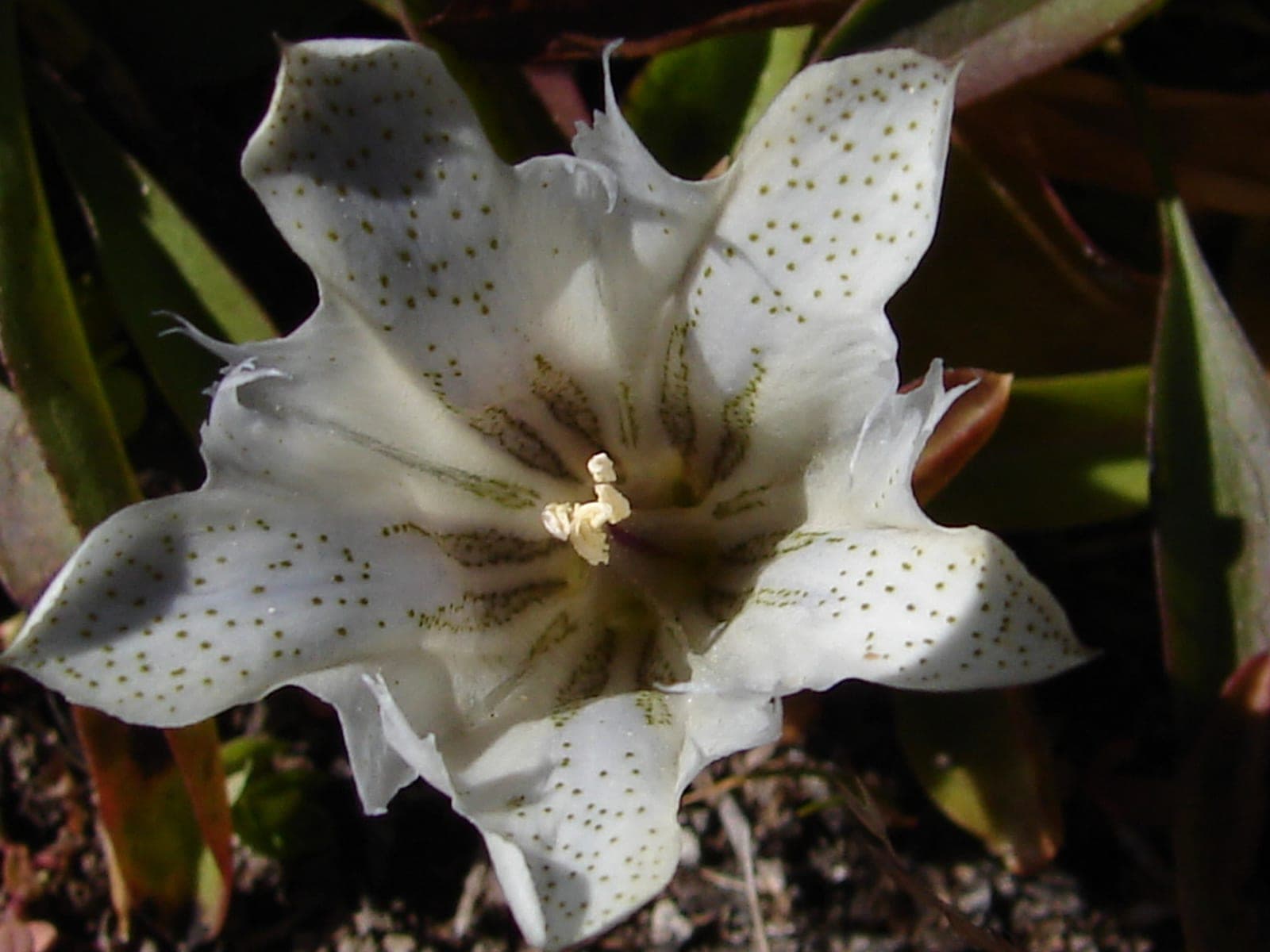
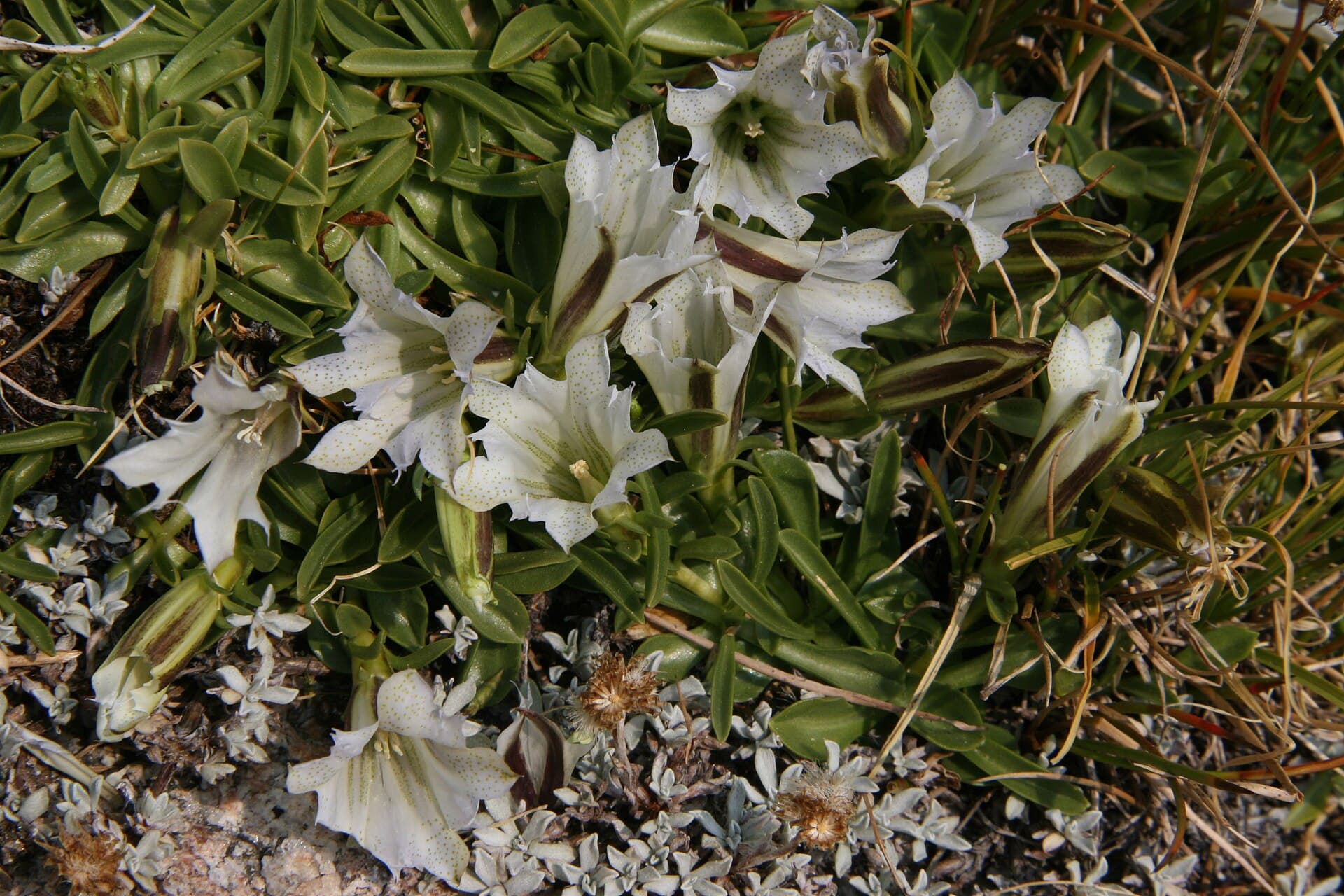
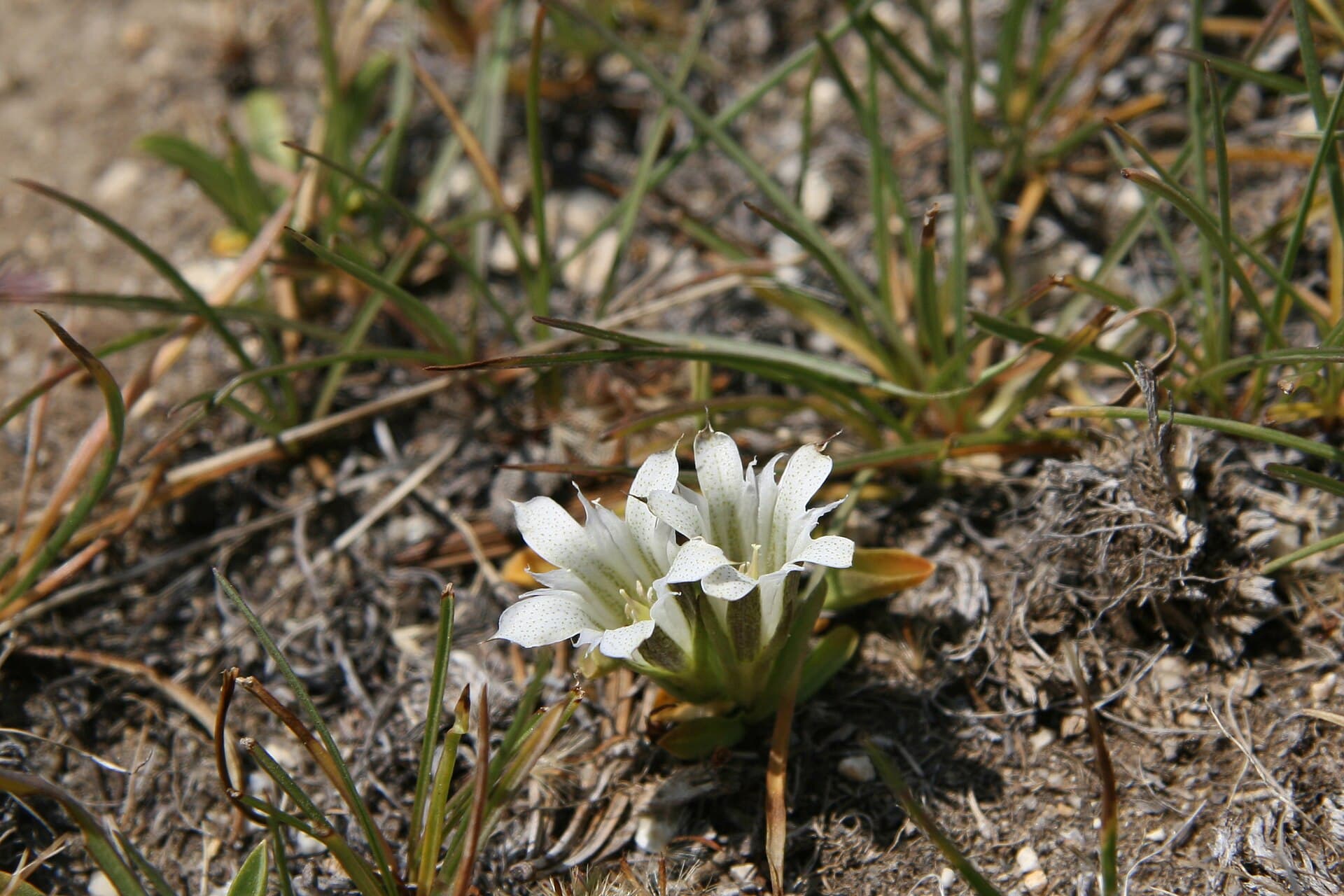
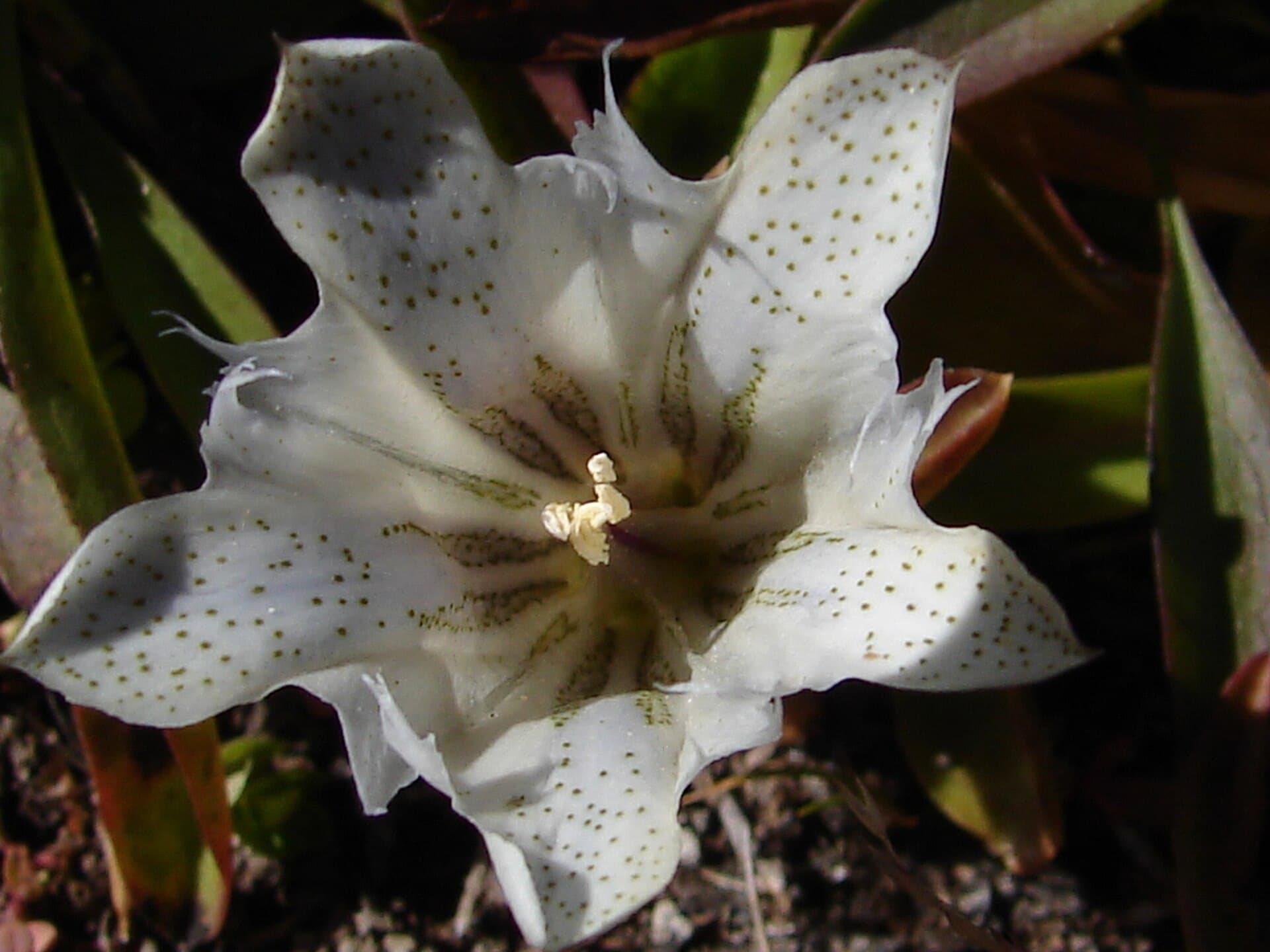
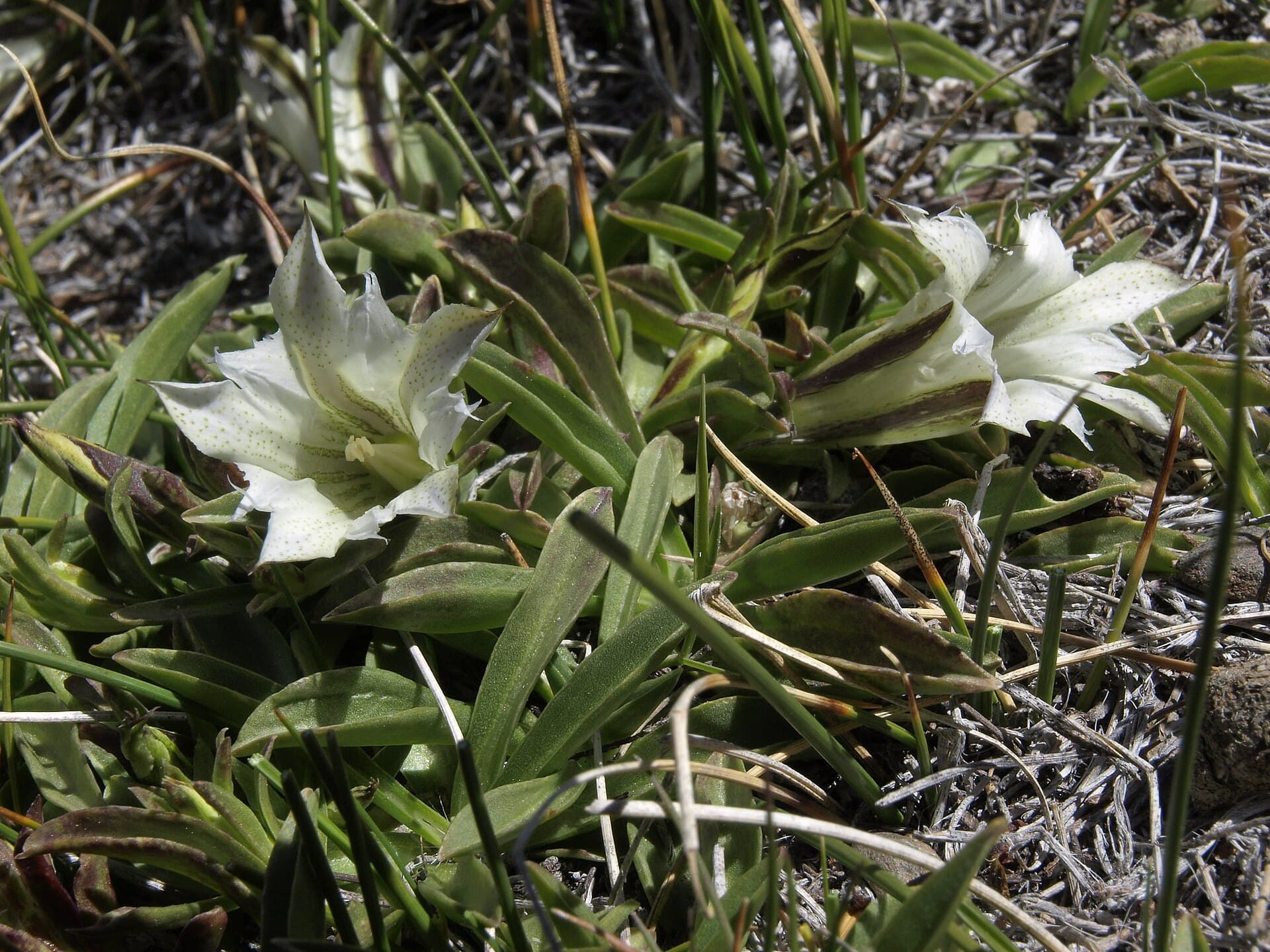
The fifth of the alpines breaks the series' own rules, which is reason enough to include it. Everything so far - the edelweiss, the sky pilot, the saxifrage, the moss campion - has been a plant of scree and crevice, holding out where drainage is total and the soil is barely soil. Gentiana newberryi, the alpine gentian, lives in the other high country: the wet alpine meadows of the Sierra Nevada and the southern Cascades, the short turf that squelches with snowmelt in July. And where the others rush to flower at the melt, this one waits. It blooms at the end of the mountain summer, into September and the first frosts, when the meadow around it has browned off - outsized trumpets on a plant barely two inches tall, white to palest blue with deep blue bands brushed down the outside, the throat speckled green. By the time it opens, it is very often the last flower on the mountain.
Gentians have a trick that suits a flower blooming that late on that edge: the trumpets close. Come cloud, cold, or evening, the petals fold shut over the pollen and the nectar, and open again when the sun returns and the bumblebees are flying. A gentian meadow changes hour by hour with the weather, the blue switching on and off across the turf, the plant spending its goods only when there is someone abroad to collect. It is the same economy every alpine in this series runs on - never waste anything - expressed, for once, in motion.
The names are a double portrait. The species remembers John Strong Newberry, a naturalist-of-all-work on the railroad surveys of the 1850s American West, physician and geologist on expeditions that mapped the Columbia and the canyons of the Colorado. The genus remembers someone much older: Gentius, the last king of Illyria, on the Adriatic coast of the Balkans, who the Roman naturalist Pliny credits with discovering the medicinal worth of gentian root. Rome took his kingdom in 168 BC and he died a captive in Italy, but the plant kept his name, and the root kept its reputation - gentian is still the spine of the great bitter drinks and apéritifs, which means more people have tasted this genus than have ever knowingly seen it flower.
For the gardener, the meadow habit is good news. Unlike its scree-bound companions, the alpine gentian does not demand rubble; it wants what a high meadow offers - moisture through the growing season, a gritty acidic soil that still never truly waterlogs, cool roots, and sun. It is a plant for the edge of a rock garden rather than the top of it, somewhere the hose reaches. And if the true species proves shy, the gentian clan is wide and more forgiving lower down: the explorer's gentian of the same western mountains, or the bottle gentian of damp eastern meadows, whose flowers never open at all and make the bumblebee force the door.