
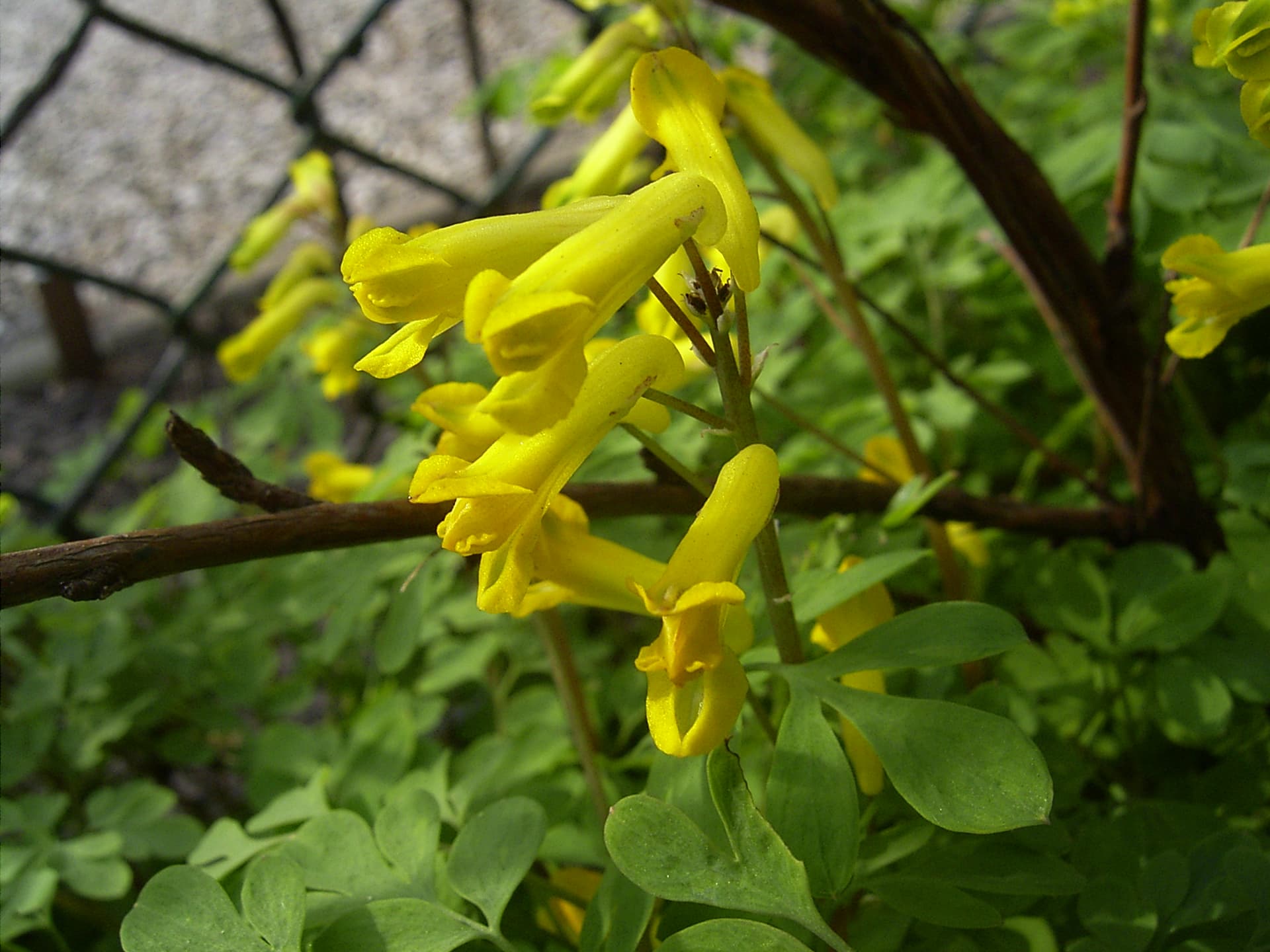
Pseudofumaria lutea is a short-lived perennial in the poppy family, native to rocky alpine foothills in Italy and Switzerland and widely naturalized elsewhere. It produces lacy blue-green ferny foliage and bright yellow tubular flowers continuously from late spring through fall - one of the longest seasons of any shade-tolerant perennial. Individual plants live two to four years, but the colony sustains itself through prolific self-seeding.
This plant excels in crevices, dry-stone walls, rocky slopes, and shaded borders where roots wedge into gaps and thin, well-drained soils. It naturalizes readily and fills difficult spots with little intervention, but seedling spread needs editing in small gardens. Cold stratification improves germination rate; plants establish quickly once roots find a foothold. At the warm edge of its range it tends to go partly dormant in hot, humid summers and performs best where summer nights stay cool. A neutral to slightly alkaline pH suits it well, and excessive soil fertility encourages lush growth that is more prone to collapse.
Damping Off
Seedlings collapse at the soil line with thin, water-soaked stems; seeds may fail to emerge or rot before sprouting.
Sow in well-draining mix, avoid overwatering, and ensure good airflow. Remove affected seedlings and let the surface dry between waterings.
Crown Rot
Lower leaves yellow and wilt; the base of the rosette turns brown and soft, sometimes with white fungal threads at the soil line. Plants collapse in wet conditions.
Remove and destroy affected plants. Improve drainage and avoid overhead watering. Do not mulch directly against the crown. Space plants for airflow and avoid replanting in the same wet spot.
Root rot
Plants wilt, yellow, and stunt even in moist soil; lower stems and roots turn brown, soft, and mushy and the plant may collapse. Most common in heavy, wet, or poorly drained ground.
Improve drainage and stop overwatering, and never plant too deep. Lift and destroy badly affected plants along with the soil around the roots. Grow in raised or free-draining beds to prevent it returning.
Downy mildew
Yellowing on top of leaves with grey-purple fuzz underneath. Spreads rapidly in humid conditions.
Remove affected leaves. Improve air circulation. Avoid overhead watering. Copper spray as preventive.
Fungal leaf spot
Brown or purplish spots on the leaves, often ringed with a yellow halo, that spread and merge in warm, humid, or wet weather; heavily spotted leaves yellow and drop early.
Pick off spotted leaves and clear fallen debris to remove overwintering spores. Improve air circulation by thinning, and water at the base so foliage dries quickly. If it persists, apply a copper- or sulfur-based fungicide at the first sign.