
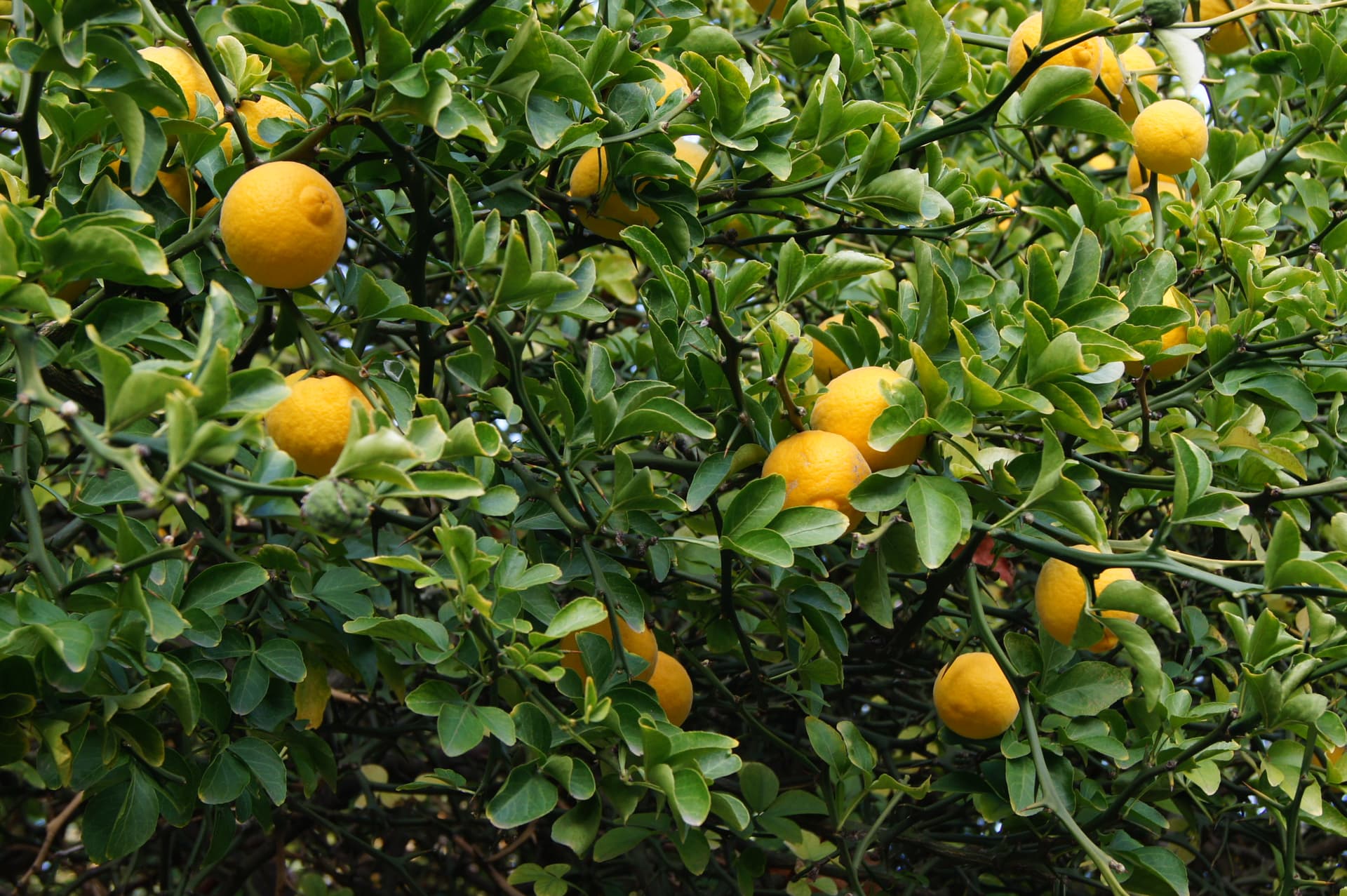
Poncirus trifoliata 'Flying Dragon' is a contorted cultivar of trifoliate orange, a deciduous citrus relative and one of the coldest-hardy members of Rutaceae. Its twisted, corkscrew stems and dramatically curved thorns distinguish it from the straight-spined species and make it among the most impenetrable barrier plants available to Zone 5 gardens. Fragrant white flowers open on bare stems in early spring before foliage emerges.
Small yellow-orange fruit ripen in fall. The plant tolerates a range of soils but performs best in slightly acidic, well-drained ground. It spreads by suckering; remove suckers promptly to contain its footprint. In the Southeast it can naturalize beyond intended plantings. The bare contorted stems provide pronounced winter silhouette, and the plant is widely used as a dwarfing rootstock for grafted citrus.
In Traditional Chinese Medicine, the dried immature fruit (zhi shi) and dried mature rind (zhi qiao) are used to move qi, relieve abdominal fullness, and ease constipation. The fruit contains synephrine and flavonoids including hesperidin. The juice can substitute for lemon in cooking, and the rind can be candied or incorporated into marmalade.
Phytophthora Root Rot
Wilting despite moist soil, yellowing leaves, stunted growth, and dark, decayed roots and crown tissue. Vines may collapse during hot weather.
Plant in well-draining soil and avoid waterlogging. Remove and destroy affected vines. Improve drainage with raised beds or amended soil and avoid overwatering.
Fungal leaf spot
Brown or purplish spots on the leaves, often ringed with a yellow halo, that spread and merge in warm, humid, or wet weather; heavily spotted leaves yellow and drop early.
Pick off spotted leaves and clear fallen debris to remove overwintering spores. Improve air circulation by thinning, and water at the base so foliage dries quickly. If it persists, apply a copper- or sulfur-based fungicide at the first sign.
Root-Knot Nematode
Swollen galls on roots, poor vigor, wilting in heat, and reduced fruiting. Containers and sandy soils are more prone.
Use clean potting mix in containers. Avoid replanting in infested soil. Maintain plant vigor with mulch and steady watering. Solarize affected garden soil.