
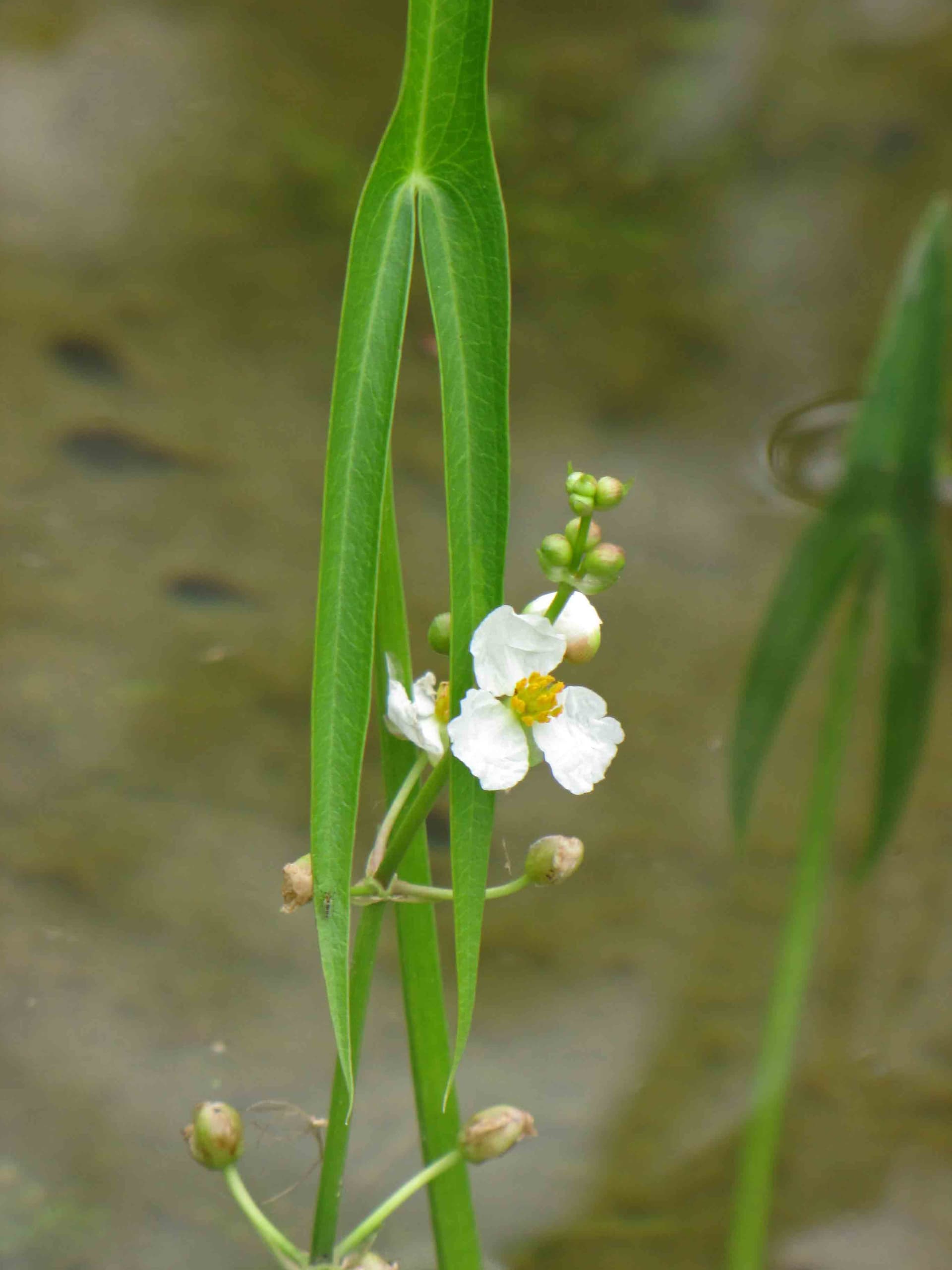
Sagittaria trifolia is an aquatic or semi-aquatic perennial native to rice paddies, marshes, and shallow waterways across Asia and parts of Europe. It produces bold, arrow-shaped leaves on upright stalks rising from shallow water or saturated soil, with small white three-petaled flowers in summer. In Western water gardens it functions as a structural foliage plant; across East Asia it has been cultivated for centuries as a food crop.
The plant spreads by stolons and produces starchy underground corms that are harvested after foliage dies back in fall. It performs best in standing water 2–12 inches deep or in permanently saturated, fertile soil. Full sun drives the strongest growth and highest corm yield. In zones 7 and warmer the corms can overwinter in place; in colder zones they survive submerged in the mud and resprout in spring. Growth can be aggressive in warm climates, and planting in submerged containers is the most reliable way to limit unwanted spread.
The corms, called ji gū in Chinese, are an established vegetable crop in Jiangxi and Guangdong provinces. Starchy and mildly bitter, they are commonly braised with pork, sliced into stir-fries, or added to soups. Traditional Chinese medicine has used the plant as a diuretic and for coughs and fever.
Fungal leaf spot
Brown or purplish spots on the leaves, often ringed with a yellow halo, that spread and merge in warm, humid, or wet weather; heavily spotted leaves yellow and drop early.
Pick off spotted leaves and clear fallen debris to remove overwintering spores. Improve air circulation by thinning, and water at the base so foliage dries quickly. If it persists, apply a copper- or sulfur-based fungicide at the first sign.
Crown Rot
Lower leaves yellow and wilt; the base of the rosette turns brown and soft, sometimes with white fungal threads at the soil line. Plants collapse in wet conditions.
Remove and destroy affected plants. Improve drainage and avoid overhead watering. Do not mulch directly against the crown. Space plants for airflow and avoid replanting in the same wet spot.