
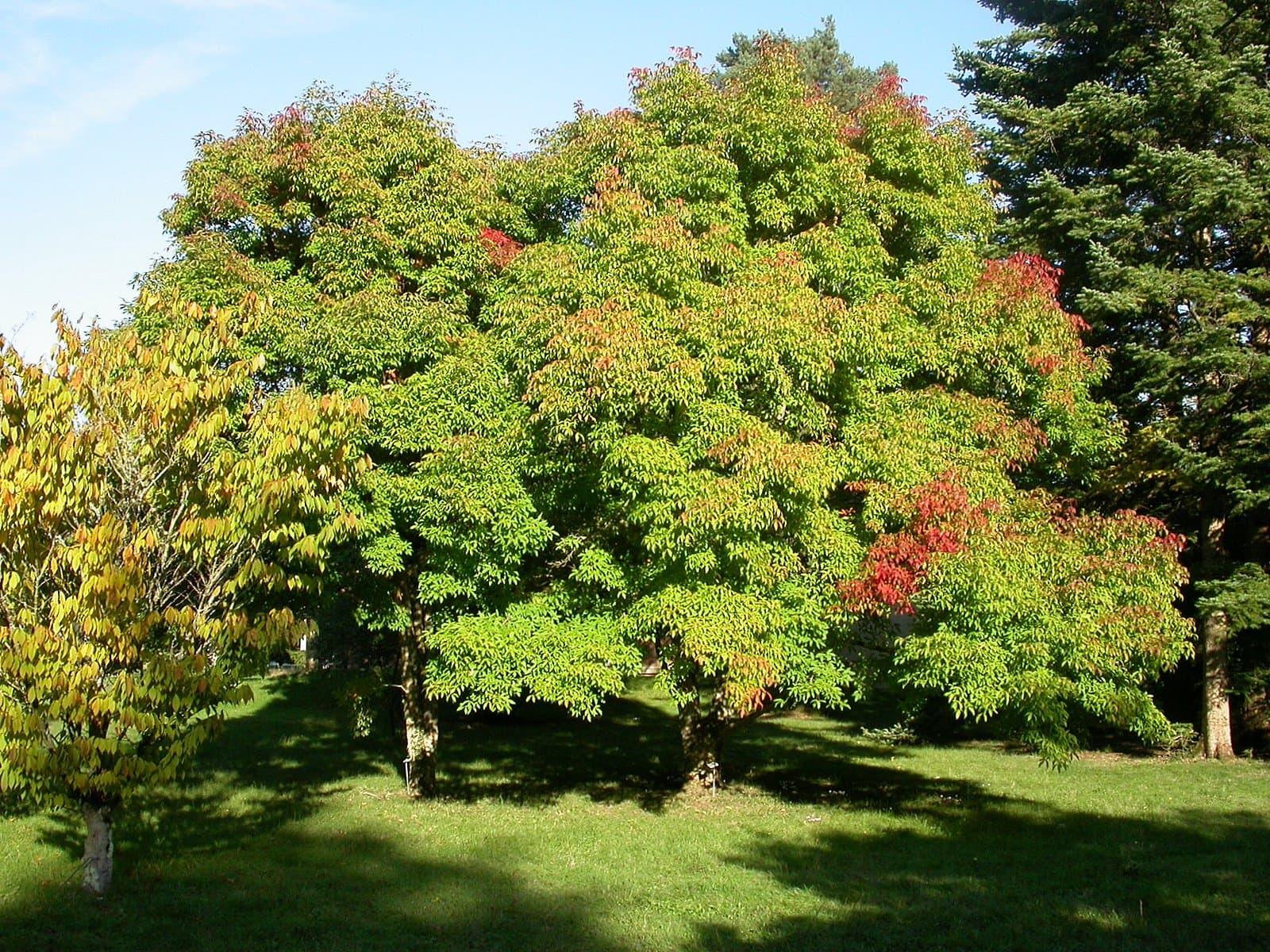
Acer triflorum is a small deciduous maple native to the hills of northeastern China and Korea. Its compound leaves - each made up of three leaflets, an unusual trait within the maple genus - produce vivid orange to scarlet fall color with high reliability. The bark exfoliates in thin, shaggy strips similar to paperbark maple, giving the trunk year-round textural interest that intensifies with age.
This tree grows slowly, typically reaching 20–25 feet over several decades. It tolerates a range of well-drained soils, handles moderate drought once established, and seldom requires corrective pruning. Its compact size suits residential lots where a standard maple would be overwhelming. It leafs out late in spring, reducing exposure to late-frost damage on emerging growth. A slightly acidic to neutral, humus-rich soil produces the best long-term vigor, and a mulched root zone helps retain moisture during dry summers.
Maple Anthracnose
Irregular brown or tan spots that follow and spread between leaf veins, giving leaves a scorched or blighted appearance. Severe infections cause premature leaf drop. In wet springs, small cankers may appear on young shoots.
Rake and remove fallen leaves each autumn to reduce overwintering fungal spores. Avoid overhead irrigation. Apply a copper-based fungicide at bud break during wet spring conditions. Prune selectively to improve canopy airflow.
Verticillium Wilt
Lower leaves yellow and wilt, often on one side of the plant, with brown streaking in the stem and crown tissue when cut open. Plants are stunted and decline over the season.
Remove and destroy affected plants. Avoid planting in soil that has grown infected tomatoes, peppers, or other susceptible crops. Rotate beds and improve drainage; there is no cure once a plant is infected.
Powdery mildew
White or grey powdery coating on leaves - usually starting on older growth in humid conditions or when nights cool.
Improve air circulation by thinning plants. Apply neem oil or potassium bicarbonate spray at first sign. Avoid overhead watering.
Armillaria Root Rot
Thinning, yellowing canopy with progressive dieback; white, fan-shaped mycelial mats visible beneath bark at or just below the soil line; honey-colored mushroom clusters appearing at the trunk base or on surface roots in autumn.
No chemical cure exists. Improve drainage and avoid any injury to roots or trunk. Remove severely infected trees along with as much root material as possible. Do not replant susceptible species in the same spot.