
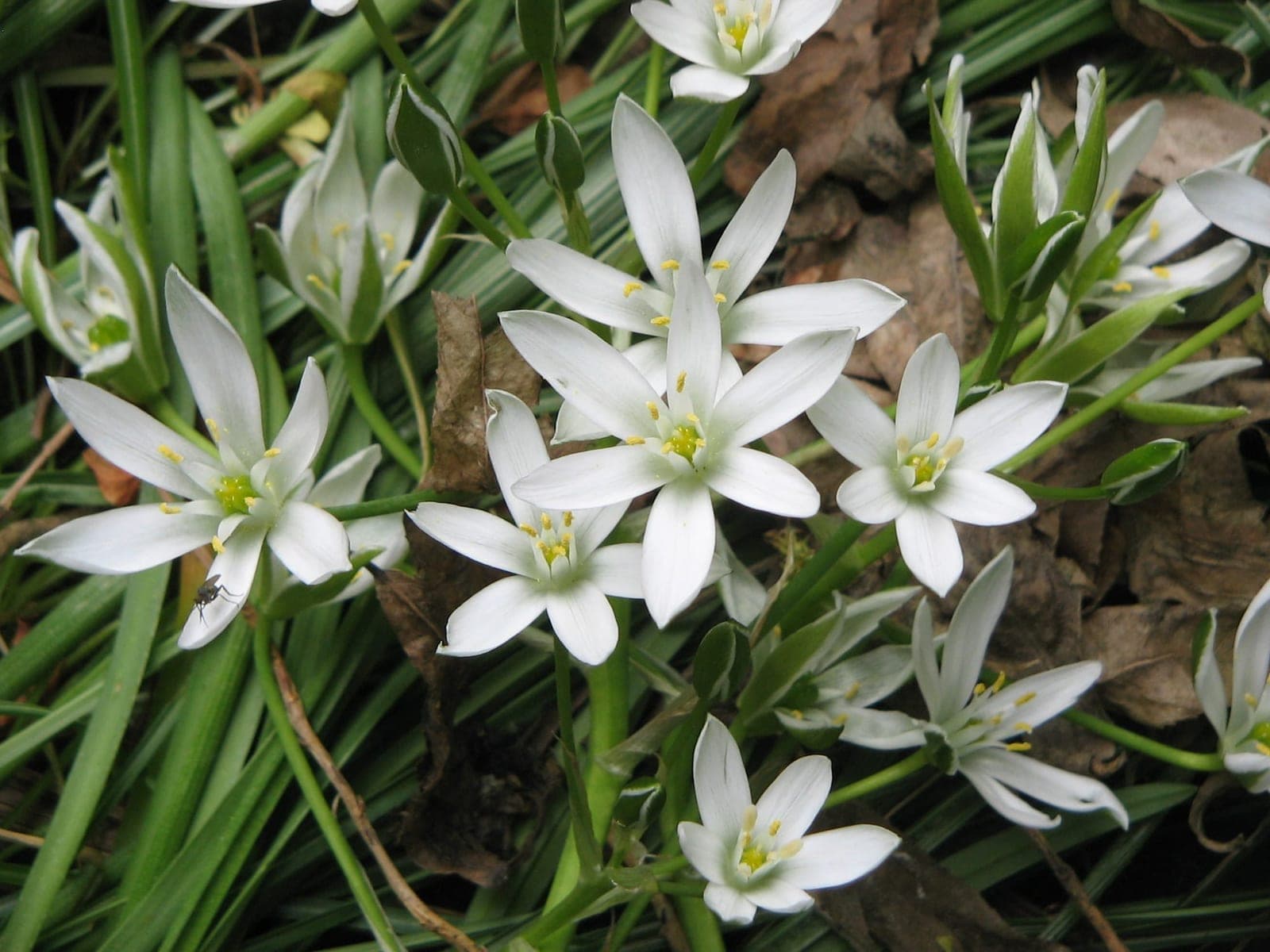
Ornithogalum umbellatum is a bulbous perennial native to southern and central Europe and northwestern Africa. It produces clusters of white, star-shaped flowers with a distinctive green stripe on the petal reverse in mid to late spring. In North America it has escaped cultivation widely and is considered invasive in many states, spreading into lawns, roadsides, and woodland edges where it can displace native spring ephemerals.
The plant multiplies rapidly through offsets; a single bulb can generate dozens of bulblets within a few seasons, making it difficult to eradicate once established. Flowers open late in the morning and only in sun, a habit that gave rise to the common names "nap-at-noon" and "eleven-o'clock lady." Plant it only in a contained bed, if at all. Bulbs are cold-hardy to zone 4 and go dormant by early summer; good drainage is essential, as persistently wet soil causes bulb rot.
All parts of the plant contain cardiac glycosides and are toxic when raw. That toxicity is why deer, rabbits and rodents leave it alone - the flowers have little scent. It was drawn by Leonardo da Vinci.
Botrytis (grey mould)
Grey fuzzy mould on petals and stems, worst in cool wet conditions.
Remove affected parts immediately. Improve air circulation. Avoid overhead watering. Apply copper fungicide if severe.
Crown Rot
Lower leaves yellow and wilt; the base of the rosette turns brown and soft, sometimes with white fungal threads at the soil line. Plants collapse in wet conditions.
Remove and destroy affected plants. Improve drainage and avoid overhead watering. Do not mulch directly against the crown. Space plants for airflow and avoid replanting in the same wet spot.
Root rot
Plants wilt, yellow, and stunt even in moist soil; lower stems and roots turn brown, soft, and mushy and the plant may collapse. Most common in heavy, wet, or poorly drained ground.
Improve drainage and stop overwatering, and never plant too deep. Lift and destroy badly affected plants along with the soil around the roots. Grow in raised or free-draining beds to prevent it returning.