
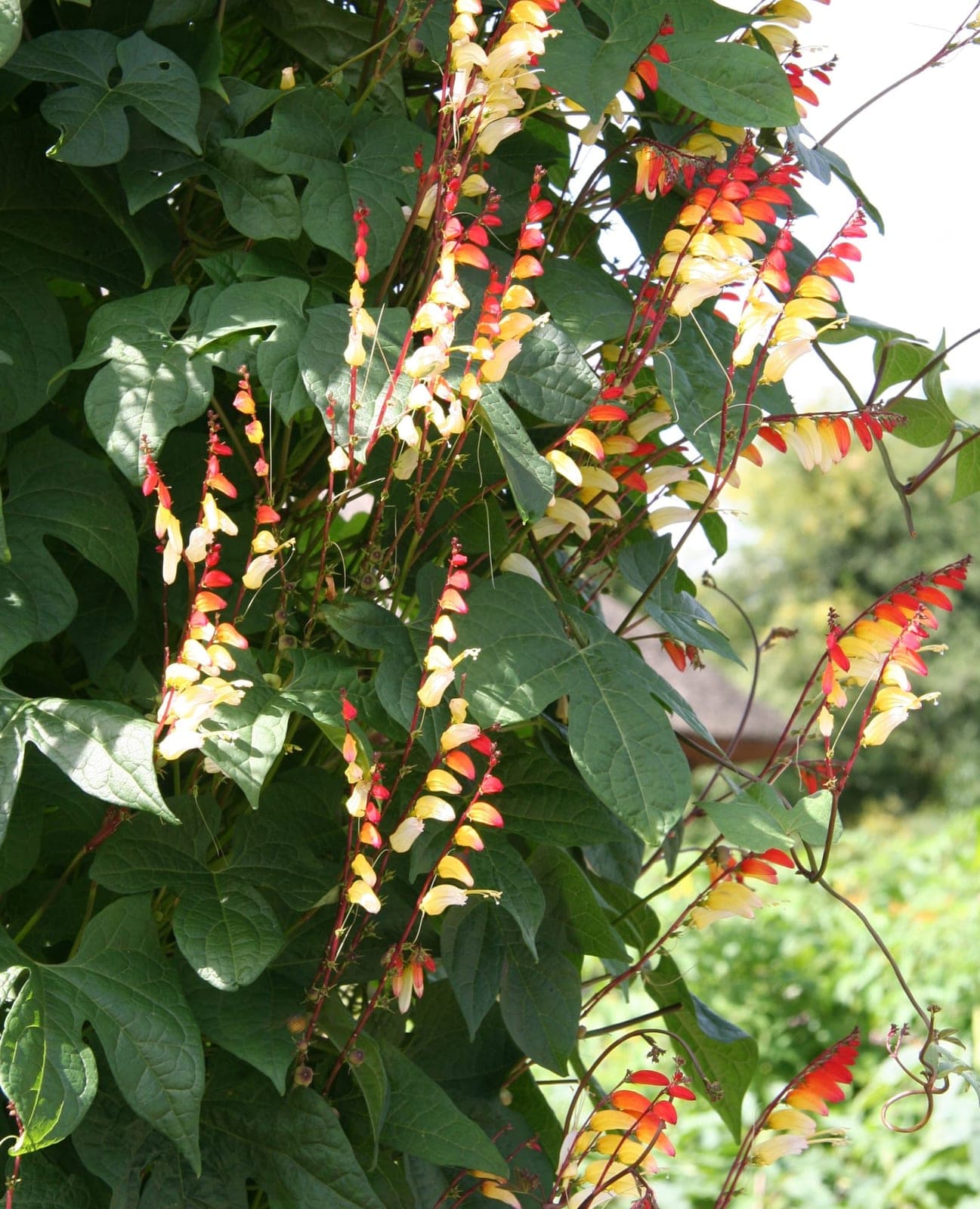
Ipomoea lobata is a fast-growing twining vine native to Mexico and Brazil, grown as a tender annual in most temperate gardens and as a short-lived perennial in frost-free climates. Its arching racemes carry tubular flowers that open scarlet red at the tip and graduate through orange and yellow to creamy white toward the base, producing a four-color gradient on each stem - the pattern behind its common name.
The vine reaches 6–15 feet in a single season and requires a trellis, fence, or arbor from the outset. Seeds have a hard coat; nicking or soaking them overnight in warm water before sowing significantly improves germination. In zones below 10, start seeds indoors 6–8 weeks before last frost and transplant only after soil is warm. The plant tolerates summer heat well and produces continuously from midsummer until frost. In zones 10 and above it can self-seed freely.
Powdery mildew
White or grey powdery coating on leaves - usually starting on older growth in humid conditions or when nights cool.
Improve air circulation by thinning plants. Apply neem oil or potassium bicarbonate spray at first sign. Avoid overhead watering.
Root rot
Plants wilt, yellow, and stunt even in moist soil; lower stems and roots turn brown, soft, and mushy and the plant may collapse. Most common in heavy, wet, or poorly drained ground.
Improve drainage and stop overwatering, and never plant too deep. Lift and destroy badly affected plants along with the soil around the roots. Grow in raised or free-draining beds to prevent it returning.