
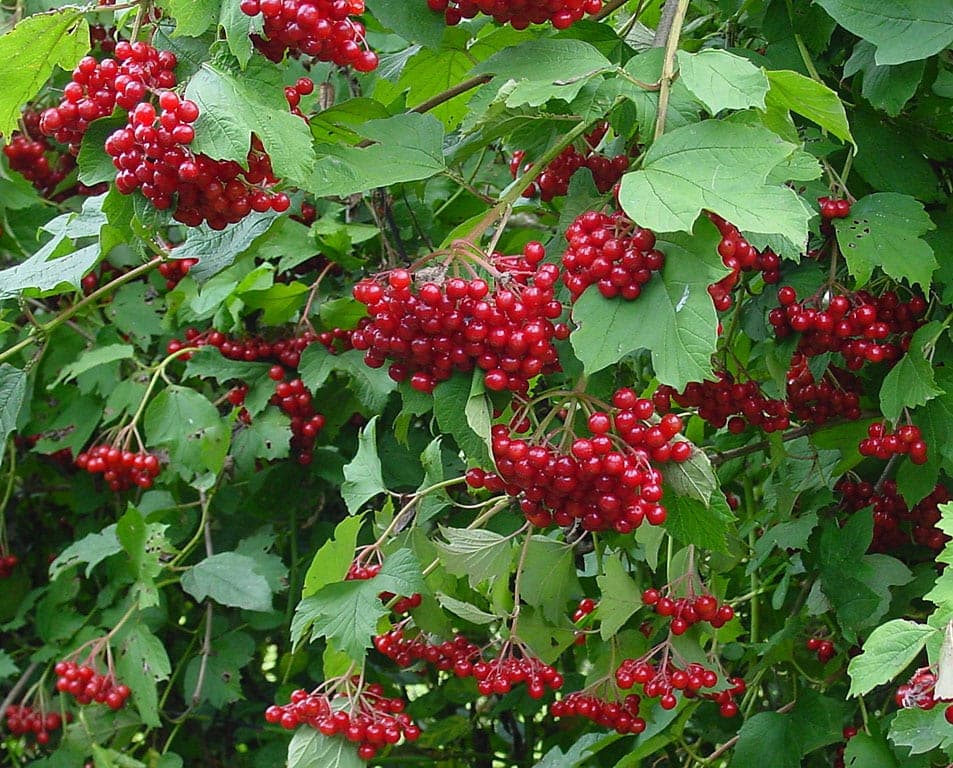
'Winterthur' is the smooth witherod selection most often sold, named for the Winterthur Museum and Garden in Delaware where it came from. It keeps everything good about Viburnum nudum and adds a glossy, deep green leaf that looks cleaner through the season than the species. Flat white flower clusters open in late spring, and the fruit that follows is the reason to plant it: berries open pink, turn blue, and finish blue-black, and because they ripen unevenly a single cluster often carries pink and blue berries at the same time. Leaves turn wine red to reddish purple before they drop.
Like the species, it is a plant of swamp edges, pond margins, and stream banks, and it takes soil that stays wet better than almost any ornamental shrub. Acidic, steadily moist ground suits it best, and a few inches of organic mulch help hold moisture over the root zone. It will set some fruit alone, but the crop is heavier with a second viburnum blooming nearby, so plant it in a group or beside another selection. The berries are eaten by birds, and the shrub is a good fit for rain gardens, bioswales, and the wet corner of a hedgerow. Where the species is wanted for a more open, naturalistic habit, see smooth witherod.
Ecoregions:Eastern Temperate Forests
Fungal leaf spot
Brown or purplish spots on the leaves, often ringed with a yellow halo, that spread and merge in warm, humid, or wet weather; heavily spotted leaves yellow and drop early.
Pick off spotted leaves and clear fallen debris to remove overwintering spores. Improve air circulation by thinning, and water at the base so foliage dries quickly. If it persists, apply a copper- or sulfur-based fungicide at the first sign.
Powdery mildew
White or grey powdery coating on leaves - usually starting on older growth in humid conditions or when nights cool.
Improve air circulation by thinning plants. Apply neem oil or potassium bicarbonate spray at first sign. Avoid overhead watering.
Phytophthora Root Rot
Wilting despite moist soil, yellowing leaves, stunted growth, and dark, decayed roots and crown tissue. Vines may collapse during hot weather.
Plant in well-draining soil and avoid waterlogging. Remove and destroy affected vines. Improve drainage with raised beds or amended soil and avoid overwatering.