
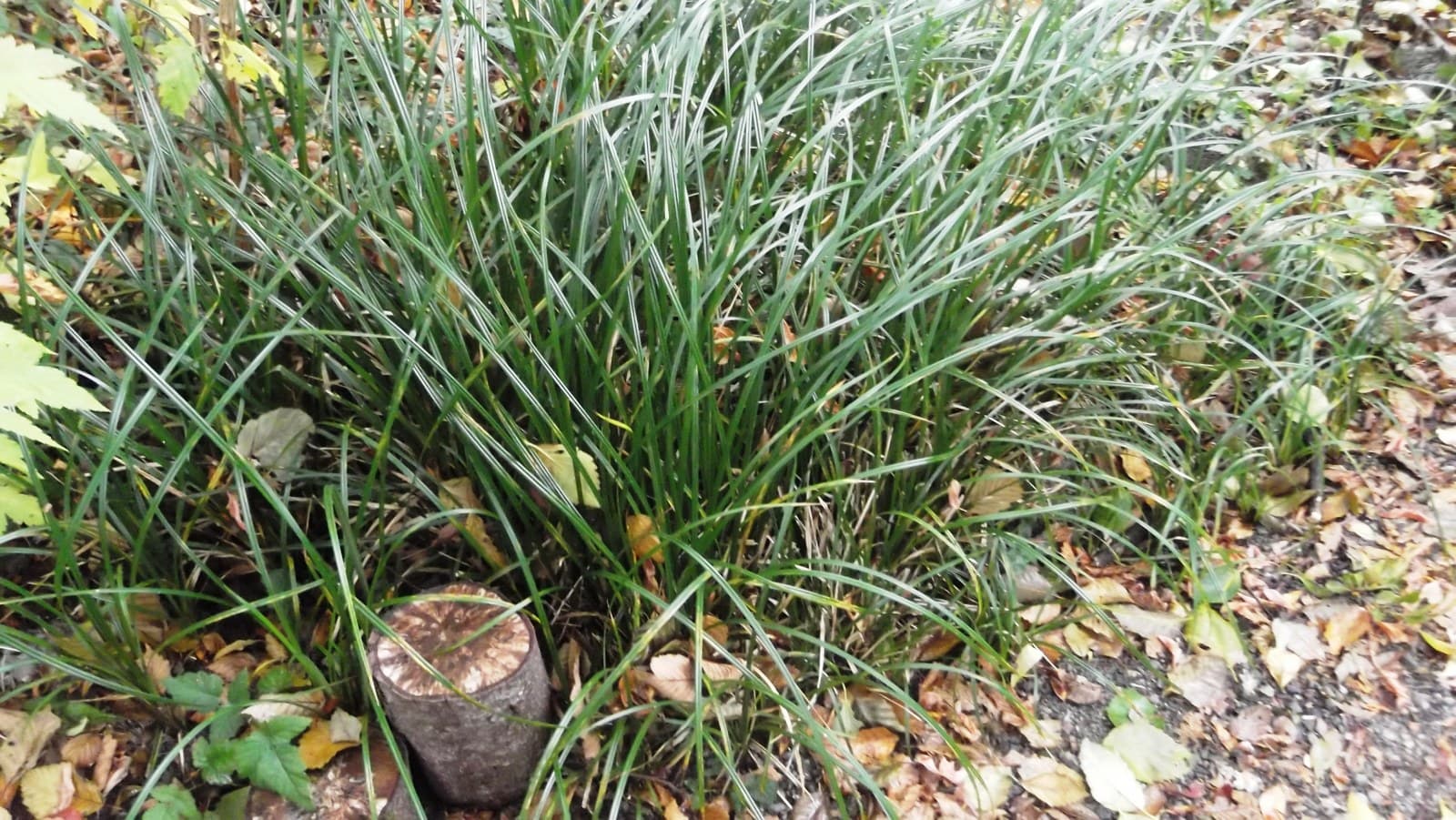
Slough sedge is a large, clump-forming sedge native to wetlands along the Pacific Coast from British Columbia to central California. It produces long, arching, deep green leaves and establishes reliably at pond margins, stream banks, rain gardens, and bioswales where most ornamentals fail. Its dense root mass anchors streambanks and filters runoff effectively, making it a standard choice in Pacific Northwest habitat restoration.
Plants spread slowly by rhizomes, building substantial tussocks over several years. They tolerate periodic flooding and prefer heavy clay or silty soils that stay consistently wet. In mild coastal climates foliage is evergreen; in colder parts of its range, older leaves may brown by late winter but fresh growth appears early in spring. Mature clumps need division only every five or more years, and the plant requires little maintenance once settled into wet ground.
Leaves of Carex obnupta were a primary basketry material for multiple Pacific Northwest Indigenous peoples, including Coast Salish and Karuk groups. Long, tough leaves were harvested, dried, and split for coiled and twined baskets, mats, and hats - a use well-documented in ethnobotanical literature that reflects the structural strength and flexibility of the foliage.
Ecoregions:Northwestern Forested MountainsMarine West Coast ForestMediterranean California
Fungal leaf spot
Brown or purplish spots on the leaves, often ringed with a yellow halo, that spread and merge in warm, humid, or wet weather; heavily spotted leaves yellow and drop early.
Pick off spotted leaves and clear fallen debris to remove overwintering spores. Improve air circulation by thinning, and water at the base so foliage dries quickly. If it persists, apply a copper- or sulfur-based fungicide at the first sign.
Root rot
Plants wilt, yellow, and stunt even in moist soil; lower stems and roots turn brown, soft, and mushy and the plant may collapse. Most common in heavy, wet, or poorly drained ground.
Improve drainage and stop overwatering, and never plant too deep. Lift and destroy badly affected plants along with the soil around the roots. Grow in raised or free-draining beds to prevent it returning.