
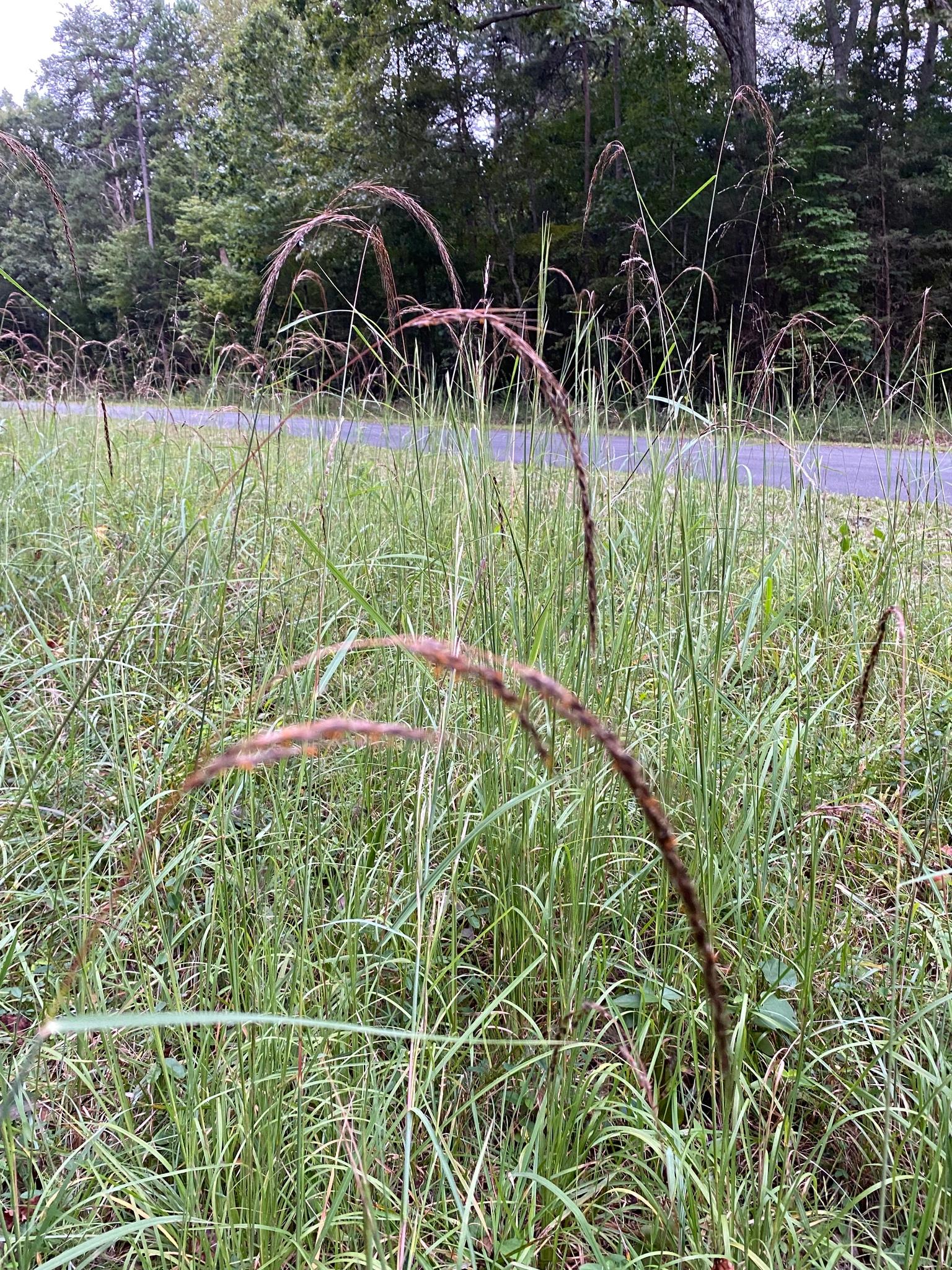
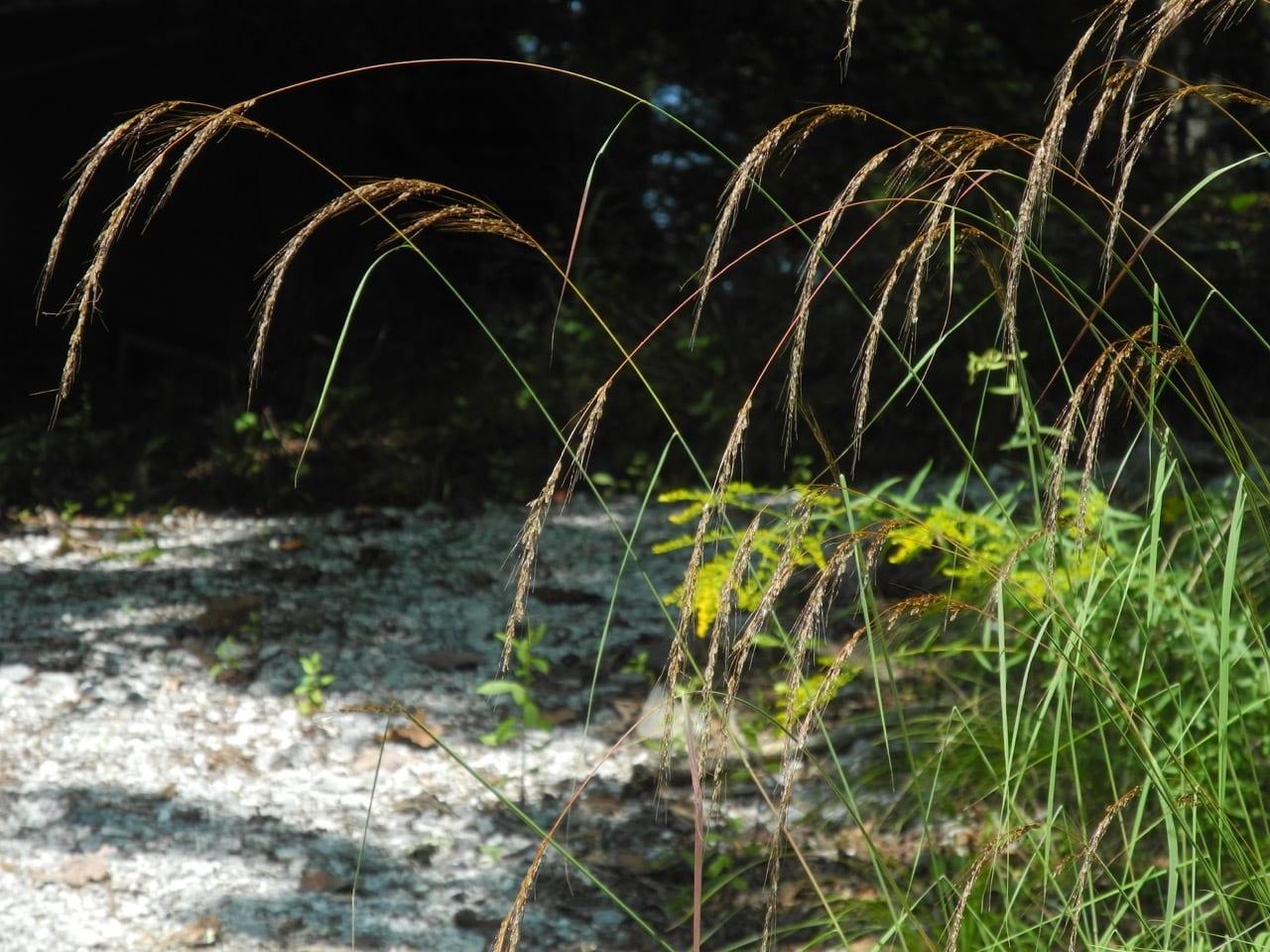
Slender Indiangrass is a perennial warm-season native grass from the eastern and southeastern United States. It is more slender in form and notably more shade-tolerant than its close relative common Indiangrass (Sorghastrum nutans), making it a practical choice for woodland edges, open pine savannas, and forest understory gaps where most prairie grasses decline. Its fine-textured seed heads and upright habit suit naturalistic and restoration plantings.
As a warm-season grass, Slender Indiangrass goes dormant in winter and resumes growth in late spring once soil warms. It spreads slowly by seed and short rhizomes, forming tidy clumps without becoming invasive. Persistent seed heads carry through winter and supply food for sparrows, finches, and other seed-eating birds. Moderately infertile, well-drained soil keeps growth upright; excess fertility encourages floppy stems.
Sorghastrum elliottii is used in pine savanna and woodland edge restoration across the Southeast, where fire historically maintained open structure. Established clumps tolerate periodic controlled burns, which suppress competition and support plant community diversity.
Ecoregions:Eastern Temperate Forests
These dates are for Zone 6b. Enter your ZIP to time every job to your own frost dates.
- sow · Oct 30 - Nov 27Direct sow seed on bare, raked soil and leave it outdoors to cold stratify naturally
- cut · Mar 13 - Apr 3Cut last year's clumps to a few inches before new shoots appear
- plant · Apr 10 - May 1Divide crowded clumps every 4-5 years as new growth starts
- buy · Aug 21 - Sep 4Order seed - about two months before sowing
Problems & troubleshooting
Common problems
Rust
Orange to brown raised pustules on the undersides of leaves, with yellow spotting on the upper surface. Heavy infections cause leaves to yellow and drop.
Remove and destroy infected leaves. Avoid overhead watering and improve air circulation. Apply a sulfur or copper-based fungicide if it spreads. Clear plant debris in fall.
Ergot
Dark purple-black, hard, elongated sclerotia replace individual seeds within the seed head. Affected heads carry a mix of normal seeds and conspicuous ergots roughly two to three times the size of healthy kernels.
Remove and bag infected seed heads before sclerotia fall to the soil. Do not collect or save seed from infected plants. Avoid siting Canada wild rye in persistently wet or poorly ventilated areas where infection pressure increases. No fungicide treatment is practical in landscape settings.