
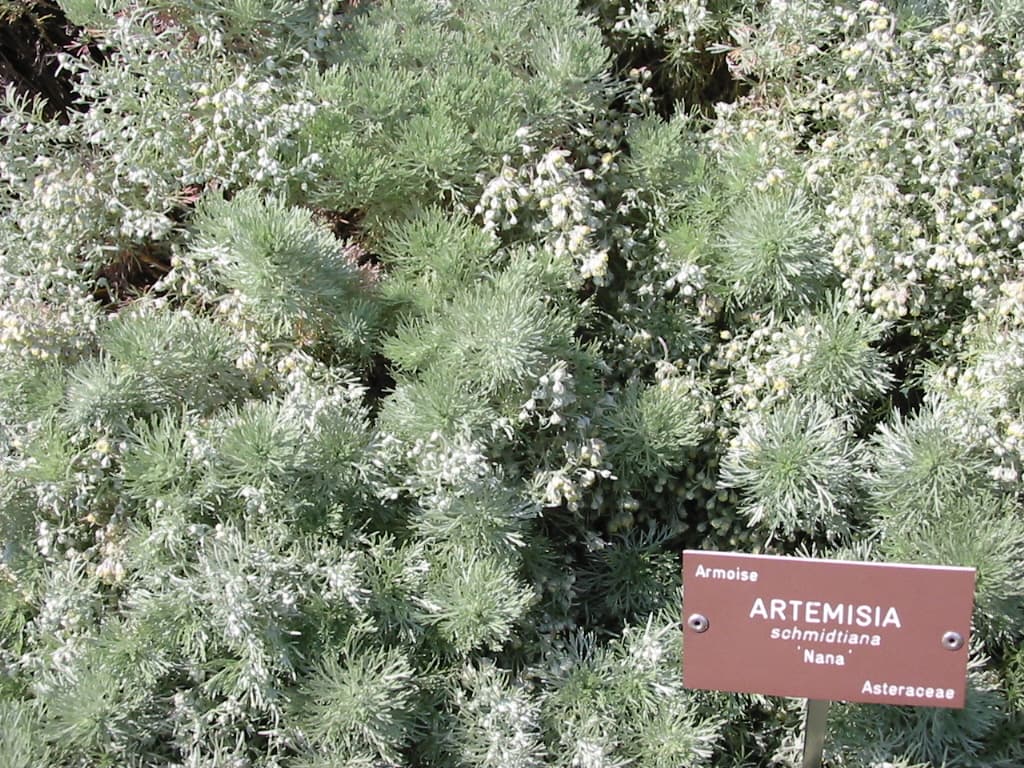
Artemisia schmidtiana 'Silver Mound' is a compact, mound-forming perennial subshrub native to Japan, grown entirely for its soft, finely divided silver-gray foliage. It builds a near-perfect dome 12–18 inches tall and wide, providing strong textural contrast in borders, rock gardens, and along path edges. The silver foliage holds its color from spring through frost and pairs well with warm-toned perennials.
Sharp drainage is essential - plants in wet or clay soils develop crown rot quickly. Lean, gritty soil produces the tightest and most silvery mounds; rich soil and excess nitrogen cause open, floppy growth. In hot, humid climates the center of the mound often splits open; shearing the entire plant back by half in midsummer restores compact form within a few weeks. Aromatic foliage makes it reliably deer- and rabbit-resistant. In zones 3–4, apply coarse mulch after the ground freezes to prevent frost heave, keeping mulch away from the crown.
Crown Rot
Lower leaves yellow and wilt; the base of the rosette turns brown and soft, sometimes with white fungal threads at the soil line. Plants collapse in wet conditions.
Remove and destroy affected plants. Improve drainage and avoid overhead watering. Do not mulch directly against the crown. Space plants for airflow and avoid replanting in the same wet spot.
Root rot
Plants wilt, yellow, and stunt even in moist soil; lower stems and roots turn brown, soft, and mushy and the plant may collapse. Most common in heavy, wet, or poorly drained ground.
Improve drainage and stop overwatering, and never plant too deep. Lift and destroy badly affected plants along with the soil around the roots. Grow in raised or free-draining beds to prevent it returning.
Rust
Orange to brown raised pustules on the undersides of leaves, with yellow spotting on the upper surface. Heavy infections cause leaves to yellow and drop.
Remove and destroy infected leaves. Avoid overhead watering and improve air circulation. Apply a sulfur or copper-based fungicide if it spreads. Clear plant debris in fall.