
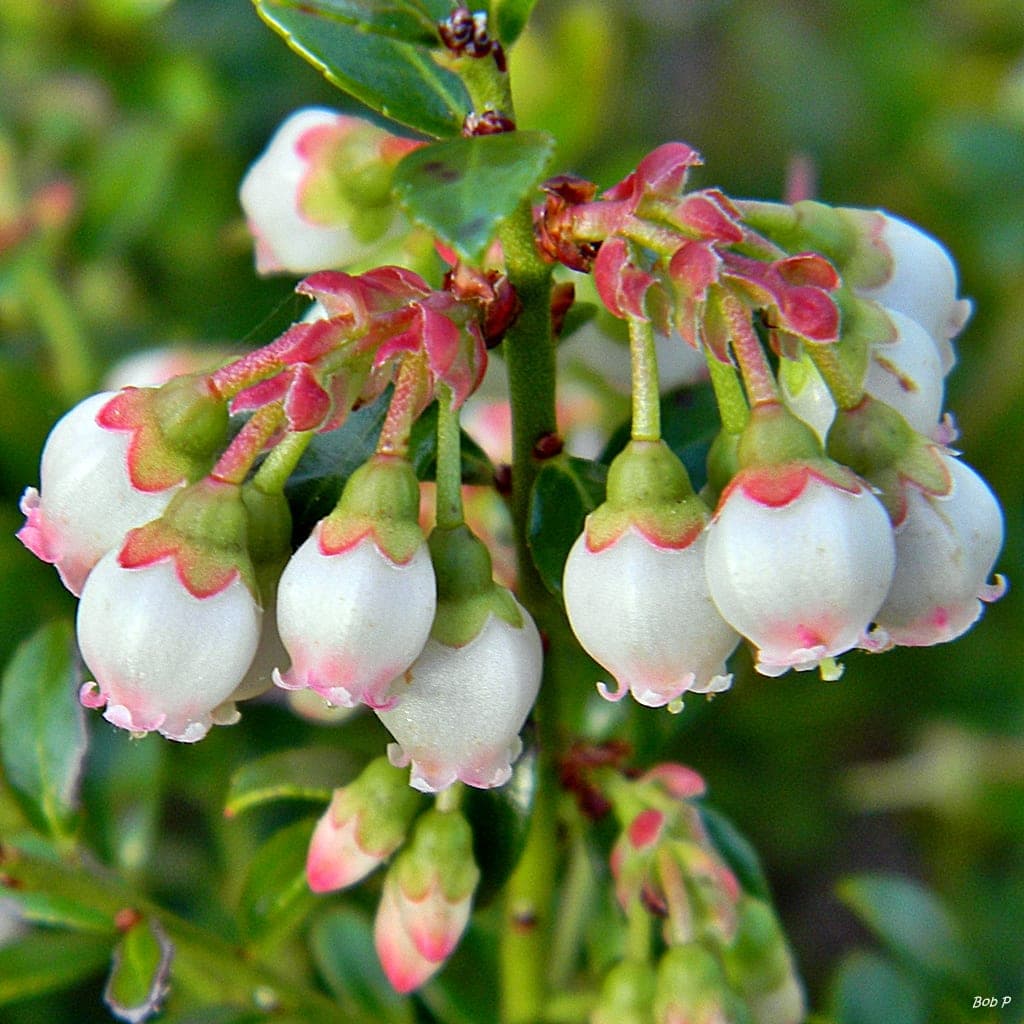
Vaccinium myrsinites is a low, evergreen, rhizomatous shrub native to the coastal plain of the southeastern United States, from South Carolina south through Florida and into Alabama. It grows naturally in longleaf pine flatwoods, scrub, and sandhills, tolerating sandy, acidic, nutrient-poor soils where few other shrubs establish. In cultivation it functions as a tough, wildlife-friendly groundcover that retains its small, glossy leaves year-round.
The plant spreads by underground rhizomes to form dense colonies. Fruit ripen from approximately April through June - earlier than most cultivated blueberry species - and are an important food source for birds, gopher tortoises, foxes, raccoons, and black bears. Established plants tolerate periodic drought but perform poorly in alkaline or waterlogged soils; a 2–4 inch layer of pine bark mulch helps maintain soil acidity and conserve moisture through Florida summers. Soil pH should be kept between 4.5 and 5.5 for best productivity.
The ripe berries are edible and sweet, used fresh or in jams, preserves, and baked goods in the same manner as commercial blueberries. Vaccinium species have a documented history of traditional use for urinary tract complaints and diarrhea, and the fruit is rich in anthocyanins.
Mummy Berry
New shoots and leaves wilt, blacken, and die in spring. Infected berries turn tan or pink, shrivel into hard 'mummies', and drop to the ground.
Remove and destroy mummified berries and blighted shoots. Rake and dispose of fallen fruit and leaves. Apply 2 inches of fresh mulch in early spring to bury overwintering spores, and prune for airflow.
Blueberry Stem Blight
Sudden wilting and browning of leaves on individual canes, with reddish-brown discoloration in the wood beneath the bark. Affected canes die back, often spreading downward from a wound.
Prune out infected canes 6–8 inches below visible discoloration and destroy them. Disinfect tools between cuts. Avoid wounding plants and keep them vigorous with proper water and acidic soil.
Phytophthora Root Rot
Wilting despite moist soil, yellowing leaves, stunted growth, and dark, decayed roots and crown tissue. Vines may collapse during hot weather.
Plant in well-draining soil and avoid waterlogging. Remove and destroy affected vines. Improve drainage with raised beds or amended soil and avoid overwatering.
Fungal leaf spot
Brown or purplish spots on the leaves, often ringed with a yellow halo, that spread and merge in warm, humid, or wet weather; heavily spotted leaves yellow and drop early.
Pick off spotted leaves and clear fallen debris to remove overwintering spores. Improve air circulation by thinning, and water at the base so foliage dries quickly. If it persists, apply a copper- or sulfur-based fungicide at the first sign.