
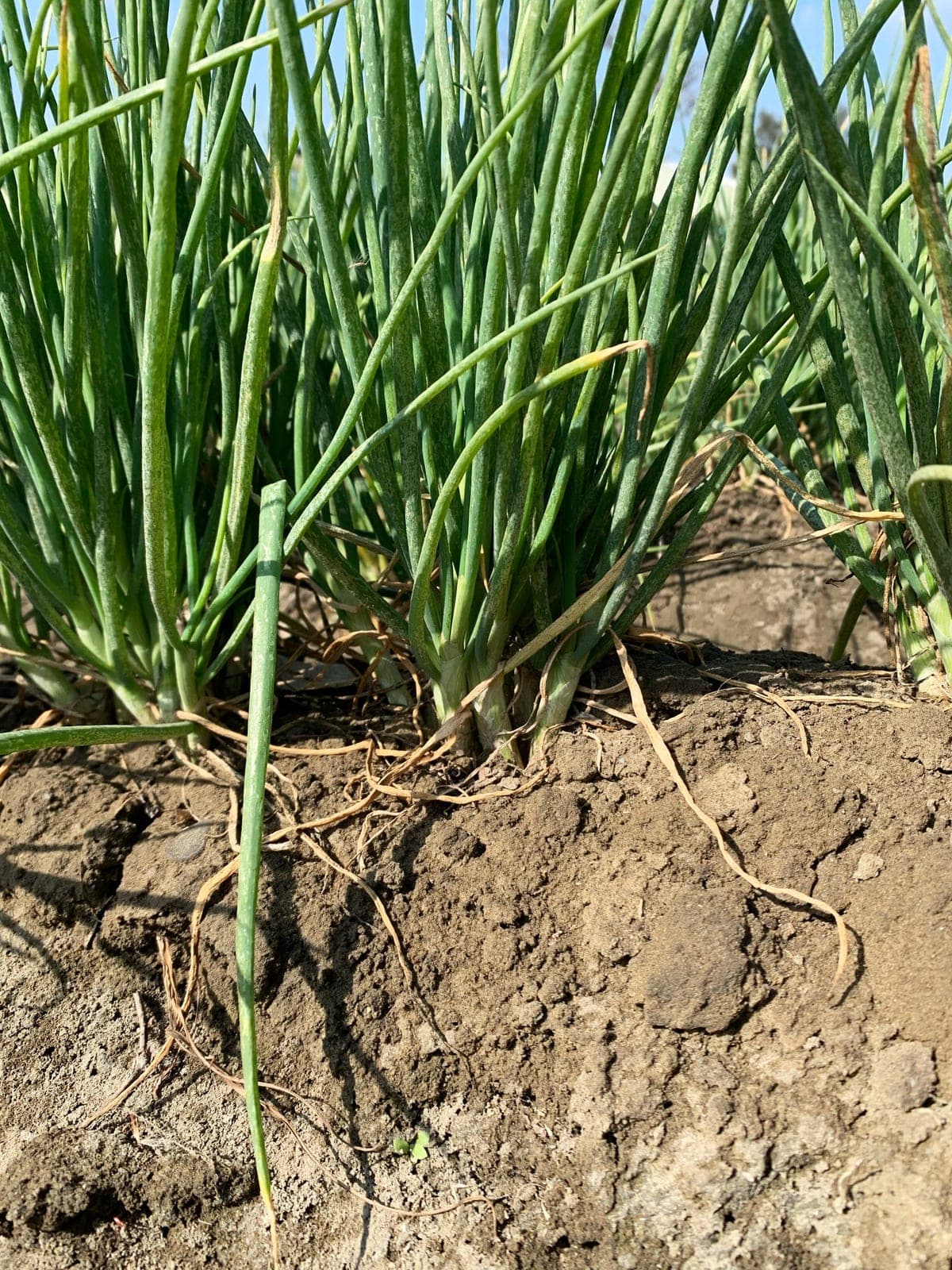
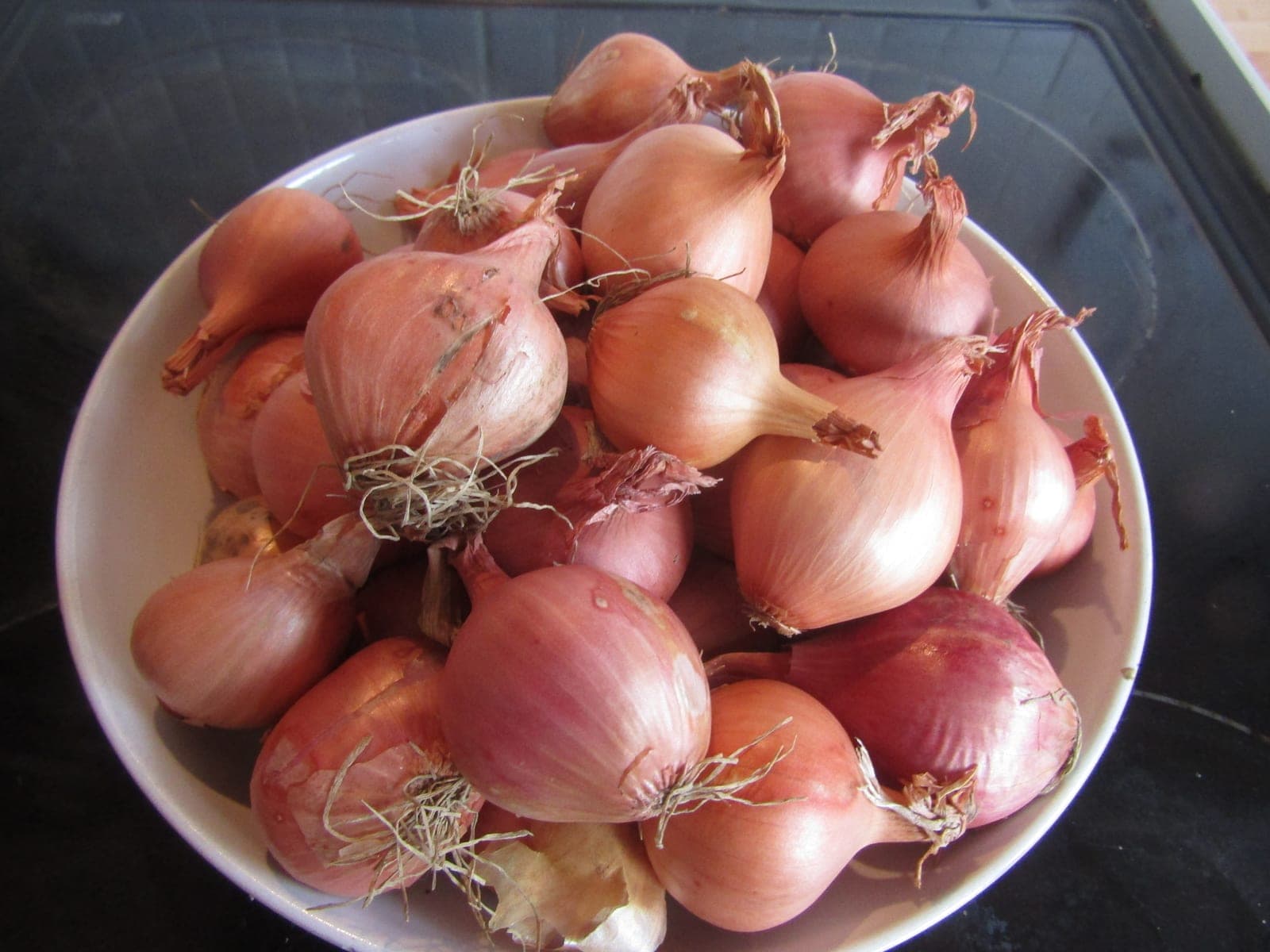
Shallots are the cook's allium - milder and sweeter than onions, forming a cluster of small bulbs from a single planted set. Like garlic, they are happiest planted in autumn in cold-winter gardens, overwintering in the ground and racing away in spring for a summer harvest that stores for months.
Plant sets pointed end up after the first hard frost, an inch deep and a hand-span apart, so roots establish before the ground freezes; mulch heavily to carry them through winter. Pull the mulch back as shoots emerge, feed once hard frost has passed, and keep the bed weed-free - shallows are shallow-rooted and resent competition. Sets can also go in as soon as the soil is workable in spring, though fall-planted bulbs grow noticeably larger. Lift when the tops yellow and fall, then cure in a dry airy space before storing.
Downy mildew
Yellowing on top of leaves with grey-purple fuzz underneath. Spreads rapidly in humid conditions.
Remove affected leaves. Improve air circulation. Avoid overhead watering. Copper spray as preventive.
White Rust
White, blister-like pustules on the undersides of leaves with yellow spots on the upper surface; severe infections distort leaves and stems.
Remove and destroy infected leaves, improve air circulation, avoid overhead watering, and rotate brassicas to a new bed each year.
Onion White Rot
Yellowing and dieback of leaves, soft rotting at the base, and a fluffy white fungal growth with small black sclerotia on roots and lower stems.
Remove and destroy infected plants. Do not compost. Avoid replanting alliums in affected soil for several years and rotate crops. There is no chemical cure once established.