
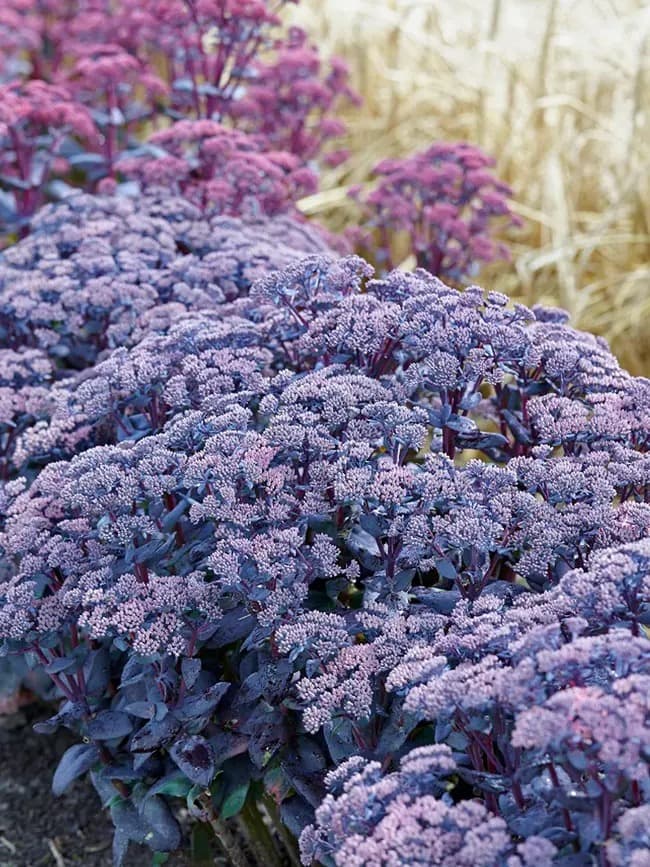
Sedum 'Mojave Jewels Sapphire' is a compact, upright succulent from the Mojave Jewels series, 12 to 15 inches tall, selected for dusty plum-blue foliage that intensifies toward purple-red in cool fall temperatures. It suits rock gardens, dry slopes, wall crevices, and container edges where drainage is reliable and most plants struggle with lean soil and drought.
The plant spreads gradually by offsets, building a dense low mat and producing small star-shaped flowers in summer. Excellent drainage is non-negotiable; standing water at the crown, especially in winter, causes rapid rot. Amend heavy clay with coarse grit before planting, or site on a natural slope. Clumps can be divided every three to four years in early spring, and stem cuttings root readily after a 24-hour callus period on a dry surface.
Root rot
Plants wilt, yellow, and stunt even in moist soil; lower stems and roots turn brown, soft, and mushy and the plant may collapse. Most common in heavy, wet, or poorly drained ground.
Improve drainage and stop overwatering, and never plant too deep. Lift and destroy badly affected plants along with the soil around the roots. Grow in raised or free-draining beds to prevent it returning.
Crown Rot
Lower leaves yellow and wilt; the base of the rosette turns brown and soft, sometimes with white fungal threads at the soil line. Plants collapse in wet conditions.
Remove and destroy affected plants. Improve drainage and avoid overhead watering. Do not mulch directly against the crown. Space plants for airflow and avoid replanting in the same wet spot.
Fungal leaf spot
Brown or purplish spots on the leaves, often ringed with a yellow halo, that spread and merge in warm, humid, or wet weather; heavily spotted leaves yellow and drop early.
Pick off spotted leaves and clear fallen debris to remove overwintering spores. Improve air circulation by thinning, and water at the base so foliage dries quickly. If it persists, apply a copper- or sulfur-based fungicide at the first sign.