
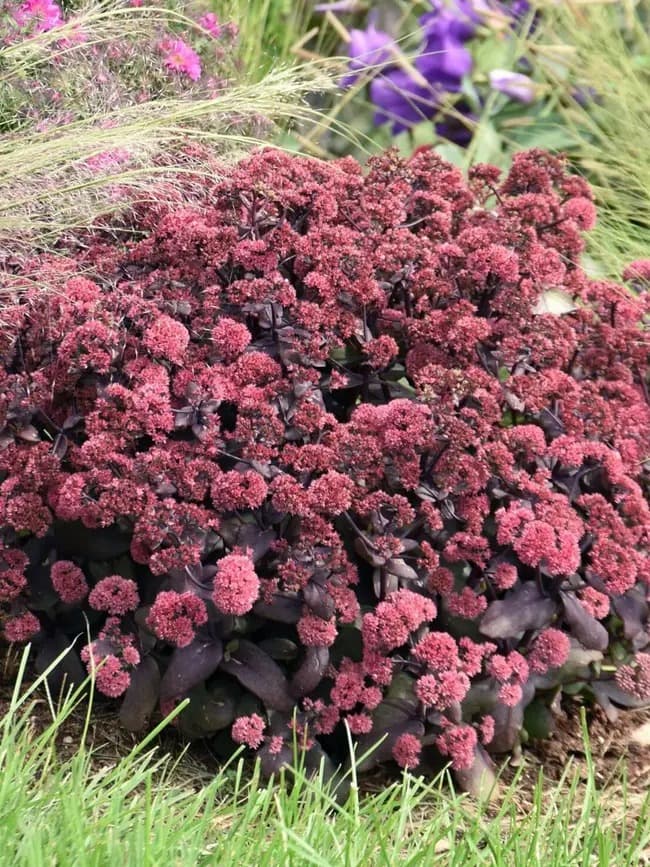
Sedum 'Midnight Velvet' is a low-growing succulent perennial with dense, fleshy foliage that holds a deep burgundy to near-black color through most of the growing season. In late summer it produces clusters of small, star-shaped rosy-red flowers that contrast sharply with the dark leaves. Multi-season foliage interest and minimal care make it useful in rock gardens, dry slopes, pathway edges, and containers.
Like other stonecrops, 'Midnight Velvet' stores water in its leaves and tolerates conditions that stress most plants - thin, poor, or rocky soil with low moisture. It spreads into a dense mat that suppresses weeds and stabilizes loose or sloping ground. Good drainage is the single critical requirement; plants rot quickly in wet or compacted soil. Cold hardiness is strong, but standing winter wet is more damaging than hard freezes. Divide crowded mats every three to four years to prevent the center from dying out.
Root rot
Plants wilt, yellow, and stunt even in moist soil; lower stems and roots turn brown, soft, and mushy and the plant may collapse. Most common in heavy, wet, or poorly drained ground.
Improve drainage and stop overwatering, and never plant too deep. Lift and destroy badly affected plants along with the soil around the roots. Grow in raised or free-draining beds to prevent it returning.
Crown Rot
Lower leaves yellow and wilt; the base of the rosette turns brown and soft, sometimes with white fungal threads at the soil line. Plants collapse in wet conditions.
Remove and destroy affected plants. Improve drainage and avoid overhead watering. Do not mulch directly against the crown. Space plants for airflow and avoid replanting in the same wet spot.
Fungal leaf spot
Brown or purplish spots on the leaves, often ringed with a yellow halo, that spread and merge in warm, humid, or wet weather; heavily spotted leaves yellow and drop early.
Pick off spotted leaves and clear fallen debris to remove overwintering spores. Improve air circulation by thinning, and water at the base so foliage dries quickly. If it persists, apply a copper- or sulfur-based fungicide at the first sign.