
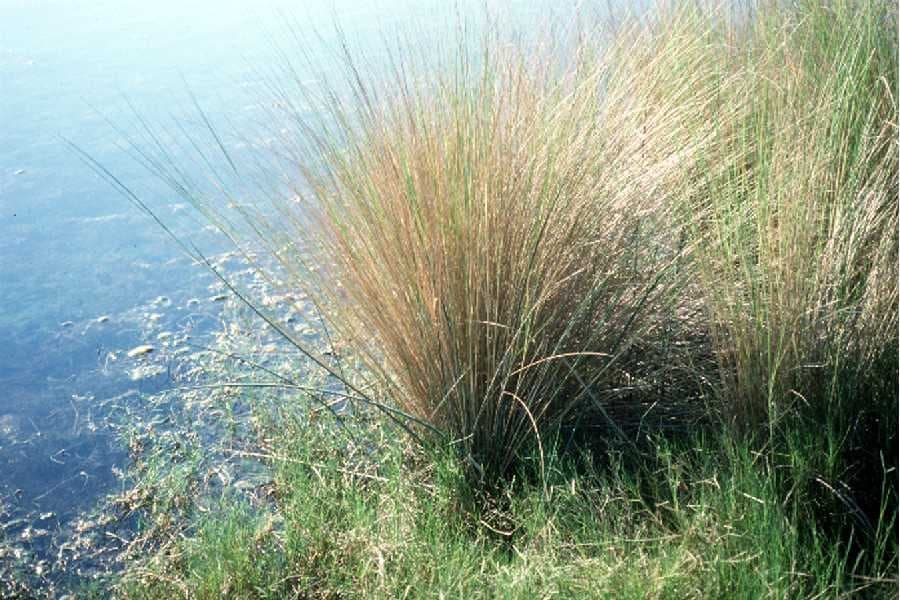
Sand cordgrass (Sporobolus bakeri) is a coarse native bunchgrass from Florida and the southeastern coastal plain, growing in coastal sandy soils, flatwoods margins, and inland freshwater edges. Dense clumps reach 3–6 feet and provide structural mass in naturalistic plantings, rain gardens, and shoreline restorations.
Once established it tolerates both periodic flooding and extended drought. It is widely used in coastal and wetland restoration to stabilize eroding sandy banks and pond margins. Clumps expand slowly without aggressive spreading; dividing them every 4–5 years prevents center dieback. The species performs poorly under shade or in heavy clay soils. A slightly acidic to neutral sandy soil is ideal; avoid rich amended beds, which promote rank growth over root development.
The dense fibrous root system is effective at binding unstable sandy soils along tidal edges and retention basins. Dense clumps also provide nesting cover and foraging habitat for ground-nesting birds and small mammals in coastal Florida ecosystems.
Fungal leaf spot
Brown or purplish spots on the leaves, often ringed with a yellow halo, that spread and merge in warm, humid, or wet weather; heavily spotted leaves yellow and drop early.
Pick off spotted leaves and clear fallen debris to remove overwintering spores. Improve air circulation by thinning, and water at the base so foliage dries quickly. If it persists, apply a copper- or sulfur-based fungicide at the first sign.
Rust
Orange to brown raised pustules on the undersides of leaves, with yellow spotting on the upper surface. Heavy infections cause leaves to yellow and drop.
Remove and destroy infected leaves. Avoid overhead watering and improve air circulation. Apply a sulfur or copper-based fungicide if it spreads. Clear plant debris in fall.
Crown Rot
Lower leaves yellow and wilt; the base of the rosette turns brown and soft, sometimes with white fungal threads at the soil line. Plants collapse in wet conditions.
Remove and destroy affected plants. Improve drainage and avoid overhead watering. Do not mulch directly against the crown. Space plants for airflow and avoid replanting in the same wet spot.