
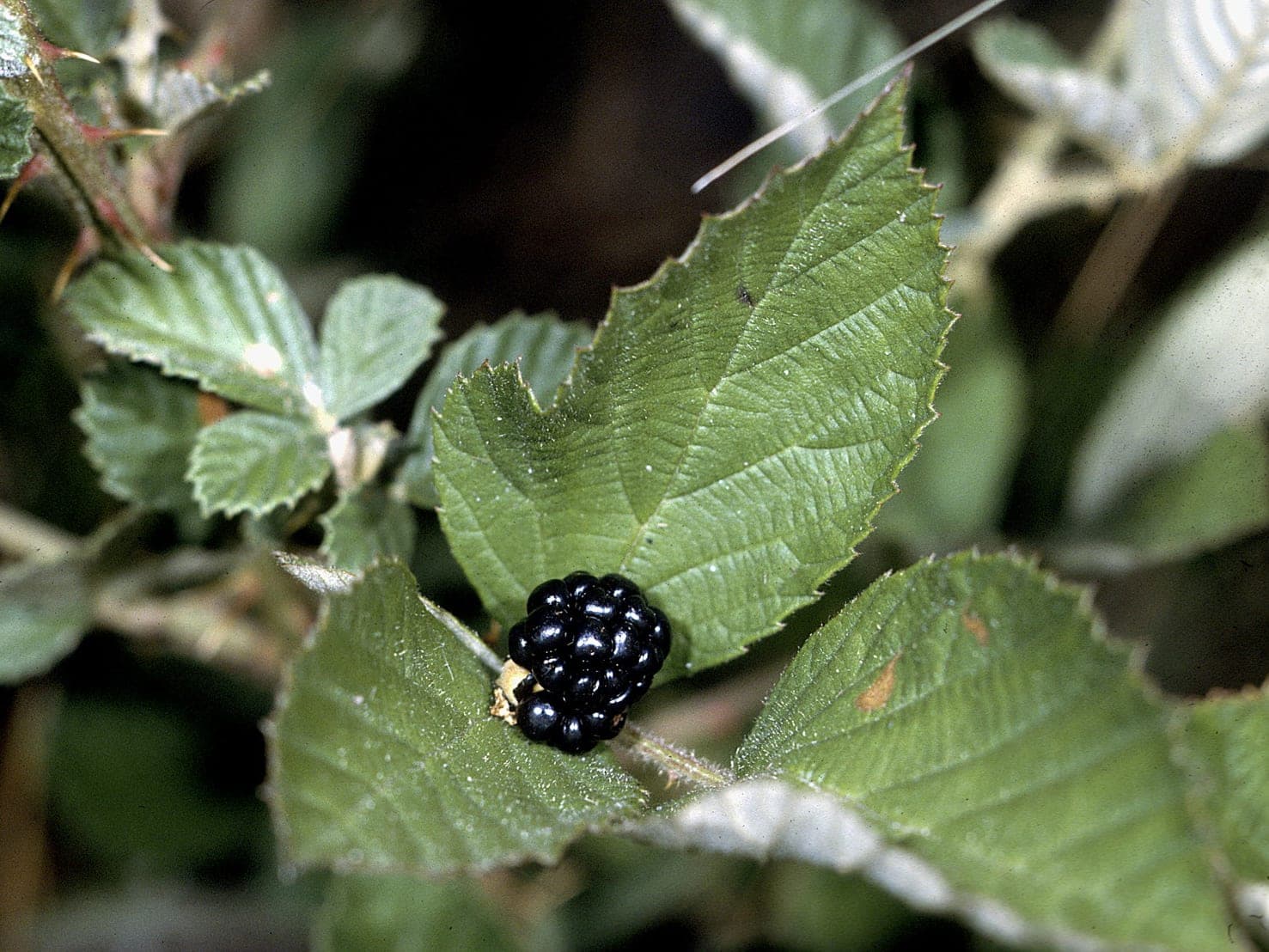
Sand blackberry (Rubus cuneifolius) is a native, thorny, thicket-forming shrub of eastern North America, ranging from southern New England through the coastal plain and piedmont to Florida and Texas. It produces small, intensely flavored black drupes in summer and is one of the few fruiting shrubs genuinely adapted to infertile, dry, sandy soils where other Rubus species struggle. Dense colonies provide fruit, nesting cover, and protective thickets for birds, small mammals, and ground-nesting pollinators.
The species spreads by root suckers and tip layering, and colonies can be difficult to contain - plan for regular sucker removal or install root barriers when siting near cultivated beds. No soil amendment is needed; it thrives in acidic, nutrient-poor conditions (pH 4.5–6.5) and is drought tolerant once established. Cold-hardy to Zone 6a without protection.
Berries are edible and can be used in place of cultivated blackberries in jams, pies, and fresh eating. Leaves and root bark of Rubus species have documented astringent uses across multiple Native American traditions, primarily for diarrhea and mouth inflammation.
Ecoregions:Eastern Temperate Forests
Cane Anthracnose
Small purple spots on young canes that enlarge into gray, sunken lesions with purple borders. Severe infections weaken canes and reduce fruit quality.
Prune and destroy infected canes. Improve air circulation by thinning. Apply lime sulfur during dormancy before bud break. Avoid overhead watering.
Rust
Orange to brown raised pustules on the undersides of leaves, with yellow spotting on the upper surface. Heavy infections cause leaves to yellow and drop.
Remove and destroy infected leaves. Avoid overhead watering and improve air circulation. Apply a sulfur or copper-based fungicide if it spreads. Clear plant debris in fall.
Powdery mildew
White or grey powdery coating on leaves - usually starting on older growth in humid conditions or when nights cool.
Improve air circulation by thinning plants. Apply neem oil or potassium bicarbonate spray at first sign. Avoid overhead watering.
Botrytis (grey mould)
Grey fuzzy mould on petals and stems, worst in cool wet conditions.
Remove affected parts immediately. Improve air circulation. Avoid overhead watering. Apply copper fungicide if severe.
Rose Crown Gall
Rough, corky galls form on roots, the crown, or lower stems. Galls begin small and pale, enlarge irregularly, and turn brown and woody with age. Affected plants show reduced vigor and stunted new growth.
No chemical cure exists once a plant is infected. Remove and destroy infected plants; do not compost galled material. Sterilize cutting tools with a 10% bleach solution between uses. Avoid wounding roots during planting or cultivation. Source certified disease-free stock and replant in uninfested soil.