
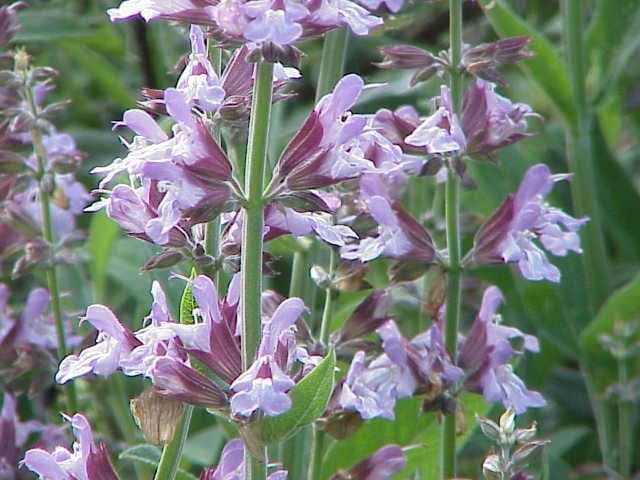
'Caradonna' is a meadow sage selection (Salvia nemorosa) found as a chance seedling at a German nursery. What sets it apart is the color: slender violet-blue flower spikes rise on dark purple, almost black stems, so the plant looks richer than the species even before the flowers open. The clump is upright and tidy at 18–24 in tall and 18–20 in wide, with felty, aromatic gray-green leaves, and it stays upright unless the soil is too rich or the light too low.
It wants full sun and well-drained soil, and it is heat and drought tolerant once established. Flowers open from late spring into summer and, if the first spikes are cut back as they fade, the plant reblooms and can carry flowers into autumn. Bees, beneficial insects, and hummingbirds visit the spikes, and deer leave it alone. It suits borders, containers, and cutting gardens, and pairs well with geranium, sedum, yarrow, and ornamental grasses. For the plain species, with a wider color range and a looser habit, see salvia.
Root rot
Plants wilt, yellow, and stunt even in moist soil; lower stems and roots turn brown, soft, and mushy and the plant may collapse. Most common in heavy, wet, or poorly drained ground.
Improve drainage and stop overwatering, and never plant too deep. Lift and destroy badly affected plants along with the soil around the roots. Grow in raised or free-draining beds to prevent it returning.
Powdery mildew
White or grey powdery coating on leaves - usually starting on older growth in humid conditions or when nights cool.
Improve air circulation by thinning plants. Apply neem oil or potassium bicarbonate spray at first sign. Avoid overhead watering.