
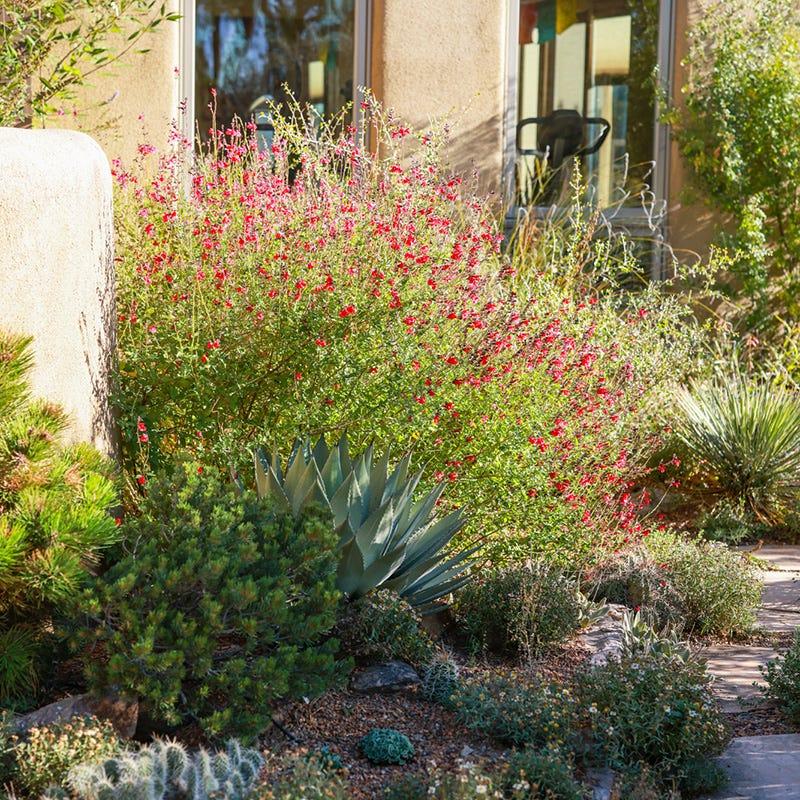
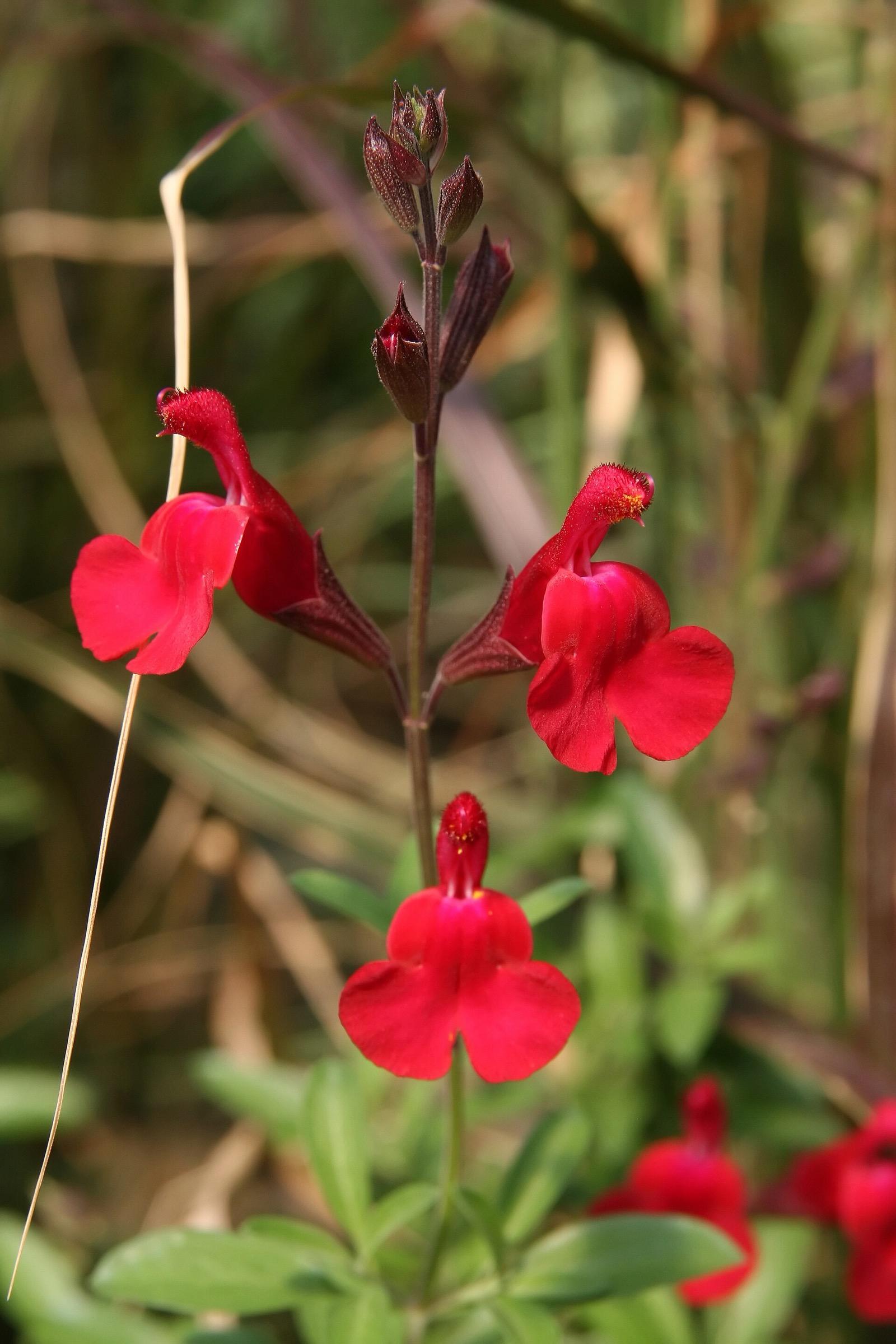
Salvia greggii 'Furman's Red' is a woody subshrub cultivar of autumn sage, native to the Chihuahuan Desert and Texas hill country. It produces deep crimson-red flowers from spring through fall, with the heaviest flushes in spring and again when temperatures cool in fall. Hummingbirds and butterflies visit consistently, and deer typically avoid the aromatic foliage.
Sharp drainage is the single most critical requirement. Wet or clay-heavy soil causes root rot and is the most common cause of plant failure. Once established in well-drained ground, the plant tolerates extended drought with minimal supplemental water. In zones 6 and colder, stems may die back after hard frost but roots resprout reliably in spring; mulch the root zone 2–3 inches after the first hard freeze and leave stems intact through winter. A hard cutback to 6–8 inches in early spring before new growth emerges, combined with light trimming after each bloom flush, keeps plants compact and productive through the season.
Ecoregions:Great PlainsNorth American Deserts
These dates are for Zone 6b. Enter your ZIP to time every job to your own frost dates.
- watch · Oct 30 - Nov 20Leave the stems standing over winter and mulch lightly around, not over, the crown - the old growth protects it until the spring cut
- buy · Feb 13 - Feb 27Buy plants - about two months before planting out
- cut · Apr 17 - May 8Once new leaves show at the base, cut the plant back by a third to a half and remove any stems that died over winter
- plant · Apr 24 - May 22Plant out once the soil has warmed, in the sunniest, best-drained spot you have - planting early gives the roots a full season to settle before the first winter
- cut · Jun 19 - Jul 3Shear lightly after the first flush to set up the heavier late-season flush
Problems & troubleshooting
Common problems
Root rot
Plants wilt, yellow, and stunt even in moist soil; lower stems and roots turn brown, soft, and mushy and the plant may collapse. Most common in heavy, wet, or poorly drained ground.
Improve drainage and stop overwatering, and never plant too deep. Lift and destroy badly affected plants along with the soil around the roots. Grow in raised or free-draining beds to prevent it returning.
Crown Rot
Lower leaves yellow and wilt; the base of the rosette turns brown and soft, sometimes with white fungal threads at the soil line. Plants collapse in wet conditions.
Remove and destroy affected plants. Improve drainage and avoid overhead watering. Do not mulch directly against the crown. Space plants for airflow and avoid replanting in the same wet spot.
Powdery mildew
White or grey powdery coating on leaves - usually starting on older growth in humid conditions or when nights cool.
Improve air circulation by thinning plants. Apply neem oil or potassium bicarbonate spray at first sign. Avoid overhead watering.