
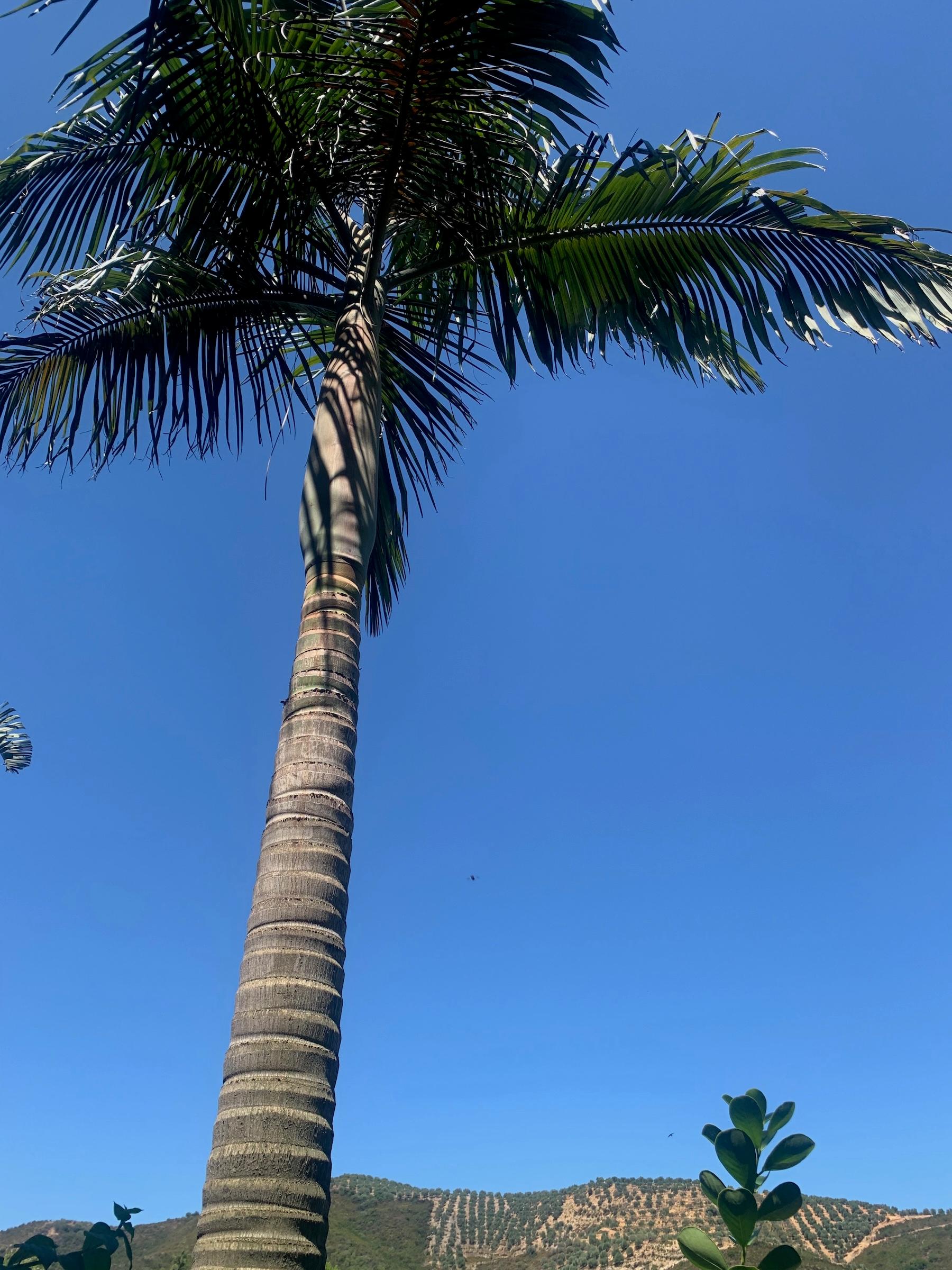
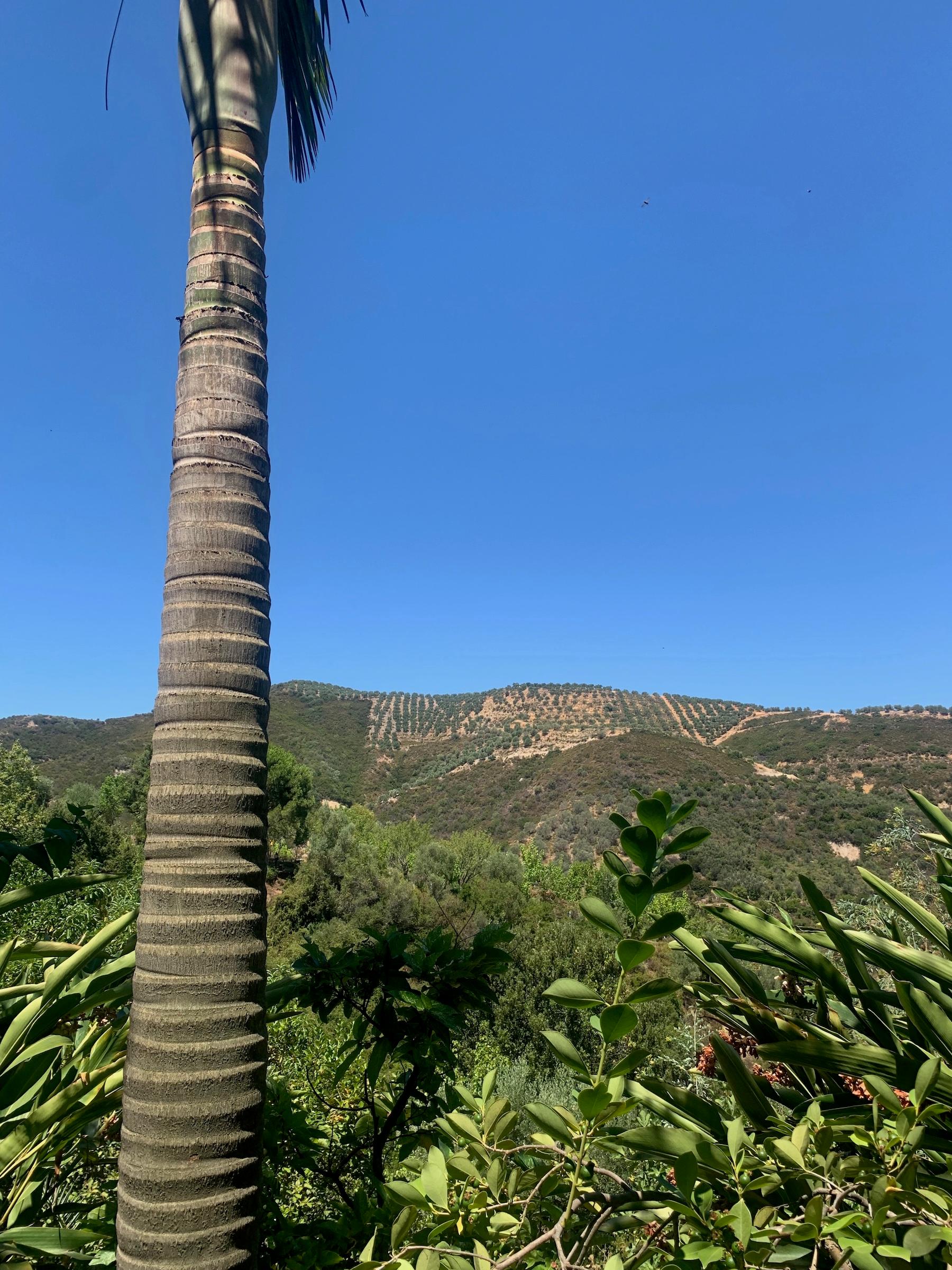
Royal palm (Roystonea regia) is a large, fast-growing palm native to Cuba, southern Florida, Mexico, and parts of Central America. Its smooth gray trunk, vivid green crownshaft, and symmetrical canopy of arching fronds have made it one of the most widely planted ornamental palms in the tropics and subtropics. It is the defining element of boulevard and avenue planting from Miami to Havana and has naturalized in many parts of the Caribbean and Southeast Asia.
Grows best in full sun with regular moisture and tolerates a range of well-drained soils, including the alkaline limestone substrates common throughout South Florida. Cold-sensitive; established trees may briefly survive temperatures near 26°F but sustain frond damage below 32°F. Growth is rapid in warm, humid conditions, with trees establishing a tall trunk within 10–15 years. The small, oil-rich drupes are consumed by birds, bats, and other wildlife, contributing to urban and rural wildlife corridors throughout its range.
The fruit has historically been processed into oil used for soap-making and livestock feed across Cuba and the Caribbean. The growing tip is edible as heart of palm, though harvesting it kills the tree; commercial heart of palm comes from multi-stemmed species rather than royal palm.
These dates are for Zone 6b. Enter your ZIP to time every job to your own frost dates.
- watch · Any time in fallInspect the base of the trunk annually for shelf-like conks of Ganoderma butt rot. No treatment exists once infection is established; remove and destroy infected trees promptly to limit spread to nearby palms.
- watch · Any time in fallMonitor the crownshaft and emerging fronds in fall for signs of pink rot, which appears as a salmon-pink discoloration and collapse of new tissue. Improve drainage and avoid overhead irrigation to reduce risk.
- sow · Any time in springPlant container-grown specimens in spring or early summer when soil is warm. Dig a hole no deeper than the root ball and twice as wide; keep the root ball at grade and backfill without amendments.
- watch · Any time in springWater deeply every 2–3 days for the first three months after planting. Once established, reduce frequency; mature trees are moderately drought-tolerant but perform best with consistent soil moisture.
- sow · Any time in springApply a slow-release palm-specific fertilizer (8-2-12 with micronutrients) in spring. Manganese, magnesium, and potassium are critical; deficiencies show first in the newest fronds.
- sow · Any time in summerApply a second round of palm-specific fertilizer in summer to sustain active growth. Avoid high-nitrogen formulas, which can accelerate growth at the expense of micronutrient uptake.
- cut · Any time in summerRemove only fully brown, dead fronds by cutting cleanly at the base of the petiole. Never cut green or yellow-green fronds; over-pruning stresses the tree and depletes stored nutrient reserves in the trunk.
- watch · Any time in summerCheck fronds for small black pustules indicating Graphiola leaf spot (false smut). Adequate fertilization and stress reduction minimize severity; fungicide applications are rarely necessary on established trees.
Problems & troubleshooting
Common problems
Ganoderma Butt Rot
White rot of heartwood at the base and lower trunk. Large, hard, shelf-like bracket fungi with a shiny reddish-brown upper surface and cream-colored pore surface appear at or near the soil line. Infected trees lose structural integrity with little visible external warning until failure.
No effective chemical treatment once established. Remove and destroy conks before they release spores. Have a certified arborist assess structural risk; removal is often required for trees near structures or high-traffic areas. Prevent infection by avoiding root collar wounds, reducing soil compaction, and maintaining tree health.
Graphiola Leaf Spot (False Smut)
Small, hard, dark brown to black wart-like pustules erupt from both surfaces of fronds, often ringed by yellow halos. Heavily infected fronds yellow and die back prematurely.
Remove and destroy heavily infected fronds. Improve air circulation around the crown by pruning adjacent vegetation. Apply copper-based fungicide in spring as new growth emerges and repeat monthly through the growing season if infection pressure remains high.
Palm Pink Rot
Water-soaked, darkening lesions at petiole bases and on lower fronds; pink to salmon-colored spore masses develop on affected tissue; fronds collapse and hang without detaching cleanly.
Cut out and dispose of infected fronds and petiole tissue. Avoid overhead irrigation and any practice that keeps the crown wet. Improve soil drainage around the trunk. Apply copper-based fungicide to the crown and petiole bases at first sign of infection and repeat every 2–3 weeks while warm, humid conditions persist.