
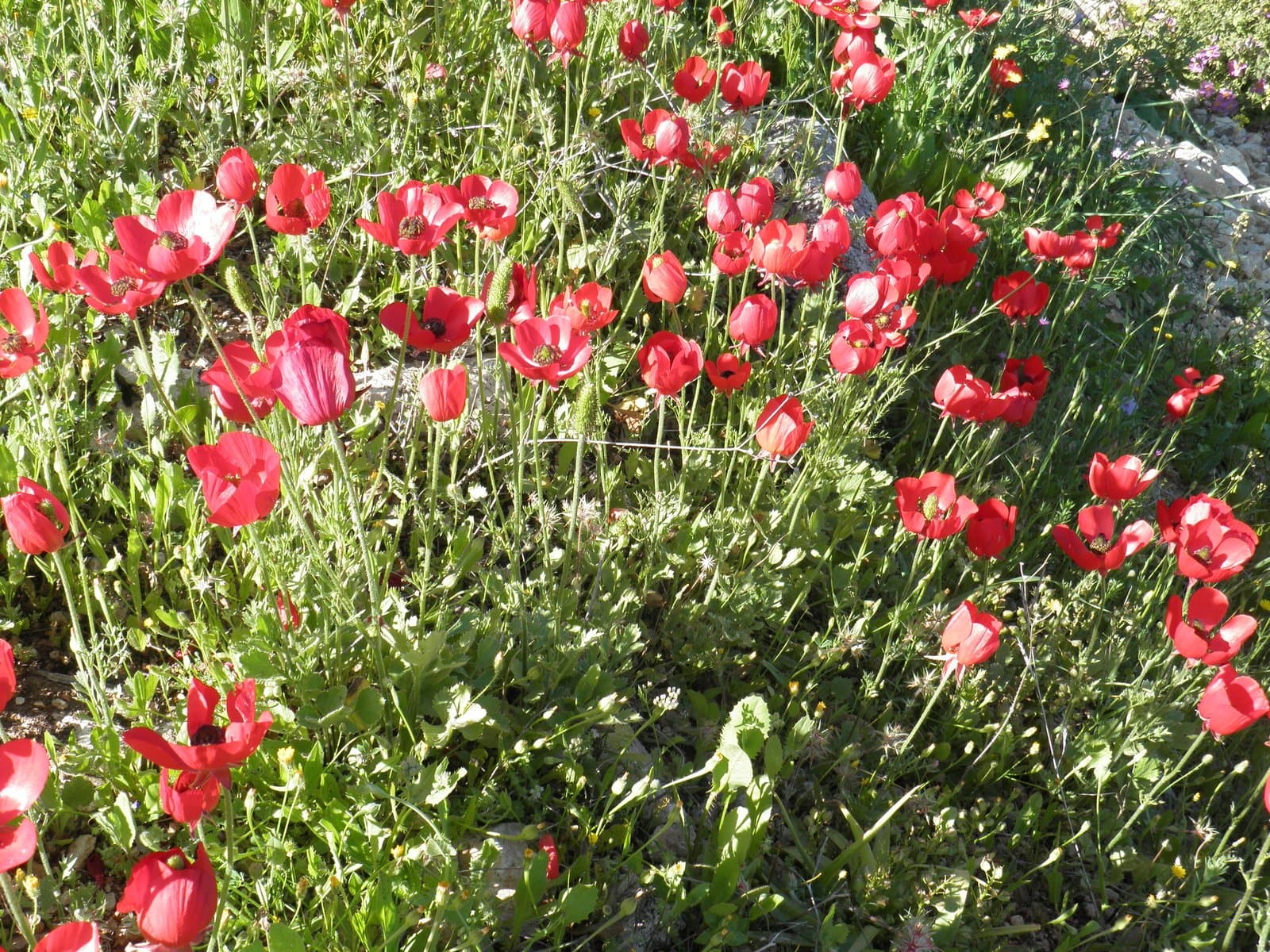
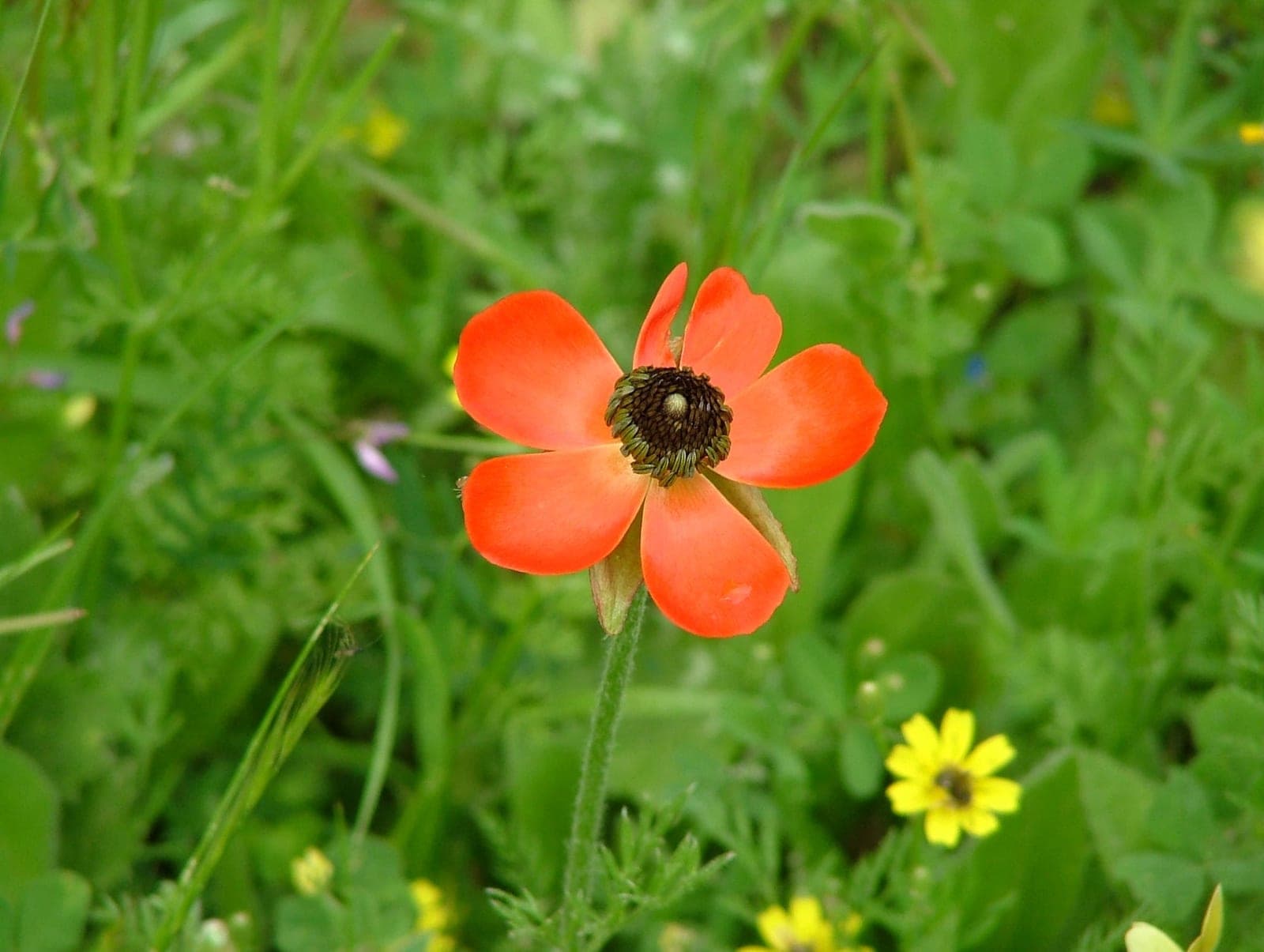
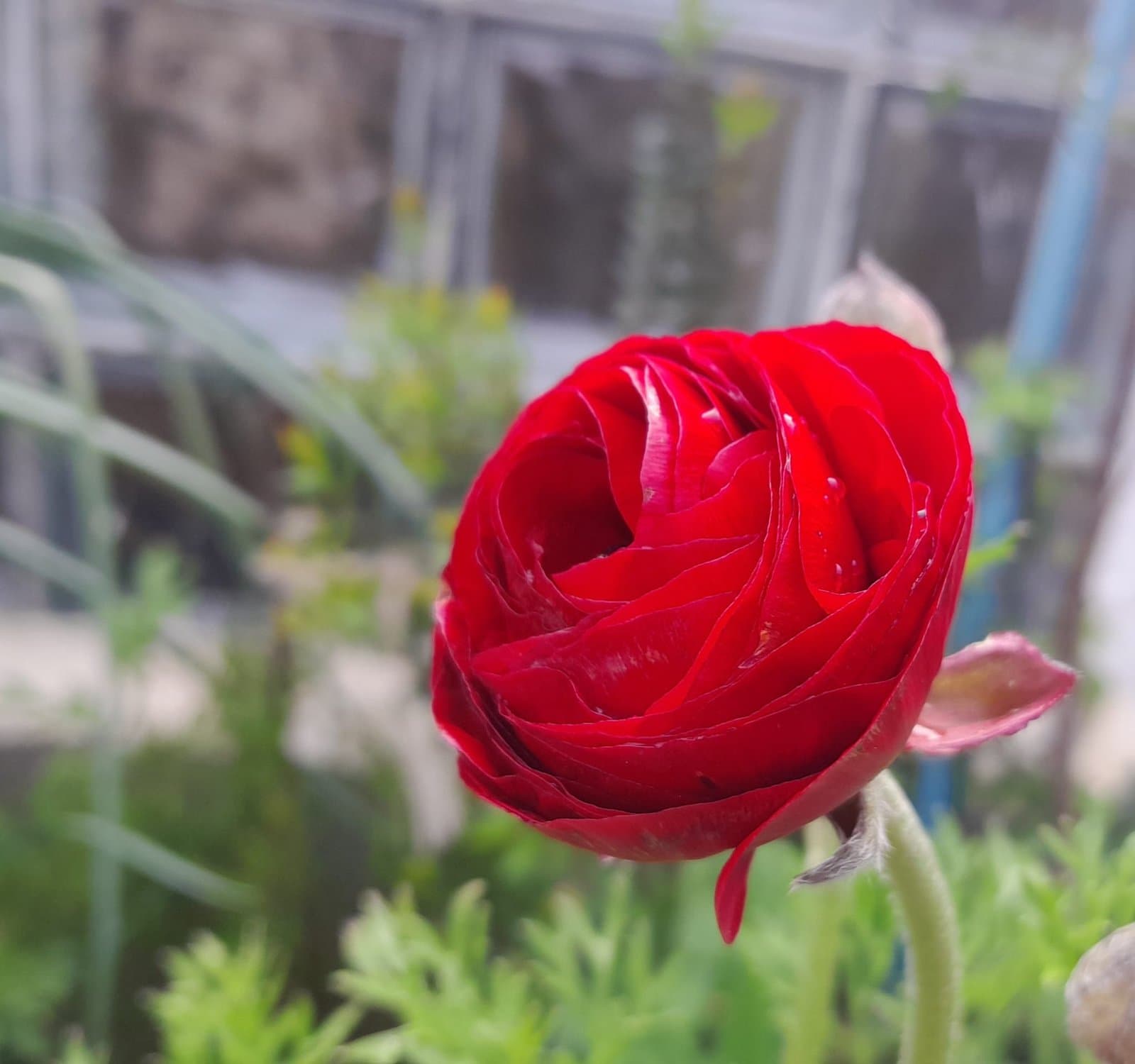
Ranunculus asiaticus, the Persian buttercup, grows from small claw-shaped corms and produces densely layered, tissue-thin flowers in red, orange, yellow, pink, white, and bicolor blends. It is a mainstay of the specialty cut flower trade and a strong garden performer wherever cool, moist spring conditions prevail.
In zones 8–10, corms are planted in fall once soil temperatures drop below 60°F, producing foliage through winter and flowers from late winter into spring. In zones 6–7, corms go into the ground in early spring several weeks before the last frost date, or are started indoors 4–6 weeks earlier. The plant shuts down when summer heat arrives. Sharp drainage is critical: waterlogged soil rots corms within days. In zones below 7, corms can be lifted after foliage yellows, cured in a warm dry location for a week, then stored in dry peat or vermiculite at 50–60°F until replanting.
All parts of Ranunculus contain ranunculin, which breaks down to protoanemonin when plant tissue is crushed. This compound is a skin and mucous membrane irritant; gloves are advisable when processing large quantities of stems.
Botrytis (grey mould)
Grey fuzzy mould on petals and stems, worst in cool wet conditions.
Remove affected parts immediately. Improve air circulation. Avoid overhead watering. Apply copper fungicide if severe.
Powdery mildew
White or grey powdery coating on leaves - usually starting on older growth in humid conditions or when nights cool.
Improve air circulation by thinning plants. Apply neem oil or potassium bicarbonate spray at first sign. Avoid overhead watering.
Downy mildew
Yellowing on top of leaves with grey-purple fuzz underneath. Spreads rapidly in humid conditions.
Remove affected leaves. Improve air circulation. Avoid overhead watering. Copper spray as preventive.
Crown Rot
Lower leaves yellow and wilt; the base of the rosette turns brown and soft, sometimes with white fungal threads at the soil line. Plants collapse in wet conditions.
Remove and destroy affected plants. Improve drainage and avoid overhead watering. Do not mulch directly against the crown. Space plants for airflow and avoid replanting in the same wet spot.
Root rot
Plants wilt, yellow, and stunt even in moist soil; lower stems and roots turn brown, soft, and mushy and the plant may collapse. Most common in heavy, wet, or poorly drained ground.
Improve drainage and stop overwatering, and never plant too deep. Lift and destroy badly affected plants along with the soil around the roots. Grow in raised or free-draining beds to prevent it returning.
Damping Off
Seedlings collapse at the soil line with thin, water-soaked stems; seeds may fail to emerge or rot before sprouting.
Sow in well-draining mix, avoid overwatering, and ensure good airflow. Remove affected seedlings and let the surface dry between waterings.