
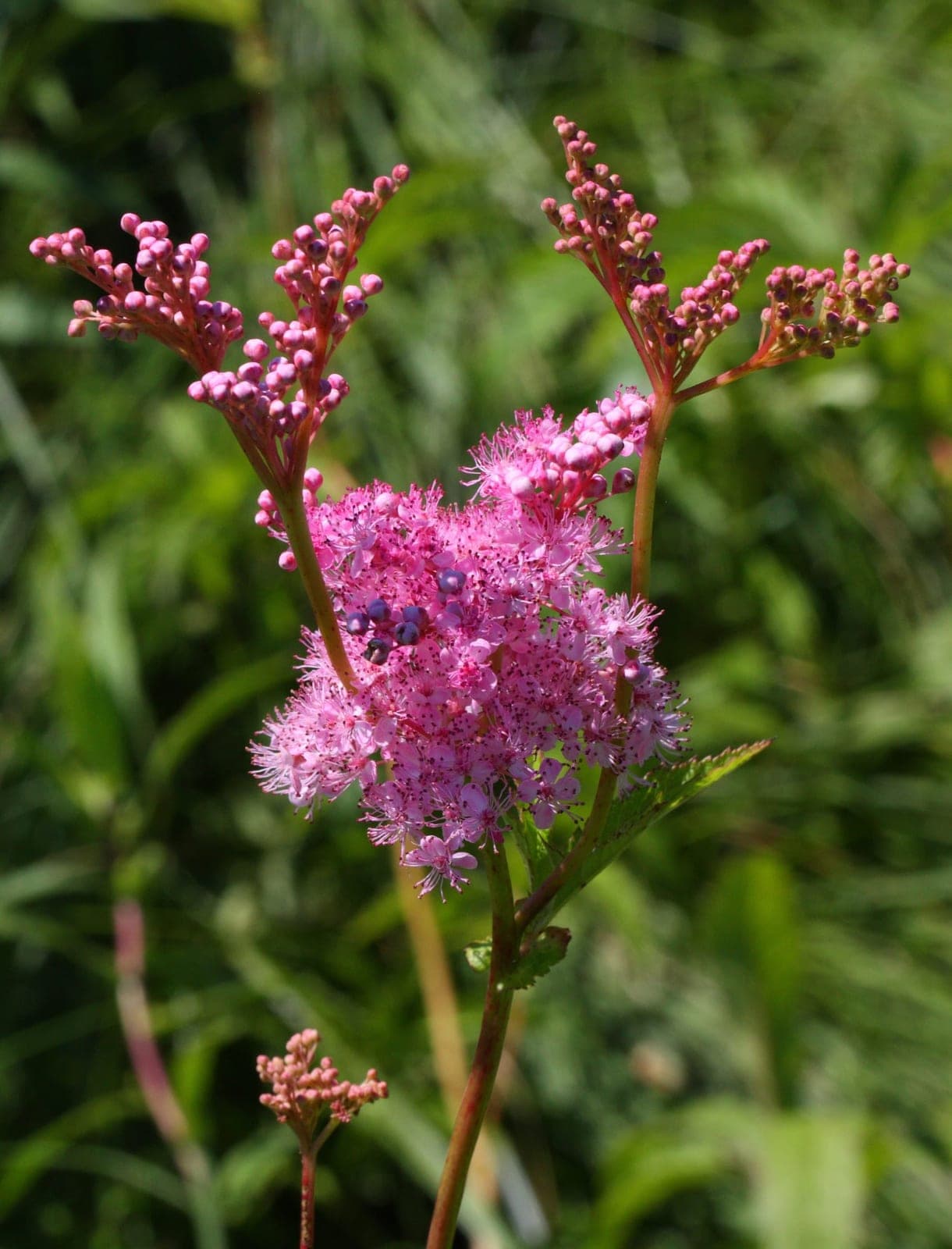
Filipendula rubra is a tall native perennial of moist prairies and meadow edges from Pennsylvania south to Georgia and west to Iowa and Missouri. In early to midsummer it produces large, feathery plumes of tiny deep-pink flowers on stems that routinely reach 4–8 ft, making it one of the most striking plants available for wet garden sites. The bold, pinnately compound foliage remains attractive well after flowering ends.
It spreads by rhizomes and forms wide colonies over time, well suited to naturalistic plantings, rain gardens, and streamside margins but requiring management in smaller bordered beds. Full sun with consistently moist to wet soil produces the strongest growth; in partial shade it tolerates somewhat drier conditions, though flower output drops. Fertile, slightly acidic to neutral soil is ideal, with pH around 5.5–7.0. Heavy mulching retains soil moisture and reduces heat stress. In zones 7–9, afternoon shade extends performance through hotter summers. Clumps benefit from division every 3–4 years to maintain vigor and control spread.
Queen of the prairie serves as a mid-season nectar source for native bees and other small pollinators, and its dense rhizome colonies help stabilize moist, erosion-prone soils. Potawatomi peoples used the root for cardiac complaints, as recorded in ethnobotanical literature.
Ecoregions:Northern ForestsEastern Temperate Forests
Powdery mildew
White or grey powdery coating on leaves - usually starting on older growth in humid conditions or when nights cool.
Improve air circulation by thinning plants. Apply neem oil or potassium bicarbonate spray at first sign. Avoid overhead watering.
Rust
Orange to brown raised pustules on the undersides of leaves, with yellow spotting on the upper surface. Heavy infections cause leaves to yellow and drop.
Remove and destroy infected leaves. Avoid overhead watering and improve air circulation. Apply a sulfur or copper-based fungicide if it spreads. Clear plant debris in fall.
Fungal leaf spot
Brown or purplish spots on the leaves, often ringed with a yellow halo, that spread and merge in warm, humid, or wet weather; heavily spotted leaves yellow and drop early.
Pick off spotted leaves and clear fallen debris to remove overwintering spores. Improve air circulation by thinning, and water at the base so foliage dries quickly. If it persists, apply a copper- or sulfur-based fungicide at the first sign.
Root rot
Plants wilt, yellow, and stunt even in moist soil; lower stems and roots turn brown, soft, and mushy and the plant may collapse. Most common in heavy, wet, or poorly drained ground.
Improve drainage and stop overwatering, and never plant too deep. Lift and destroy badly affected plants along with the soil around the roots. Grow in raised or free-draining beds to prevent it returning.