
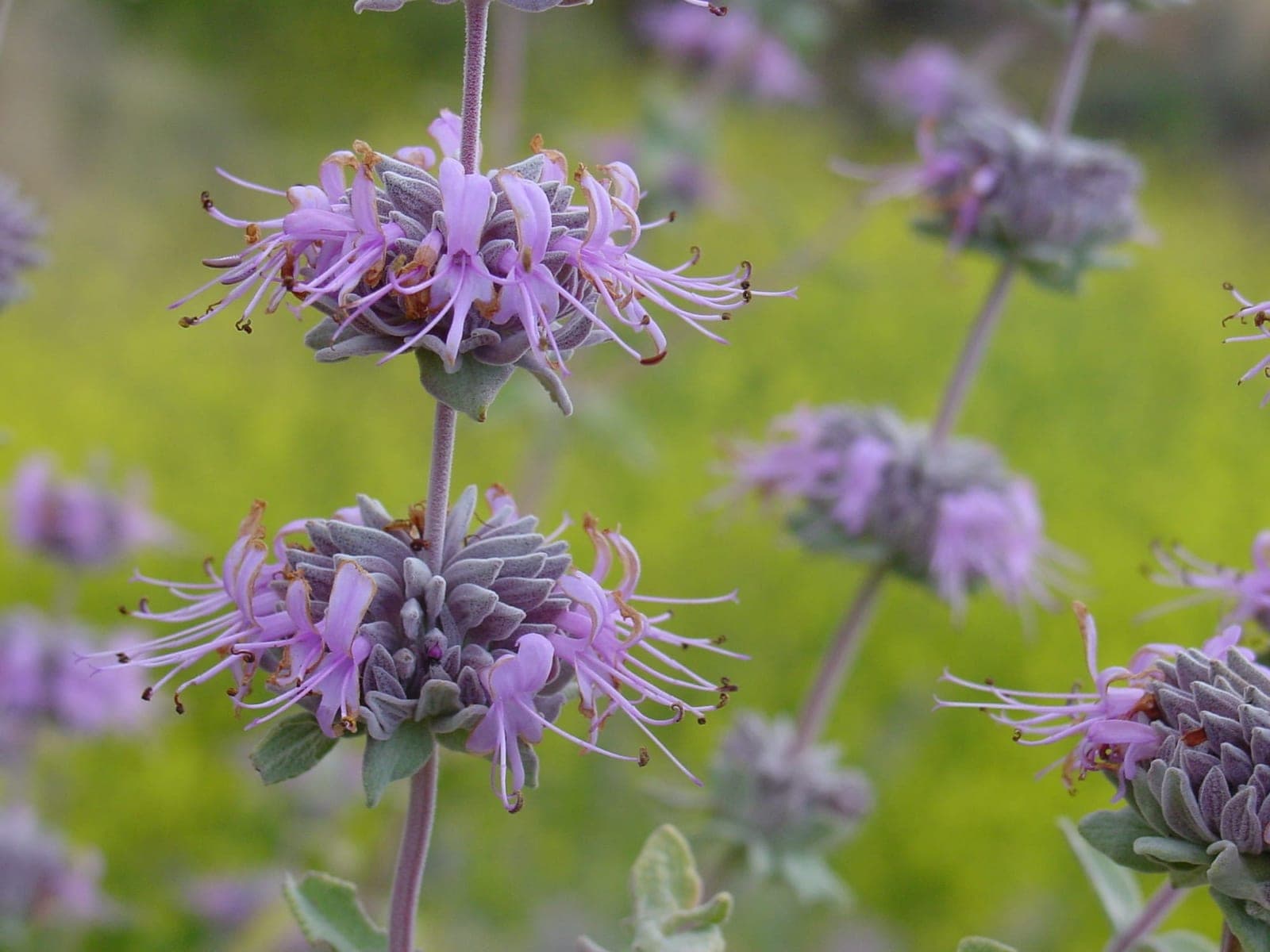
Salvia leucophylla is an evergreen native shrub of California's southern coastal mountain ranges, grown for its year-round silver-gray woolly foliage and whorled lavender-purple flowers in late spring and early summer. It requires almost no supplemental water once established and provides consistent structural interest in dry western gardens. Bees, hummingbirds, and native butterflies use it heavily during its bloom period.
This species is allelopathic: its leaves release volatile terpenes - camphor, 1,8-cineole, and β-pinene - that inhibit germination of nearby annual grasses and herbaceous plants, creating natural bare zones around the shrub. This is a documented competitive adaptation, not a cultural problem, and should be factored into planting design. Site in full sun with sharply drained, lean soil; clay soils or any summer irrigation nearly always results in root rot. Prune by one-third to one-half immediately after flowering to maintain a compact habit and slow the natural tendency toward open, woody structure.
Chumash and other indigenous peoples of coastal California used the aromatic foliage as a ceremonial smudge and topical wash, and the volatile compounds show antimicrobial activity in laboratory studies consistent with traditional use.
Ecoregions:Mediterranean California
Root rot
Plants wilt, yellow, and stunt even in moist soil; lower stems and roots turn brown, soft, and mushy and the plant may collapse. Most common in heavy, wet, or poorly drained ground.
Improve drainage and stop overwatering, and never plant too deep. Lift and destroy badly affected plants along with the soil around the roots. Grow in raised or free-draining beds to prevent it returning.
Powdery mildew
White or grey powdery coating on leaves - usually starting on older growth in humid conditions or when nights cool.
Improve air circulation by thinning plants. Apply neem oil or potassium bicarbonate spray at first sign. Avoid overhead watering.