
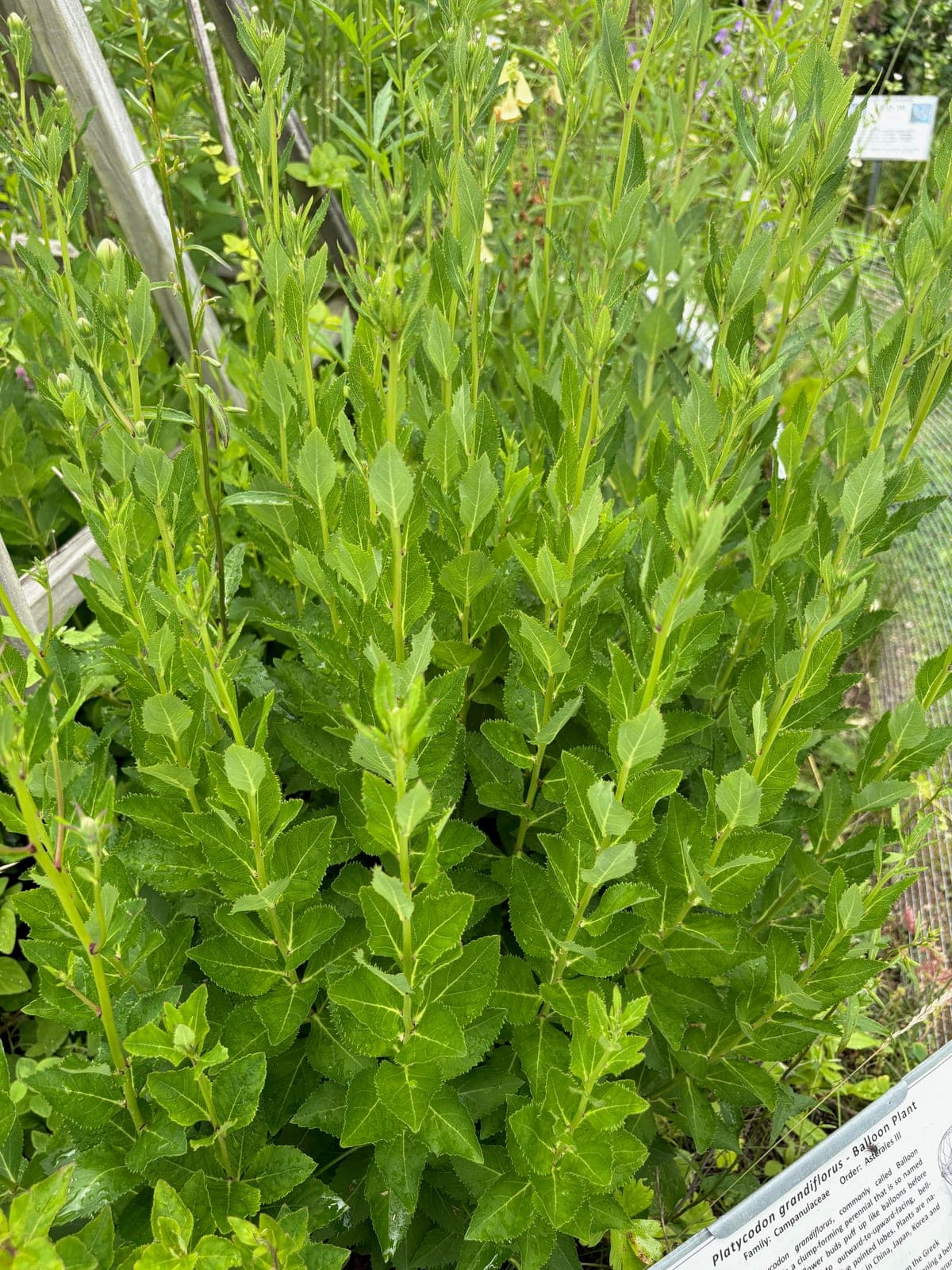
Balloon flower is one of those quiet overachievers that rewards a little patience with years of faithful blooming. Soil preparation really does matter here - this plant develops a deep, fleshy taproot, so work your bed to at least 12 inches, loosening and amending with grit or coarse sand if you're dealing with heavy clay. Good drainage is non-negotiable; wet feet in winter will rot that taproot faster than almost anything else. Direct sow on the surface in early spring, as seeds need light to germinate - don't bury them. Thin to 12–18 inches once seedlings are established. The biggest mistake gardeners make is giving up on balloon flower in spring: it's famously late to emerge, sometimes not showing until late May or even early June. Mark your planting spots clearly and resist the urge to dig - that taproot does not forgive being disturbed. Once settled, it's essentially a plant-it-and-forget-it perennial that will outlive many of your other garden residents.
In traditional East Asian medicine, particularly in Korean and Chinese herbalism, the dried root of Platycodon grandiflorus - known as Doraji in Korean and Jiegeng in Chinese - has been used for centuries as a remedy for respiratory complaints: coughs, bronchitis, sore throats, and phlegm congestion. The root contains saponins that are believed to have expectorant and anti-inflammatory properties, and it remains a staple in traditional Chinese medicine formulas for lung support. In Korean cuisine, the fresh or rehydrated root is eaten as a vegetable - thinly sliced, salted, and tossed into the beloved banchan dish called doraji-namul, with sesame oil, garlic, and a touch of honey to temper its natural bitterness. If you're growing it for root harvest, give plants at least three years to develop a substantial root before digging. As a companion in the garden, balloon flower pairs well with yarrow and calendula, both of which share its preference for well-drained soil and together create a long season of colour with minimal fuss.