
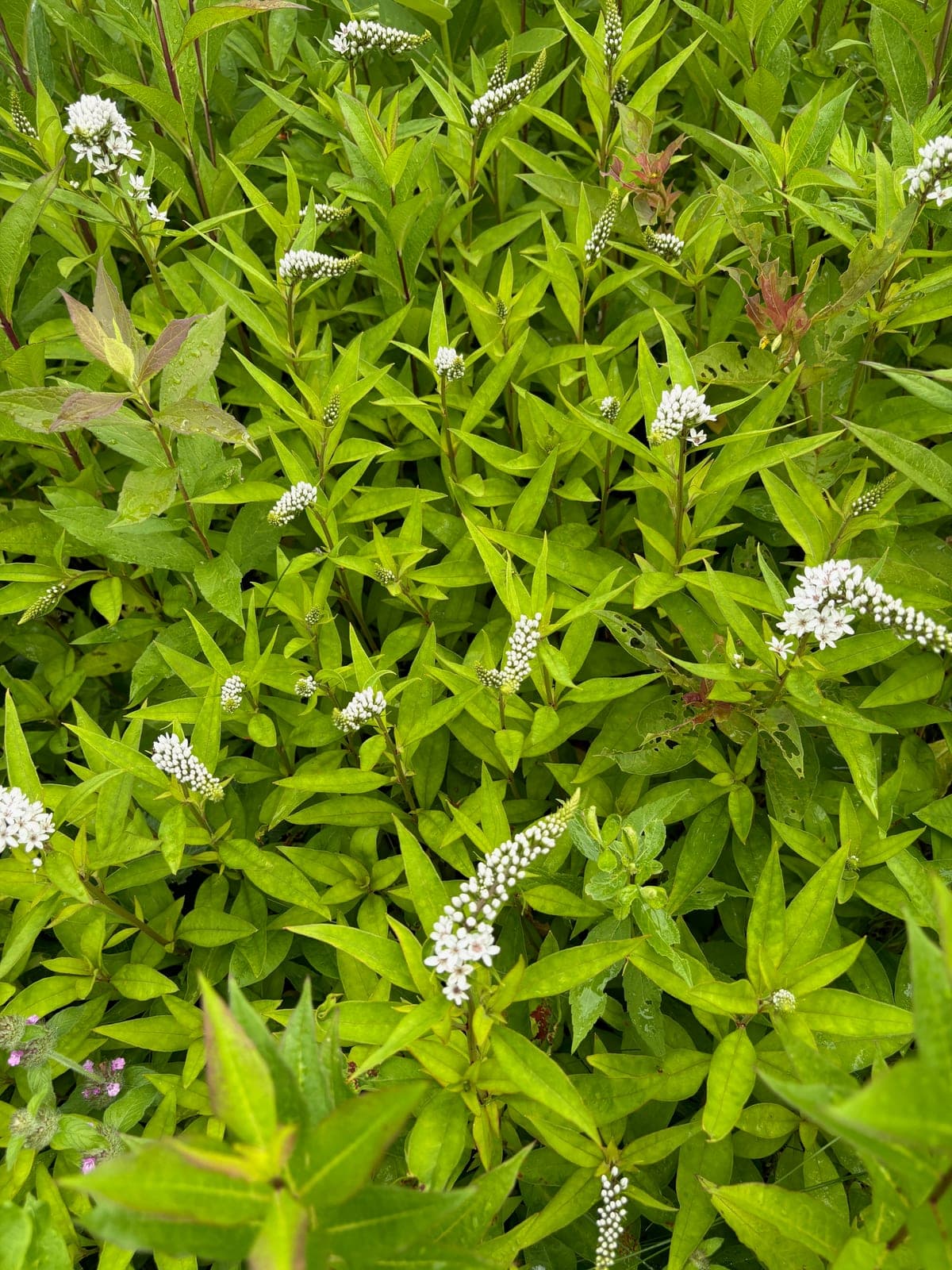
Gooseneck loosestrife is one of those plants that rewards you enormously as long as you go in with eyes wide open about its spreading habit. Plant it where it has a natural boundary - a path edge, a stream bank, or a bed backed by lawn you mow regularly - and it becomes an absolute workhorse of the summer garden. Soil prep matters here: dig in generous amounts of compost and make sure the bed retains moisture, because dry, sandy soils will stress it and reduce that signature arching bloom display. Division in early spring, just as the spear-like shoots emerge, is the best way to keep colonies in check and rejuvenate older clumps. Set divisions about 60 cm apart - they'll close the gaps faster than you'd expect. The most common mistake gardeners make is planting it in a confined raised bed or too close to delicate neighbours; the rhizomes travel freely and will happily outcompete less vigorous plants. If you're starting from seed, cold stratification for four to six weeks before an indoor sow in late winter gives the best germination rates.
On the medicinal side, Lysimachia clethroides has a genuine history in traditional Chinese medicine, where the whole aerial plant is prepared as a decoction to address inflammation, skin infections, and snakebite - its Chinese name translates loosely to "snake medicine." Modern phytochemical research confirms the presence of flavonoids and saponins responsible for those antimicrobial properties, so the traditional use has real grounding. It is not used culinarily in any meaningful way, so focus your energy on growing it well rather than cooking with it. As a garden plant, it pairs beautifully with other moisture-tolerant perennials: yarrow holds its own at the colony edges, and calendula makes a cheerful, easy-to-manage annual companion in the foreground. Watch for slugs in cool, wet springs - they'll target the fresh shoots before the plant gets moving - and give the whole colony a hard cut to the ground in late fall to keep it tidy and reduce self-seeding.