
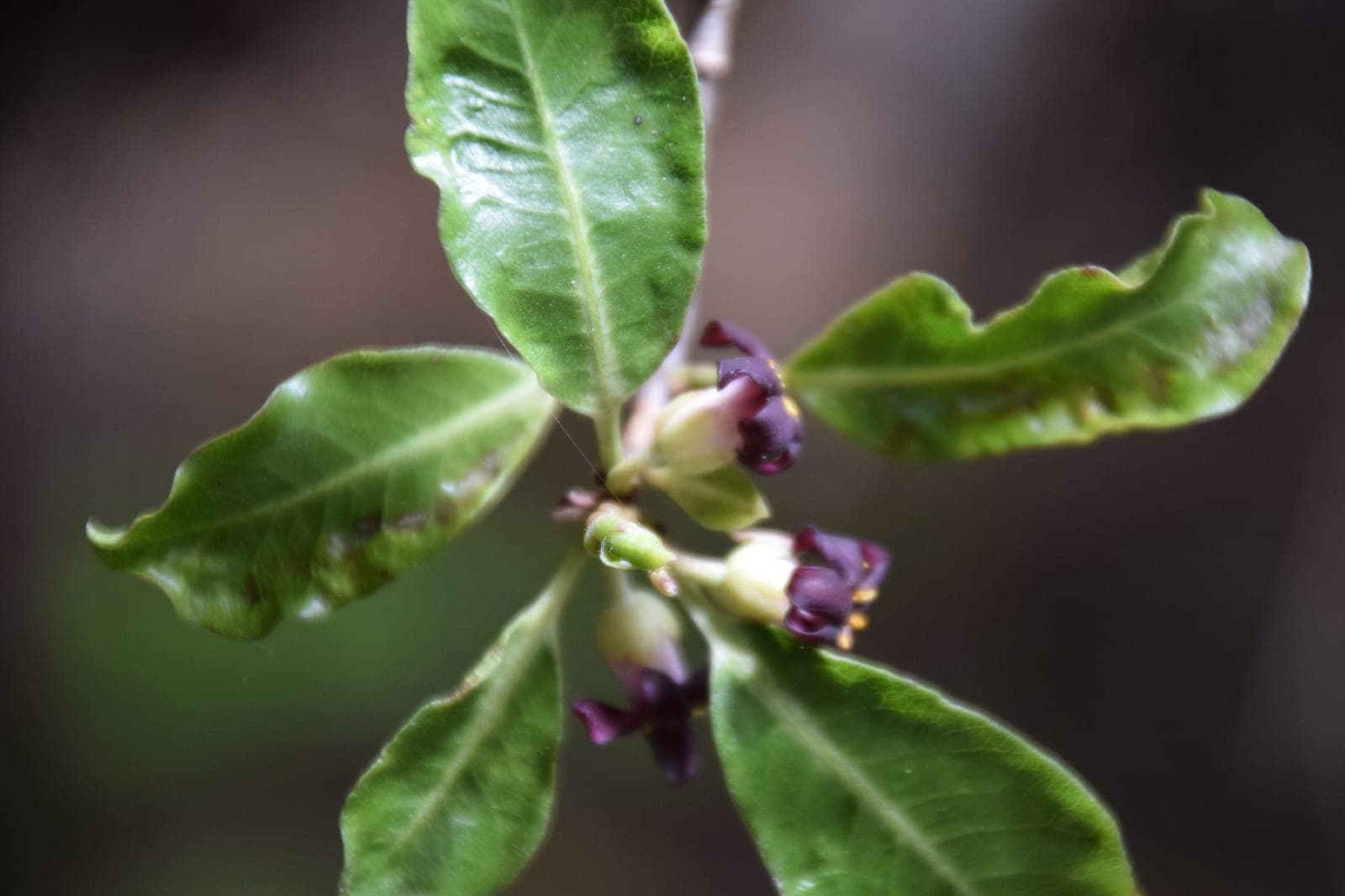
Kohuhu is a New Zealand native evergreen that grows naturally to about 30 ft. In cultivation it typically stays within 10–20 ft and responds well to clipping, making it one of the most widely planted evergreen hedging plants in mild-climate gardens worldwide. Its near-black stems and pale green, wavy-edged leaves are immediately distinctive; numerous cultivars extend the palette to deep purple, gold, and silver-variegated foliage, providing year-round structural interest.
It tolerates salt wind and coastal exposure well, handling conditions that defeat many other broadleaf evergreens. Free-draining soil is essential - waterlogged roots decline quickly. In zone 8, planting against a sheltered wall improves winter survival. The small, dark reddish-purple flowers appear in spring, are largely hidden by the foliage, and release a heavy fragrance only at night.
The cut foliage - particularly from variegated and purple-leafed cultivars - is commercially harvested and traded internationally as a florist backing green, sold under the names pittosporum or black matipo.
Powdery mildew
White or grey powdery coating on leaves - usually starting on older growth in humid conditions or when nights cool.
Improve air circulation by thinning plants. Apply neem oil or potassium bicarbonate spray at first sign. Avoid overhead watering.
Fungal leaf spot
Brown or purplish spots on the leaves, often ringed with a yellow halo, that spread and merge in warm, humid, or wet weather; heavily spotted leaves yellow and drop early.
Pick off spotted leaves and clear fallen debris to remove overwintering spores. Improve air circulation by thinning, and water at the base so foliage dries quickly. If it persists, apply a copper- or sulfur-based fungicide at the first sign.
Sooty Mold (Scale-Associated)
Black, powdery or crusty coating on upper leaf surfaces and stems. Affected leaves may yellow and drop in severe cases. The mold grows on honeydew secreted by scale insects, mealybugs, or aphids feeding on the plant.
Control the underlying pest infestation first using horticultural oil or neem oil applied thoroughly to stems and leaf undersides. Once pest populations are reduced, sooty mold stops spreading and weathers away over time. Rinse foliage with a strong stream of water to dislodge existing mold deposits.
Root rot
Plants wilt, yellow, and stunt even in moist soil; lower stems and roots turn brown, soft, and mushy and the plant may collapse. Most common in heavy, wet, or poorly drained ground.
Improve drainage and stop overwatering, and never plant too deep. Lift and destroy badly affected plants along with the soil around the roots. Grow in raised or free-draining beds to prevent it returning.