
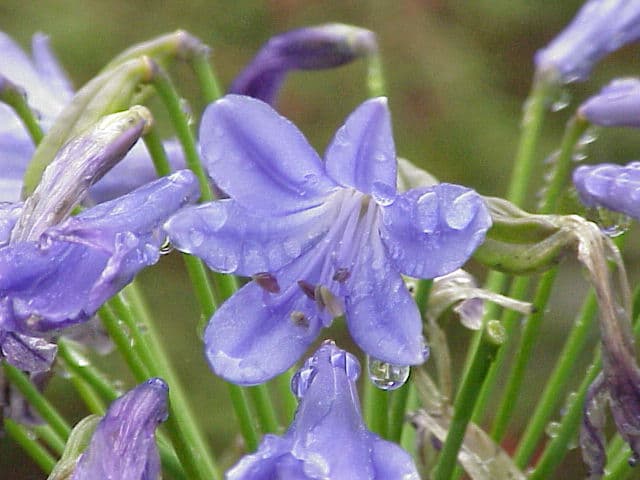
PL. —Agapanthus africanus 'Albus'Botanical illustration — drop image
Agapanthus africanus 'Albus'

White Lily of the Nile

SummerFallInvasive
7a11bHardiness zone
Peak bloom windowZone 6b · frost-offset weeks
Winter
Not in bloom
Spring
Not in bloom
Summer
Peak bloom
Fall
Not in bloom
Peak bloom
In bloom
Background

White Agapanthus sends up tall, leafless stems topped with a loose globe of star-shaped white flowers over strappy, deep-green foliage — a clean, architectural contrast to the more common blue forms. Established clumps flower reliably through summer with almost no fuss.

It is a fleshy-rooted perennial, not reliably winter hardy below the mid-70s zone range; in marginal zones grow it in a large container that can be moved, or mulch heavily and accept some risk. It can naturalize and self-seed in mild, coastal climates — deadhead spent stalks if that's a concern nearby.

Care guide
SunFull sun to part shade
WaterModerate
SoilWell-drained, fertile
Spacing18–24 in
Height24–36 in
Zone7a – 11b
WinterMulch heavily over the dormant crown where marginally hardy; in colder zones dig and store the fleshy rhizomes in barely moist peat in a cool, frost-free spot, or grow in a container and bring it indoors.
Invasive
Seasonal tasks
spring
watchCheck new spring growth for slug and snail damage.
sowPlant out divisions or container-grown clumps in spring after the last frost.
summer
watchWater regularly through the bloom period for the strongest flower display.
cutCut spent flower stalks back to the base once blooms fade, or leave a few to self-seed if naturalizing is welcome.
fall
overwinterMulch heavily over the dormant crown where marginally hardy; in colder zones dig and store the fleshy rhizomes in barely moist peat, or grow in a container and bring it indoors.
Common problems

Root rot

Symptoms

Plants wilt, yellow, and stunt even in moist soil; lower stems and roots turn brown, soft, and mushy and the plant may collapse. Most common in heavy, wet, or poorly drained ground.

Treatment

Improve drainage and stop overwatering, and never plant too deep. Lift and destroy badly affected plants along with the soil around the roots. Grow in raised or free-draining beds to prevent it returning.

Pests

Slug and Snail Damage

Deroceras reticulatum
Symptoms

Large irregular holes chewed in leaves, with slime trails on foliage and soil.

Treatment

Hand-pick at night, set beer traps, or apply iron phosphate bait. Remove debris and mulch where they hide.