
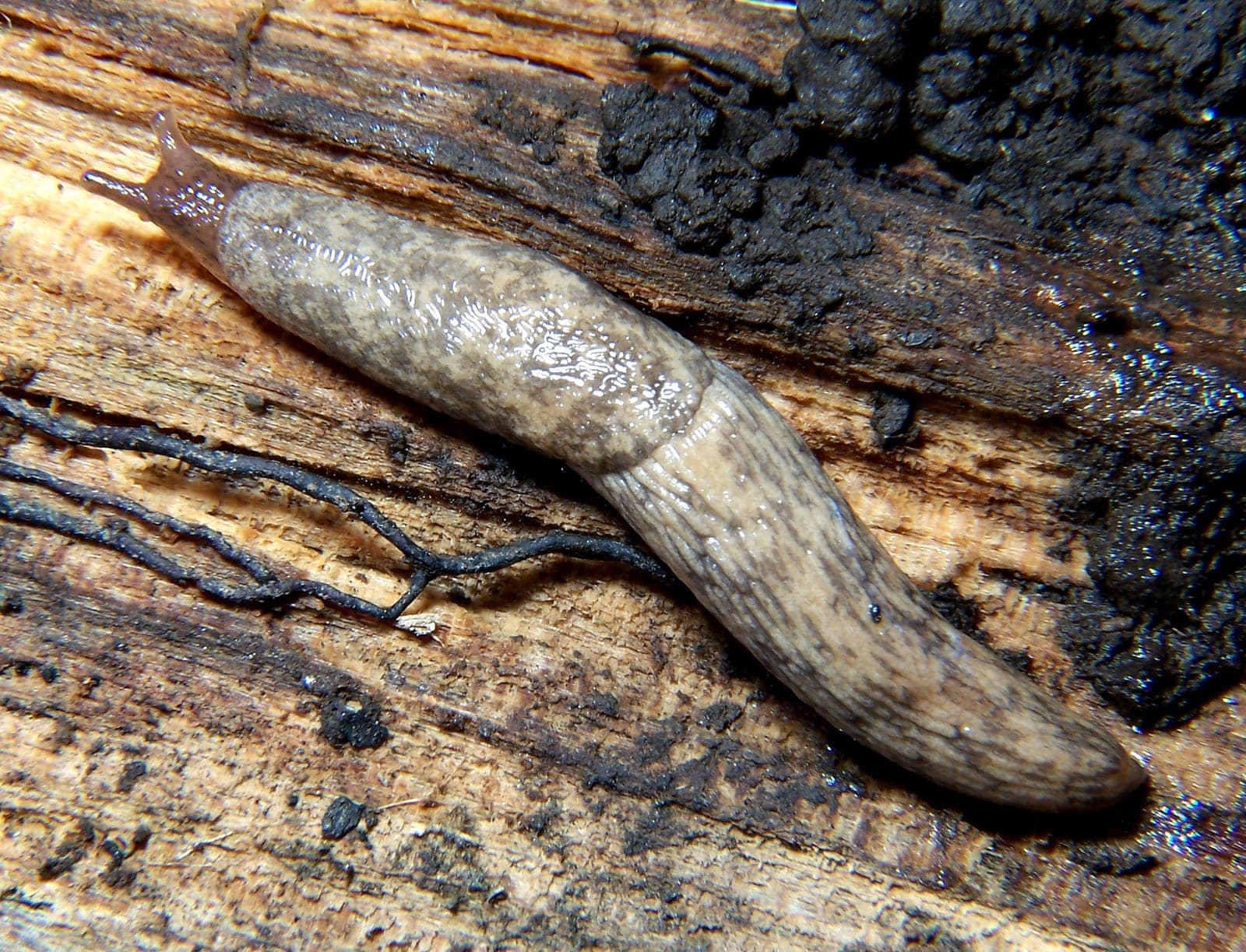
Slug and Snail Damage
The grey field slug is one of the most common and destructive mollusks in temperate North American gardens. Though routinely grouped with garden pests under a single heading, it is a shell-less terrestrial mollusk, not an insect. It damages a wide range of vegetables, ornamentals, and seedlings and is recognized as a significant agricultural pest across Europe and North America.
Slugs feed by rasping plant tissue with a file-like mouthpart called a radula, leaving ragged holes and a glistening slime trail. They are most active at night and during cool, wet weather. In Zone 6b, peak activity occurs in spring and again in fall, though slugs can feed throughout the growing season whenever soil and air moisture remain adequate. During daylight hours they shelter under mulch, boards, stones, or leaf debris.
Generalist herbivore pest that damages a broad range of garden plants by feeding on leaves, stems, seedlings, and fruit.
Large irregular holes chewed in leaves, with slime trails on foliage and soil.
Hand-pick at night, set beer traps, or apply iron phosphate bait. Remove debris and mulch where they hide.