
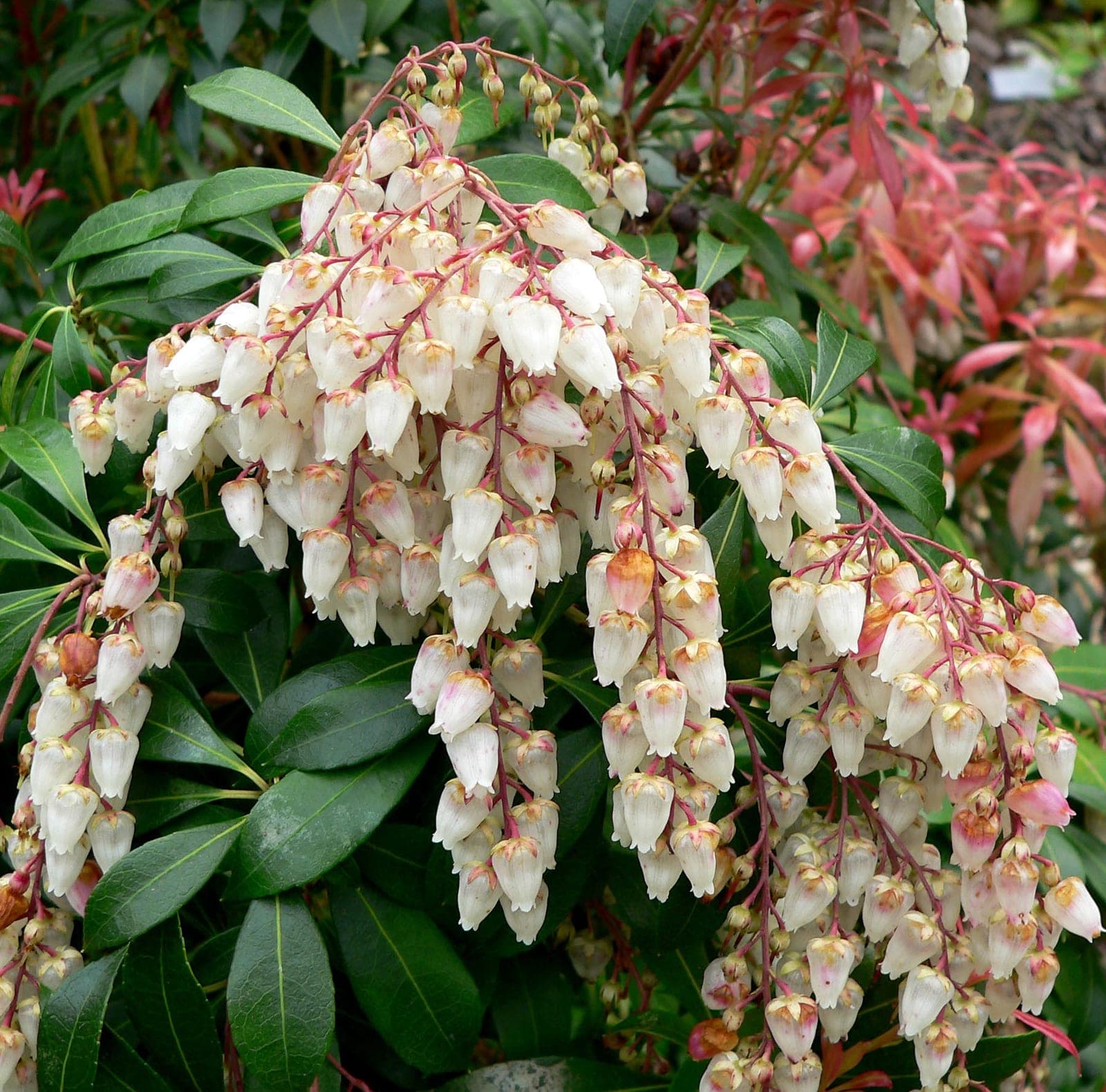
Pieris japonica is a slow-growing evergreen shrub in the heath family (Ericaceae), native to mountain thickets in Japan, eastern China, and Taiwan. It delivers three overlapping seasons of interest: pendulous clusters of urn-shaped white flowers in late winter to early spring, vivid red-to-bronze new foliage that emerges at the same time, and prominent flower buds that provide visible winter structure. Mature plants typically reach 6–10 ft tall and nearly as wide, functioning as a reliable structural evergreen in acid-soil beds and shade gardens.
Pieris shares cultural requirements with rhododendrons and azaleas: acidic, humus-rich, consistently moist but well-drained soil and protection from harsh afternoon sun, especially in zones 7–8. A 2–3 inch layer of organic mulch over the root zone conserves moisture, buffers soil temperature, and sustains acidity. Flower buds for the following spring are set by late summer, so the only safe pruning window is immediately after bloom; remove spent flower clusters and any dead or crossing stems, but avoid cutting into old bare wood, which regenerates poorly. Lace bugs (Stephanitis takeyai) are the most consistent pest, producing pale stippling on upper leaf surfaces; inspect undersides in late spring and treat with insecticidal soap or neem oil at first detection.
All parts of the plant contain grayanotoxins and are toxic to people, livestock, and pets. Honey produced by bees foraging heavily on Pieris can carry these compounds in sufficient concentration to cause illness.
Phytophthora Root Rot
Wilting despite moist soil, yellowing leaves, stunted growth, and dark, decayed roots and crown tissue. Vines may collapse during hot weather.
Plant in well-draining soil and avoid waterlogging. Remove and destroy affected vines. Improve drainage with raised beds or amended soil and avoid overwatering.
Fungal leaf spot
Brown or purplish spots on the leaves, often ringed with a yellow halo, that spread and merge in warm, humid, or wet weather; heavily spotted leaves yellow and drop early.
Pick off spotted leaves and clear fallen debris to remove overwintering spores. Improve air circulation by thinning, and water at the base so foliage dries quickly. If it persists, apply a copper- or sulfur-based fungicide at the first sign.
Leaf gall
Leaves, buds, or young shoots thicken into pale green, reddish, or whitish fleshy galls that later turn white with a powdery spore bloom before browning.
Pick off and destroy galls before they turn white and shed spores. Improve air circulation and avoid overhead watering in spring. The damage is largely cosmetic and rarely needs fungicide.
Azalea Lace Bug
Stephanitis pyrioides →Leaf upper surfaces show stippled, silvery-white speckling; undersides carry dark spots of excrement and small clear-winged insects. Heavy feeding bronzes foliage.
Spray leaf undersides with insecticidal soap or horticultural oil when nymphs appear in late spring. Repeat through the season. Site plants in shade, since stressed sun-grown shrubs are hit hardest.