
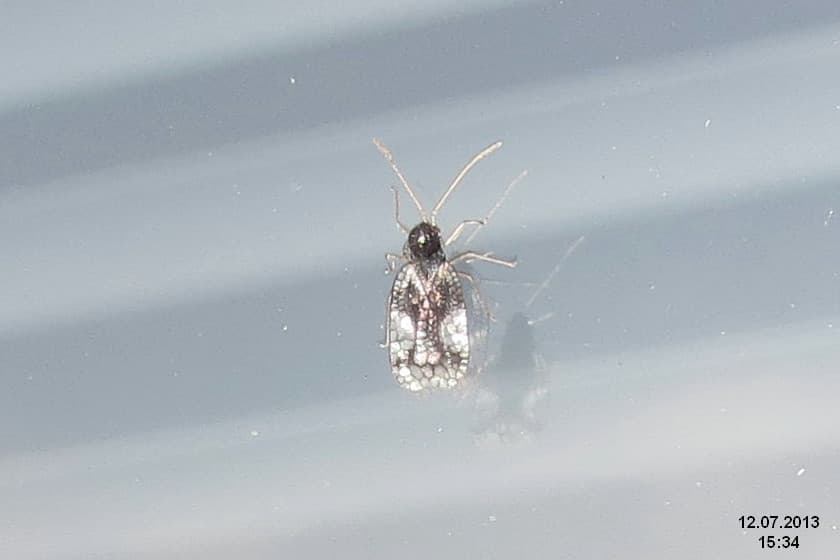
Azalea Lace Bug
The azalea lace bug (Stephanitis pyrioides) is a small sap-feeding insect in the family Tingidae, native to Japan and now established across North America, Europe, Australia, and beyond. Gardeners growing azaleas and rhododendrons need to know it because infestations cause noticeable cosmetic damage and, when severe or repeated across multiple seasons, can reduce plant vigor and the following year's flower production.
Adults overwinter as eggs inserted into leaf tissue on the undersides of leaves. Nymphs hatch in late spring and pass through five instars before reaching adulthood. Both nymphs and adults feed by piercing leaf tissue from the underside and extracting sap, which produces the characteristic stippled, bleached, or silvery discoloration visible on the upper leaf surface. Black, varnish-like fecal deposits on leaf undersides are a reliable diagnostic sign. In Zone 6b, two or three overlapping generations develop each season, with populations typically peaking in midsummer. Plants sited in full sun experience heavier infestations than those grown in partial shade.
Pest that damages azalea and rhododendron foliage by extracting sap from leaf undersides, producing stippled, bronzed, and bleached leaves.
Leaf upper surfaces show stippled, silvery-white speckling; undersides carry dark spots of excrement and small clear-winged insects. Heavy feeding bronzes foliage.
Spray leaf undersides with insecticidal soap or horticultural oil when nymphs appear in late spring. Repeat through the season. Site plants in shade, since stressed sun-grown shrubs are hit hardest.