
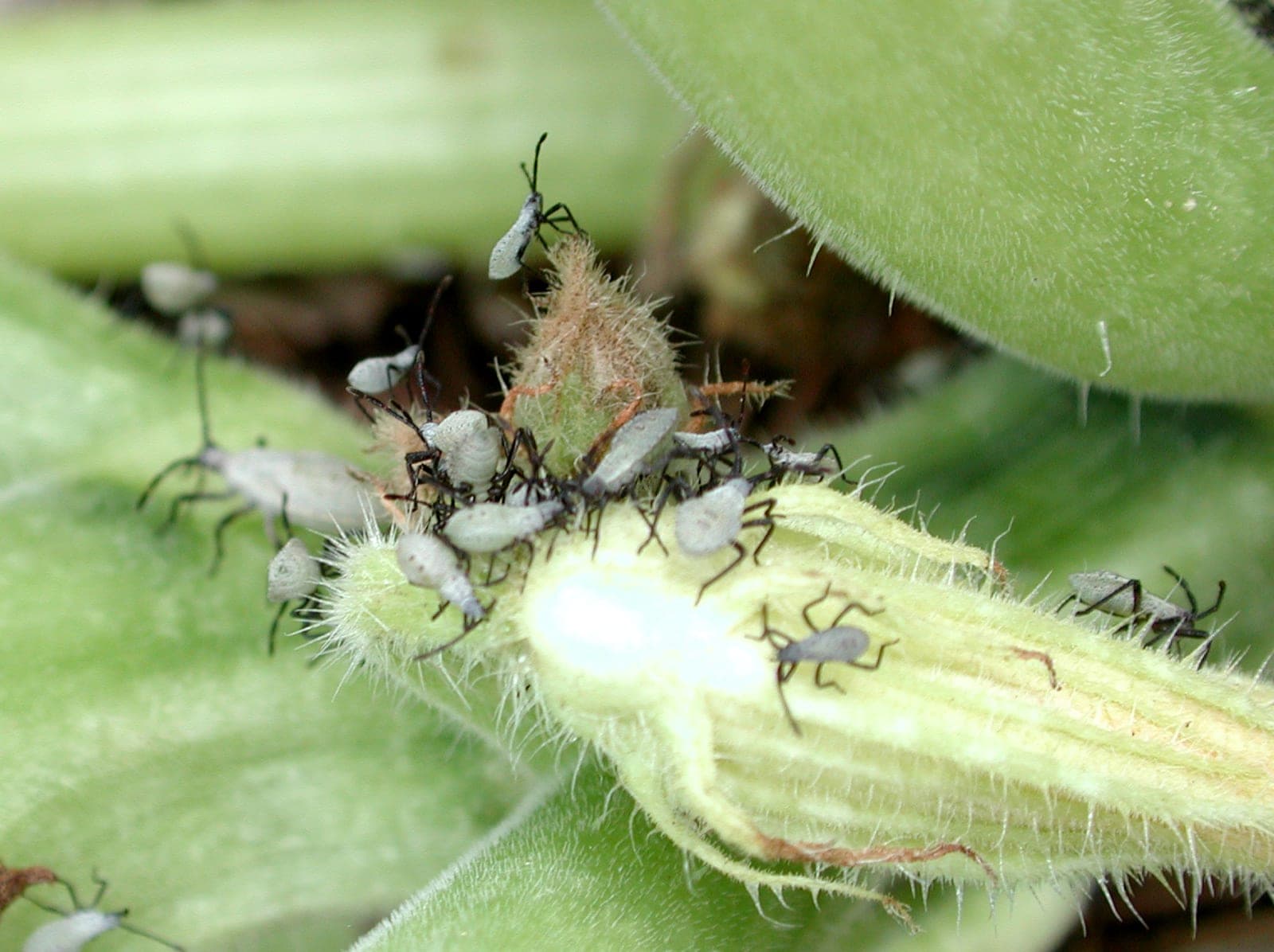
Squash Bug
The squash bug (Anasa tristis) is one of the most damaging pests a cucurbit gardener will face. Adults and nymphs pierce stems and leaves to extract sap, causing yellow spots that turn brown, rapid wilting, and plant death if populations go unchecked. The species also vectors cucurbit yellow vine disease, a bacterial infection that can collapse an entire planting even when bug numbers appear low.
Adults overwinter in garden debris, under boards, and in leaf litter, emerging in late spring when squash and pumpkin plants begin to sprawl. Females lay tight clusters of bronze, oval eggs on leaf undersides, often in the angles between veins. Eggs hatch in one to two weeks, and nymphs pass through five instars before reaching adulthood. In upstate New York there is typically one generation per year. Nymphs are easier to kill than hardened adults, so catching the pest early in the season is critical. When handled or crushed, the bugs produce a noticeable defensive odor.
Serious piercing-sucking pest of cucurbit crops, weakening plants through sap loss and transmitting cucurbit yellow vine disease.
Bronze or brown egg clusters on leaf undersides, yellow speckling that turns brown, and wilting from feeding damage.
Crush egg masses by hand, trap adults under boards at night, and remove debris where they overwinter. Treat heavy infestations on young plants with insecticidal soap targeting nymphs.