
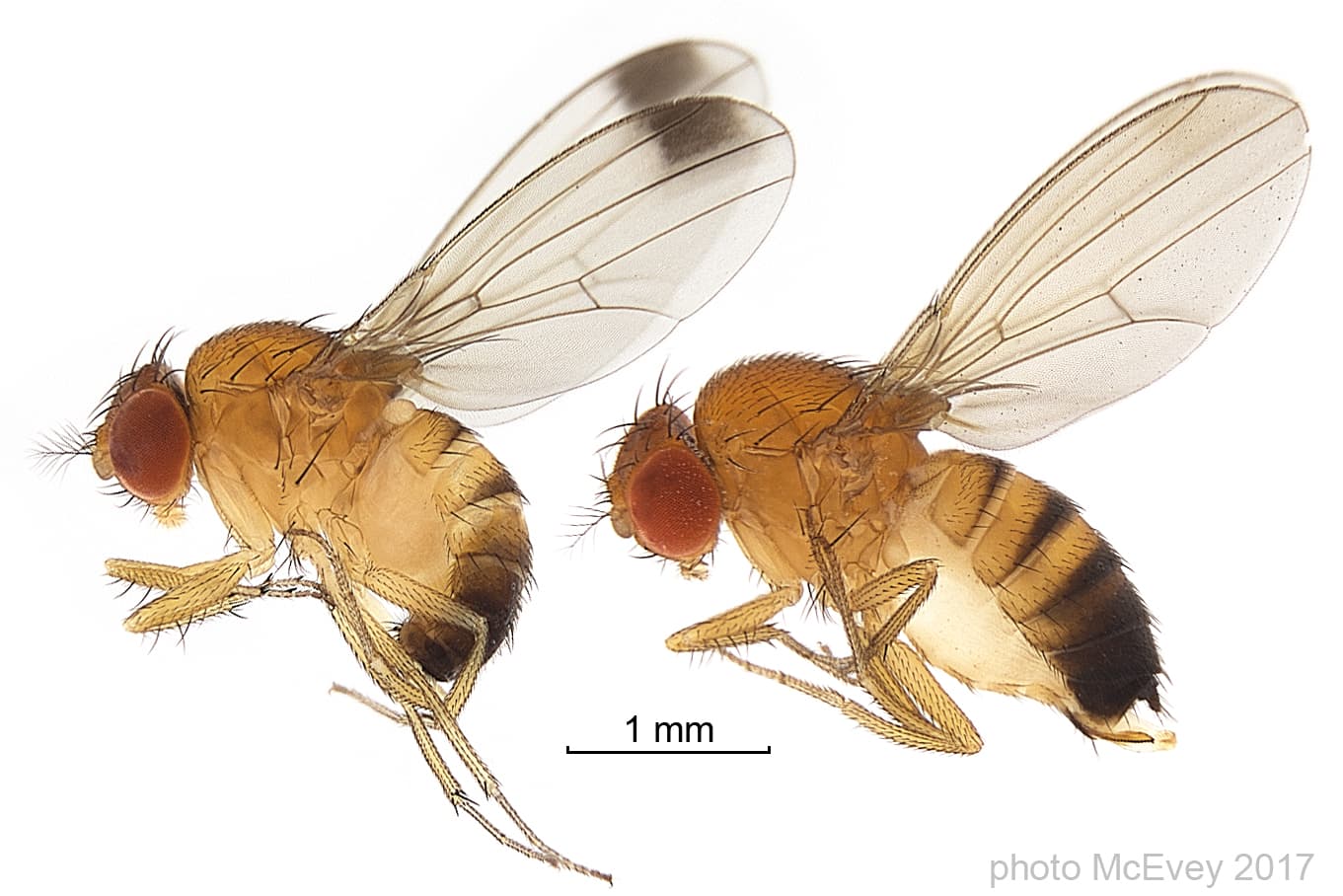
Spotted Wing Drosophila
Spotted wing drosophila is a small fruit fly native to Southeast Asia that has become one of the most damaging soft-fruit pests in North America since its arrival around 2008. Unlike native Drosophila species that only attack overripe or rotting fruit, this species has a serrated ovipositor that lets it cut into healthy, ripening fruit to lay eggs. Gardeners growing strawberries, raspberries, blueberries, cherries, or grapes in upstate New York will almost certainly encounter it.
Females insert eggs directly into firm, ripening fruit. Larvae hatch within one to three days and feed inside the flesh, causing the fruit to collapse and become inedible before it is fully ripe. The fly completes multiple generations per season — potentially seven or more in a warm year — so populations build rapidly from midsummer onward. Adults overwinter in sheltered sites and become active again in spring as temperatures rise above roughly 50 degrees.
Since its establishment in the eastern United States, spotted wing drosophila has caused significant economic losses to both commercial growers and home gardeners. Research into biological controls, including parasitic wasps from its native range in Asia, is ongoing but not yet reliably available for garden use.
Invasive fruit fly pest that destroys ripening soft-skinned fruits by laying eggs inside them before harvest.
Soft, collapsing berries with small puncture marks; white larvae inside ripening or ripe fruit.
Harvest fruit promptly and frequently. Remove and dispose of overripe or fallen berries. Use fine-mesh netting or traps. Refrigerate harvested fruit immediately.