
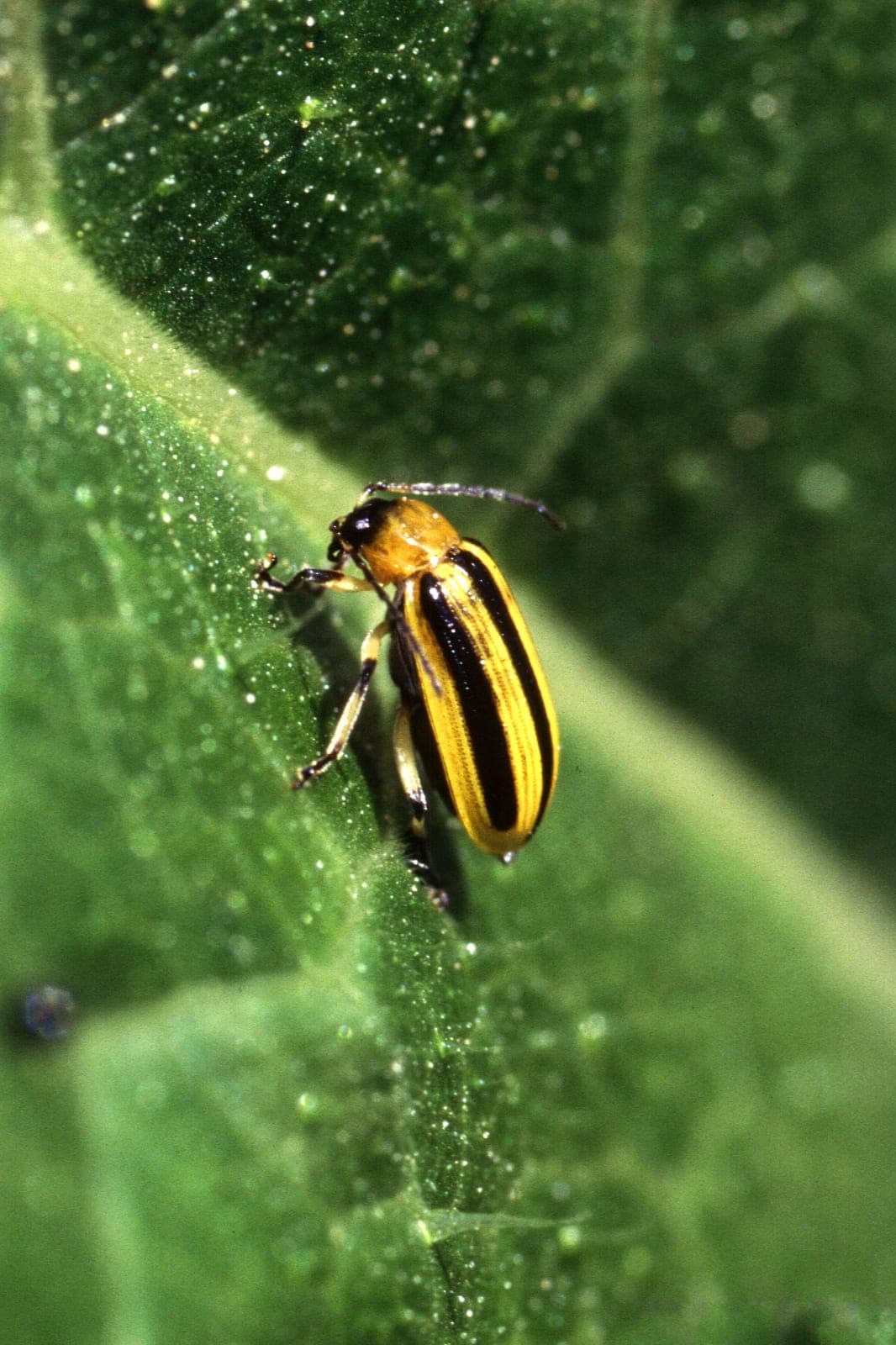
Cucumber Beetle
The striped cucumber beetle is one of the most damaging insect pests of cucurbit crops in eastern North America. It attacks cucumbers, squash, melons, and pumpkins at both the larval and adult stage, making it a threat from the moment seedlings emerge in spring through the end of the growing season. The adult is easy to identify: yellow wing covers with three bold black stripes running lengthwise down the body.
Adults overwinter in leaf litter and woodland edges, then move into gardens as soon as cucurbit seedlings become available in late spring. They feed on leaves, flowers, and soft fruit tissue. Females lay eggs at the soil surface near host plants, and larvae hatch and work their way underground to feed on roots through the summer. Beyond direct feeding damage, adults carry bacterial wilt caused by Erwinia tracheiphila. The bacterium overwinters inside the beetle's gut and is introduced to plants through feeding wounds. Once a plant shows wilt symptoms, it cannot be saved, which makes early prevention far more important than reactive treatment.
The bacterial wilt relationship sets this beetle apart from most garden pests. Because the pathogen lives inside the beetle and not in soil or plant debris, the beetle population itself is the disease reservoir each season. Reducing beetle numbers before they feed on young plants is the only reliable way to prevent wilt outbreaks.
A primary pest of cucurbit crops that causes direct feeding damage at both the larval and adult stage and transmits the fatal bacterial wilt pathogen to host plants.
Irregular feeding scars on leaves, stems, and fruit rind from small yellow-green beetles with black stripes or spots. At low populations, damage is minor; the primary harm is vectoring bacterial wilt, which causes rapid, irreversible vine collapse.
Use row covers from planting until flowering to exclude beetles. Apply kaolin clay to exposed plants as a physical deterrent. Hand-pick adults from vine bases. Use pyrethrin or neem oil for heavy infestations. Destroy wilting vines immediately to prevent further disease spread.