
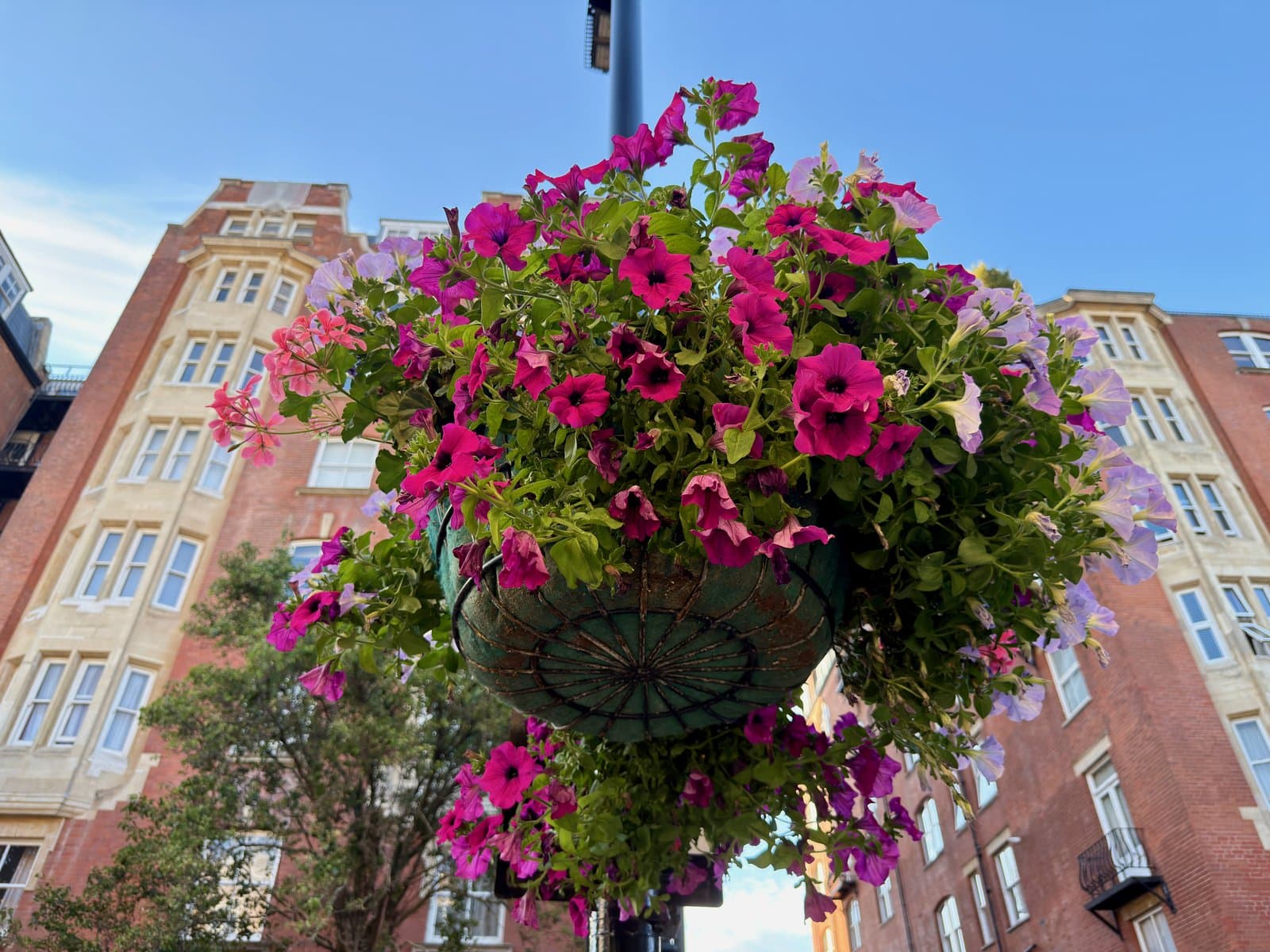
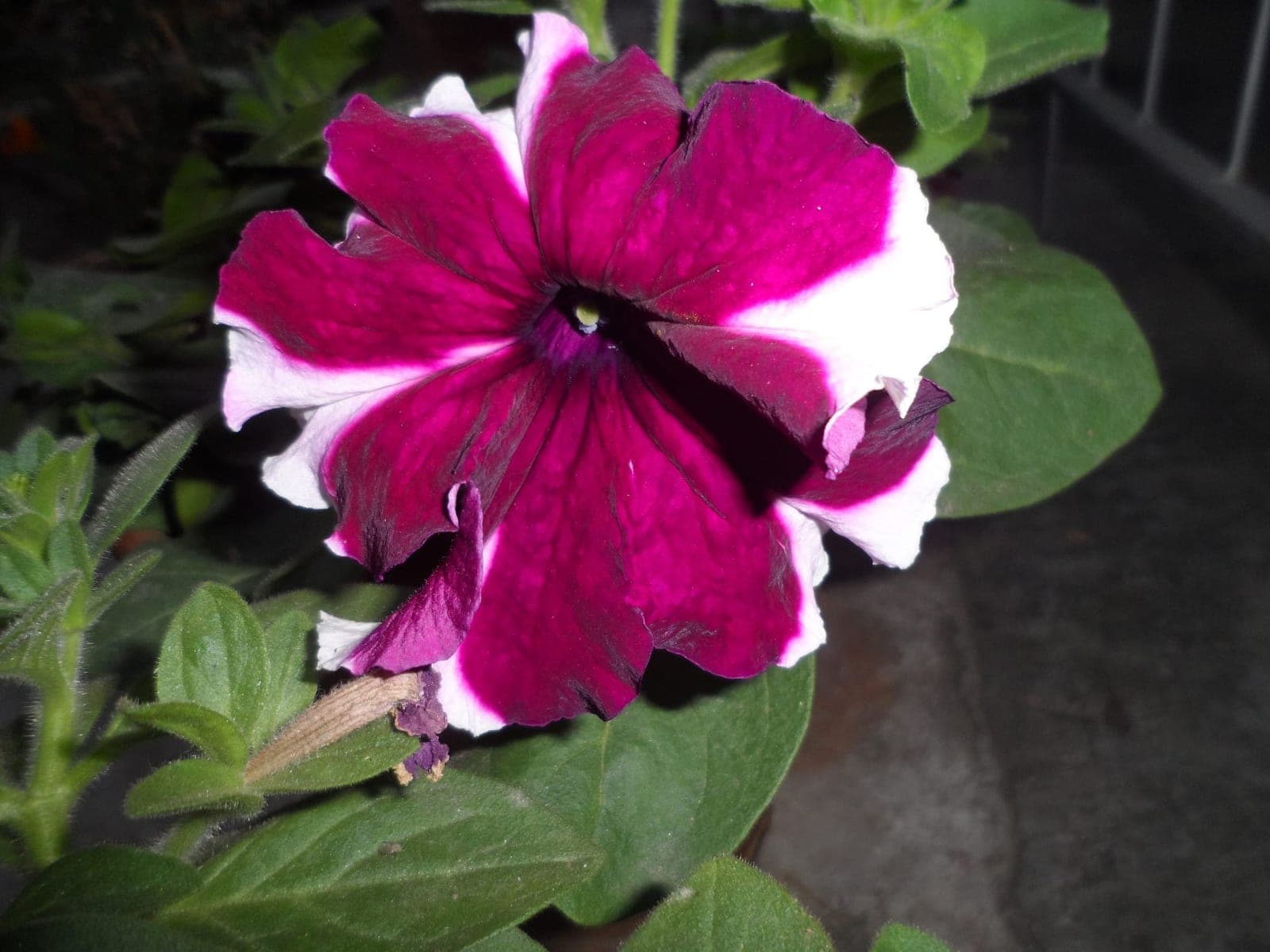
Petunia × atkinsiana encompasses virtually all hybrid garden petunias sold commercially, derived from crosses between the white-flowered P. axillaris and the purple-flowered P. integrifolia, both native to South America. The hybrid was first raised by Quaker plantsman James Atkins at Painshill nursery in England in 1834 but remained obscure until the 1990s, when intensive cultivar development produced the Grandiflora, Multiflora, Milliflora, and Wave series now standard in the trade. Color range spans white through pink, red, purple, and bicolors; true orange is absent.
Petunias perform best with consistent sun and warmth. Most upright and mounding types benefit from regular deadheading or a hard cutback by one-third in midsummer when growth becomes leggy and flowering slows. Spreading Wave series cultivars are largely self-cleaning and require 18–36 inches of space between plants. Glandular hairs on stems and foliage give the plant a sticky texture that deters some small insects. In zones 10–11, petunias can persist as short-lived perennials, but they are grown as warm-season annuals virtually everywhere else.
Botrytis (grey mould)
Grey fuzzy mould on petals and stems, worst in cool wet conditions.
Remove affected parts immediately. Improve air circulation. Avoid overhead watering. Apply copper fungicide if severe.
Powdery mildew
White or grey powdery coating on leaves - usually starting on older growth in humid conditions or when nights cool.
Improve air circulation by thinning plants. Apply neem oil or potassium bicarbonate spray at first sign. Avoid overhead watering.
Damping Off
Seedlings collapse at the soil line with thin, water-soaked stems; seeds may fail to emerge or rot before sprouting.
Sow in well-draining mix, avoid overwatering, and ensure good airflow. Remove affected seedlings and let the surface dry between waterings.
Root rot
Plants wilt, yellow, and stunt even in moist soil; lower stems and roots turn brown, soft, and mushy and the plant may collapse. Most common in heavy, wet, or poorly drained ground.
Improve drainage and stop overwatering, and never plant too deep. Lift and destroy badly affected plants along with the soil around the roots. Grow in raised or free-draining beds to prevent it returning.
Fusarium wilt
Sudden wilting, brown streaks in stems, yellowing leaves. Affects sweet basil varieties most.
No cure. Remove and destroy plants. Do not replant in the same spot for 3+ years. Choose resistant varieties.
Downy mildew
Yellowing on top of leaves with grey-purple fuzz underneath. Spreads rapidly in humid conditions.
Remove affected leaves. Improve air circulation. Avoid overhead watering. Copper spray as preventive.
Mosaic virus
Yellowing, mottled, or distorted leaves. No cure - spread by aphids.
Remove and destroy infected plants. Control aphid populations to prevent spread. Do not propagate from infected tubers.